Kathmandu (GNP): The death toll from this week’s devastating flash floods along the Nepal-Tibet border has risen to 626, according to Nepal’s National Disaster Risk Reduction and Management Authority. The authority reported the update in a social media statement, alongside a sharp increase in the number of people unaccounted for, now standing at 2,426. This figure marks a significant jump from the 1,924 missing reported by the same authority a day earlier, and it also runs ahead of the 616 fatalities recorded separately by Nepal Police in an earlier update.
The scale of the disaster has made identification of the dead extremely difficult in some of the worst-hit areas. Officials from Chitwan district in the southern-central Terai region say that of 233 bodies recovered so far, only four have been formally identified.
The District Administration Office of Chitwan says the remains collected from health institutions and riverbanks are in an advanced state of decomposition, and that DNA samples are being gathered from the remaining 229 bodies now held in holding centres and health facilities.
Rescue efforts on the Tibetan side of the border have faced their own set of obstacles. Teams from the Sichuan Fire and Rescue Mobile Corps have been searching mountainous terrain around Gyirong county, one of the main crossing points between Nepal and Tibet, after trekking over cliffs and raging rivers to reach the area.
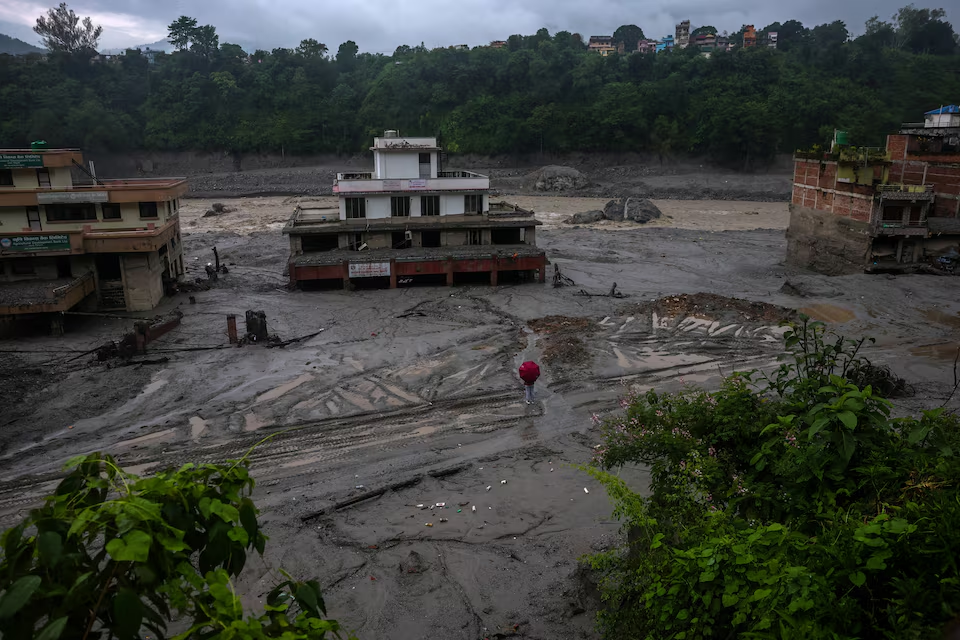
Zou Mingqi, a fire and rescue team leader from Lhasa, describes the scene around the old border gate as a scene of ruins, with thick mud that swallowed rescuers’ feet with every step. At least 554 people remain missing in the Tibetan region, with seven deaths confirmed there so far, a figure Chinese authorities say may or may not overlap with Nepal’s own tally.
Geologists warn that the danger is far from over. Dr Alena Giesche of the US Geological Survey says rescue teams are working in the same hazardous zones where further debris, mud and dislodged boulders remain unstable.
Water levels in a lake formed by landslide debris in Tibet are reportedly rising again, prompting rescue command teams to deploy drones and observation posts to monitor slopes for early signs of secondary slides. Dr Giesche notes that the timing, coinciding with peak glacial melt and the summer monsoon, has compounded the risk.
The human cost of the disaster is visible in places like Devighat, a pilgrimage site in Nuwakot district at the confluence of the Trishuli and Kali Gandaki rivers. Once known for its rows of colourful homes, the area now lies buried under mud, with its bridge destroyed and riverbanks unrecognisable.
Also Read: Nepal Flood Death Toll Rises to 475 as Second Flood Risk Grows
Many of those still missing had travelled to the region on pilgrimage, including large numbers of Indian nationals en route to Mount Kailash in Tibet, a peak held sacred by Hindus, Buddhists and Jains. Among the missing are Deepak and Madhu Ahuja, a couple who travelled from the United States; their daughters say only that they want them to come home.
The international response has intensified as the scale of need becomes clearer. European Commission President Ursula von der Leyen has committed 2 million euros in immediate humanitarian aid, saying the funding will deliver life-saving assistance to the hardest-hit families and communities.
Chinese President Xi Jinping has offered condolences to Nepalese President Ram Chandra Paudel, expressing confidence that the two nations will join hands to overcome the disaster and rebuild. The United Nations says tens of thousands of households now need emergency food and drinking water, as governments including Canada and the United States pledge additional assistance.
As search and recovery operations enter their fourth day, discrepancies between figures released by Nepal Police and the national disaster authority reflect the sheer speed and scale of the emergency response rather than any single authoritative count. Conditions in Tibet remain especially difficult to verify independently, given the region’s tightly controlled media environment since its annexation by China in the 1950s, leaving much of the picture reliant on updates from Chinese state channels.

Managing Editor at Global News Pakistan (GNP), with a Bachelor's degree in International Relations from Riphah International University, graduated with a Gold Medal. Reach out at sabahtareengnp@gmail.com