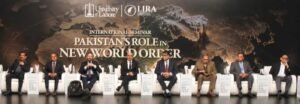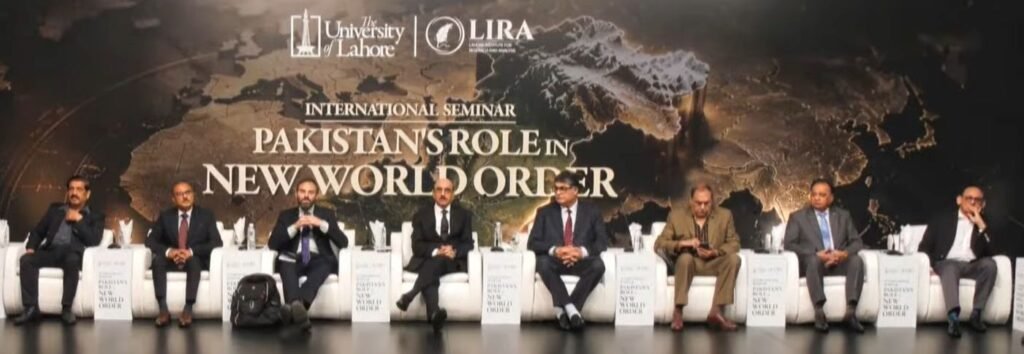
Lahore (GNP): Pakistan must translate its growing diplomatic influence and emerging strategic partnerships into economic strength, technological advancement and greater national capacity to shape its future in an increasingly multipolar world, said Sardar Masood Khan, Former Ambassador of Pakistan to the United States, China and the United Nations, and former President of Azad Jammu and Kashmir.
Speaking at a seminar titled “Pakistan’s Role in the New World Order” at the University of Lahore, Sardar Masood Khan observed that the world had already undergone a fundamental redistribution of power. He said the international system was no longer defined by a single superpower, as China, Russia, Europe and a growing number of middle powers were reshaping the global political, economic and security landscape.
He identified Pakistan, Türkiye and Saudi Arabia among the emerging middle powers, alongside countries such as Malaysia and Indonesia. He noted that economic influence was becoming more widely distributed, while technology had emerged as a transformative source of power, connecting societies, accelerating development and creating new opportunities for countries to overcome traditional limitations.
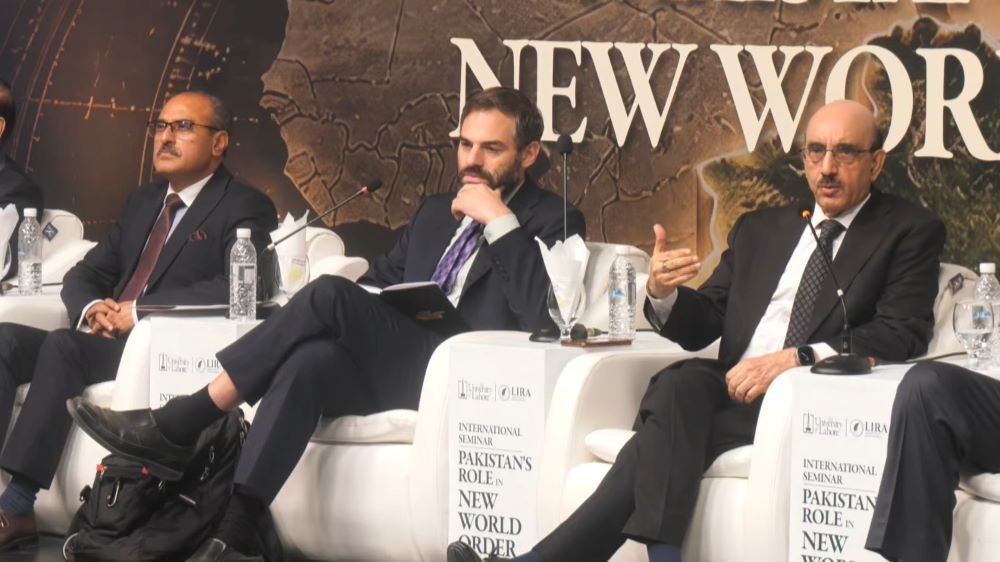
Khan highlighted the major areas of geopolitical competition, including the Russia-Ukraine conflict, tensions in the Middle East, the Taiwan Strait and the wider Indo-Pacific, as well as emerging strategic interests in the Arctic, maritime routes and critical minerals. He stressed that technological advancement would increasingly determine how power was distributed in the international system.
Warning against further escalation in the Middle East, he said another military confrontation involving Iran could have devastating consequences for the entire region. The international community must prevent such a catastrophe and rebuild confidence in multilateralism. He argued that the United Nations Charter and international legal framework remained essential, but their selective and inconsistent implementation had weakened the credibility of the international system.
Discussing Pakistan’s diplomatic role, Khan paid tribute to the country’s political and military leadership for its engagement during the US-Iran conflict. He described Pakistan’s efforts to facilitate a ceasefire and bring adversarial parties towards direct negotiations as a significant diplomatic achievement that had enhanced its international standing. He also noted the considerable expansion of diplomatic engagement between Islamabad and Washington.
Khan highlighted opportunities for Pakistan in critical minerals, wind energy, agriculture, technology startups and investment. He emphasised the importance of expanding educational opportunities for Pakistani students in American universities, particularly in natural sciences and emerging technologies, including artificial intelligence and blockchain.
He also stressed the need for Pakistan to maintain balanced and constructive relations with both China and the United States, avoiding unnecessary alignment in their strategic competition.
Referring to emerging regional partnerships, he said cooperation involving Pakistan, Saudi Arabia, Türkiye, Egypt and Indonesia could create new opportunities for collective security and strengthen engagement with the Middle East and Europe.
Also read: 60% of Online Learners Face Cyber Incidents, Kaspersky
Concluding, Khan stressed that Pakistan’s principal challenge was its economic vulnerability. He called for massive investment in the national economy and technology, emphasising that sustainable economic strength must underpin the country’s diplomatic achievements and enable it to play a more influential role in the emerging world order.

Sohail Majeed is a Special Correspondent at The Diplomatic Insight. He has twelve plus years of experience in journalism & reporting. He covers International Affairs, Diplomacy, UN, Sports, Climate Change, Economy, Technology, and Health.