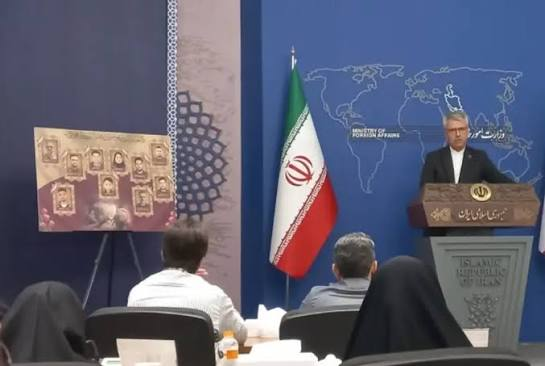
Islamabad (GNP): Iran said Monday it is negotiating with Oman over a temporary shipping route through the Strait of Hormuz, even as US President Donald Trump insisted new talks aimed at ending the war would begin the same day. Trump said he had called off plans for what he described as massive strikes on Iran to allow room for the negotiations to proceed.
Trump did not name who would take part in the discussions he referenced. Tehran, however, denied it was in contact with Washington and said it had no plans for such talks, a denial that appeared to frustrate the US president. Writing on Truth Social afterward, Trump accused Iran’s leadership of being duplicitous, saying the country had sought a meeting and begun talks only to publicly claim it was dealing solely with Oman.
Over the weekend, Trump had said the outlines of a deal were in place, including the reopening of Hormuz, the strategic waterway whose repeated closures by Iran have driven up global oil prices since the conflict began in late February. Trump maintained Monday that the US, not Iran, controls the strait and said no vessels would be permitted through unless a deal or a full surrender was reached.
Speaking aboard Air Force One on Sunday, Trump said Iran was aware of the scale of planned US strikes in advance and described ongoing contact with Tehran as a form of negotiation set to continue into Monday afternoon. He declined to set a deadline for reaching an agreement, saying only that talks could proceed at any time.
Trump also said Saudi Crown Prince Mohammed bin Salman, along with officials from the United Arab Emirates and Qatar, had urged him to hold off on strikes over the weekend, citing the prospect of a deal both on Hormuz and separately on Iran’s nuclear program.
Oil prices fell in Asian trading Monday following Trump’s remarks, with Brent crude down 4.5 percent to $83.98 a barrel and US crude down 4.6 percent to $80.74. Prices have swung repeatedly since the conflict began on Feb. 28, driven by disruptions to shipping through the strait, which normally carries about a fifth of the world’s crude oil and liquefied natural gas.
Also Read: From Memorandum to Renewed Conflict: The Israel-Iran War and the Failure of Lasting Diplomacy
Vessel-tracking data cited from trade intelligence firm Kpler showed a roughly 28 percent drop in crossings through the strait between July 30 and Aug. 2 compared with the preceding four-day period.
Earlier mediated talks to end the conflict collapsed last month following the breakdown of a ceasefire reached in April. Trump has repeatedly said a negotiated resolution was close, only for renewed strikes to follow. The White House has previously suggested Iran’s public statements are shaped partly for a domestic audience that includes hardline officials opposed to concessions.
Polling has shown declining US public support for the conflict, with a Reuters/Ipsos survey last week finding only a third of Americans back it, the lowest level since fighting began, with most respondents citing unclear objectives.

Managing Editor at Global News Pakistan (GNP), with a Bachelor's degree in International Relations from Riphah International University, graduated with a Gold Medal. Reach out at sabahtareengnp@gmail.com