Iran (GNP): Hostilities between the United States and Iran escalated sharply over the past two days, with strikes exchanged across multiple countries, oil tankers hit in the Strait of Hormuz, and Washington moving to reinstate a naval blockade on Iranian shipping, driving global oil prices to a four-week high.
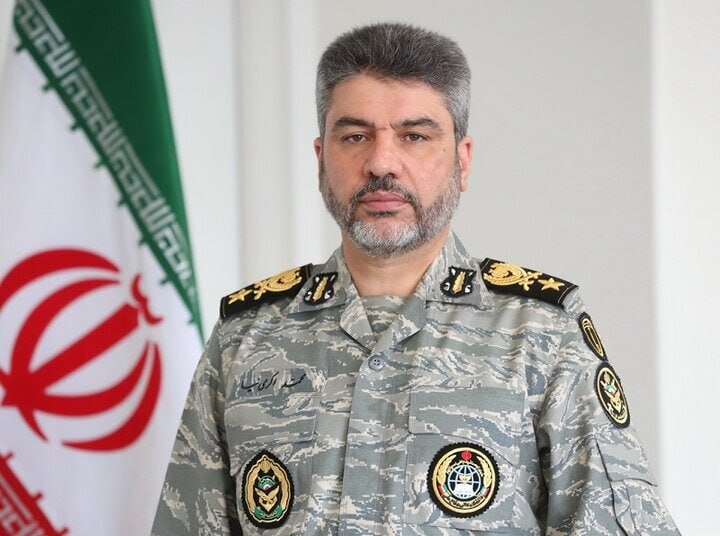
Iranian army spokesman Brigadier General Mohammad Akraminia said Tuesday that the Strait of Hormuz would not reopen through American military pressure. “The only way to reopen it is by respecting the rights of the Iranian people,”
Moreover, Akraminia said, according to Iranian state television, adding that Iran remained committed to avenging the killing of former Supreme Leader Ali Khamenei and others who died during the war.
Iran’s military said it struck US assets in Kuwait, including communication systems, fuel depots, a Patriot missile system, a control tower and an ammunition warehouse, using explosive-laden drones, and separately targeted a “hostile” American vessel with cruise-missile fire.
Iran’s Islamic Revolutionary Guard Corps said it also fired ballistic missiles at a US air base in Jordan, while Jordan’s armed forces said they intercepted and shot down four missiles that entered Jordanian airspace from Iranian territory. Bahrain said its air defences intercepted Iranian aerial attacks over the kingdom, and Iranian state media reported explosions in Bandar Abbas, Kish and Qeshm islands, Abu Musa Island, and the city of Jam, with no casualties reported in those incidents.
Separately, southern Lebanon saw renewed Israeli strikes, with Lebanese sources reporting explosions in Yahmar al-Shqif and Kfar Tebnit, the demolition of residential buildings in the Tyre and Bint Jbeil districts, and artillery shelling of Bayut al-Siyad.
The US military carried out a third consecutive night of strikes against Iran on Monday. US Central Command said the operation began on President Donald Trump’s direction after he told a radio interview that Iran would be hit hard. Four people were wounded when US projectiles struck the southwestern Iranian city of Omidiyeh early Tuesday, according to Khuzestan province deputy governor Valiollah Hayati.
The UAE Ministry of Defence said Tuesday that one Indian crew member was killed and eight other sailors wounded, four seriously, after Iranian cruise missiles struck two Emirati oil tankers, the Mombasa B and Al Bahyah, in the southern lane of the strait within Omani territorial waters.
Both vessels caught fire and sustained significant damage, though the ministry said the fires were later brought under control. Iran’s Revolutionary Guards said separately that they had disabled two “offending” supertankers after the vessels ignored warnings, switched off navigation systems and attempted to use what the Guards described as a mined route, without confirming whether these were the same ships cited by the UAE.
The UK Maritime Trade Operations agency reported a separate incident in which a tanker was struck by an unidentified projectile roughly 40 nautical miles northeast of Oman’s Qalhat, damaging its engine room; the crew were reported safe. In a separate incident, Iran’s Fars news agency said 23 foreign crew members were rescued after a bulk carrier collided with another vessel north of Qeshm Island and began taking on water.
Kuwait’s foreign ministry condemned the strikes on the Emirati tankers as a “flagrant violation of international law” and expressed solidarity with the UAE.
Iran sent a letter to UN Secretary-General Antonio Guterres and the president of the Security Council accusing the United States of repeatedly violating the Islamabad Memorandum of Understanding, the deal that had been signed on June 17 to halt the earlier phase of the conflict. Iran’s UN ambassador, Amir Saeid Iravani, said Washington had “actively and systematically undermined” the foundations of that agreement almost from the moment it was signed.
President Trump said on Truth Social that the US was reinstating a naval blockade on Iran and would charge a 20 percent fee on cargo shipped through the strait, framing the US role as “guardian” of the waterway.
The US Navy-led Joint Maritime Information Centre said the blockade would take effect at 2000 GMT Tuesday, covering the entire Iranian coastline while allowing neutral transit passage and inspected humanitarian shipments to continue.
Iranian Foreign Minister Abbas Araghchi rejected the proposed fee as excessive, saying Tehran would remain the strait’s guardian. The UN’s shipping agency separately said it opposed any fees on international strait transits, arguing there was no legal basis for mandatory tolls.
German shipping line Hapag-Lloyd said charging fees for passage through international waters “would be fundamentally wrong” and that it could not yet quantify the financial impact of the regional tensions on its operations.
Oil Market And Trade Impact
Brent crude rose 2.3 percent to 85.20 dollars a barrel and US West Texas Intermediate rose 2.4 percent to 80.05 dollars a barrel on Tuesday, marking a four-week high after Brent had already surged 9.6 percent the previous session, its steepest one-day gain since May 2020.
Maritime monitor TankerTrackers said Iran had shipped more than 80 million barrels of crude oil and refined products, worth an estimated 6 billion dollars, over the preceding four weeks, though it said roughly 30 million further barrels remained undeparted following the blockade’s early reinstatement.
US Central Command said it had facilitated the transit of more than 800 vessels and over 400 million barrels of crude through the strait over the prior two months via ship-to-ship transfers beyond the strait, an operation in which UAE state oil firm ADNOC has been a leading participant.
Before the conflict began in February, roughly a fifth of the world’s oil and gas traffic, more than 15 million barrels of fuel worth at least 1.2 billion dollars daily, passed through Hormuz. A 20 percent fee on that volume could generate an estimated 240 million dollars a day for the United States.
Also Read: UN Prison Standards Draw Fresh Attention Ahead Of Mandela Day
The war, which involves the United States and Israel on one side and Iran on the other, has spread across the Gulf region and beyond, with Iran striking US bases in multiple countries. Thousands of people have been killed since the conflict began, mainly in Iran and Lebanon. The US Embassy in Abu Dhabi and the Consulate General in Dubai have suspended consular appointments from July 13 to 15 because of the security situation.

Managing Editor at Global News Pakistan (GNP), with a Bachelor's degree in International Relations from Riphah International University, graduated with a Gold Medal. Reach out at sabahtareengnp@gmail.com