Islamabad (GNP): Federal Minister for Power Sardar Awais Ahmad Khan Leghari has announced that a policy to promote local manufacturing of battery energy storage systems in Pakistan will be finalized soon.
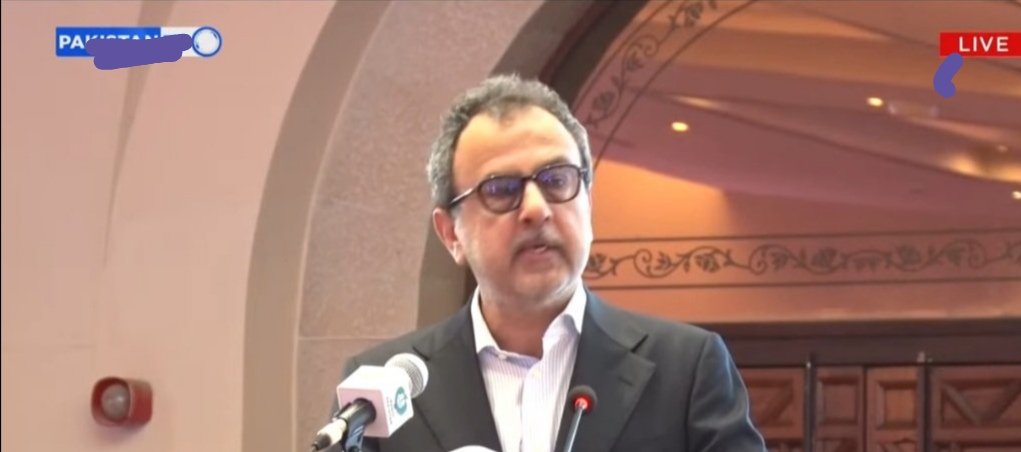
Speaking at the Solar Storage Flexibility 2026 Conference, he said the Ministry of Industries and Production is currently drafting the policy, which will offer incentives for domestic battery production. Leghari described solar power and energy storage as two sides of the same coin, noting that Pakistan’s energy mix already draws 50 percent from clean sources, with a target of reaching 90 percent by 2035 — a goal being actively planned across power generation, transmission, and storage capacity.
He said achieving a 90 percent renewable energy mix will require significant investment in storage infrastructure to turn Pakistan’s renewable energy goals into a workable reality.
Domestic manufacturing of battery storage systems, he stressed, is critical to ensuring these systems are built within Pakistan rather than imported. He remarked that just as ordinary Pakistanis drove the country’s solar transition, the development of storage and grid flexibility needs to keep pace and stay ahead of demand.
The minister also mentioned that while the government is prepared to roll out a daytime Time-of-Use tariff, doing so is currently limited by conditions tied to Pakistan’s IMF program.
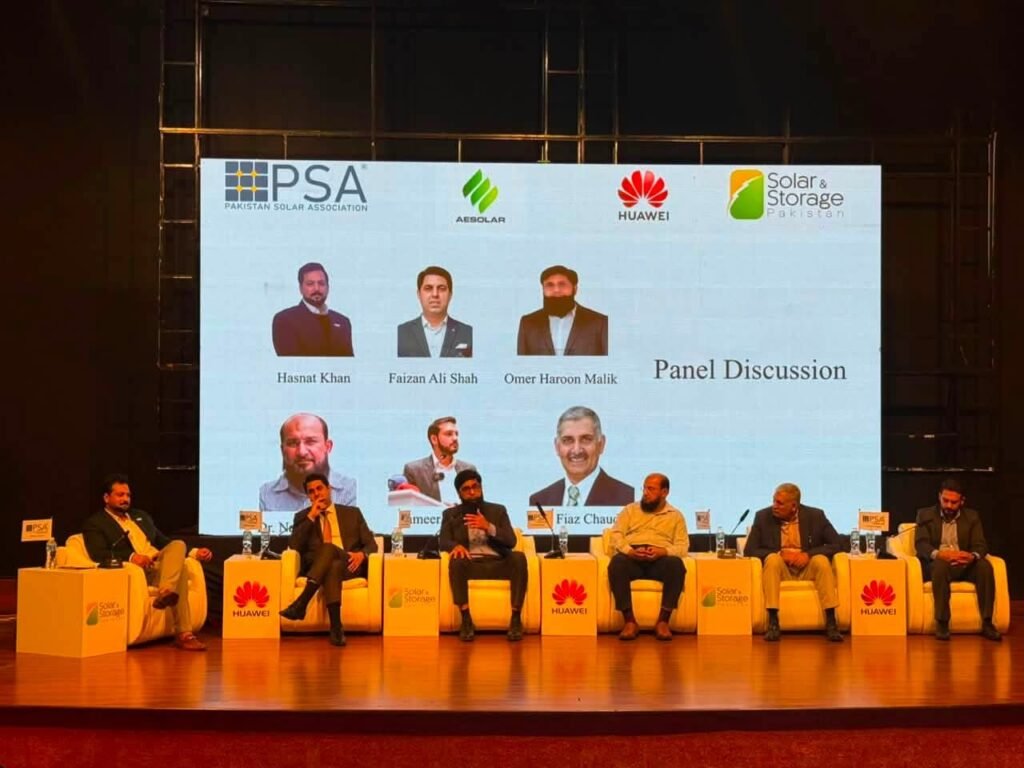
Experts at the conference said Pakistan urgently needs a government-approved battery storage policy to keep pace with the country’s rapid solar adoption. They also stressed that manufacturing storage systems locally is key to avoiding heavy dependence on imports, and that a clear regulatory framework would help drive local adoption.
Pakistan has already installed an estimated 38 gigawatts of distributed solar capacity, largely the result of independent decisions made by households, farmers, businesses, and industries.
Meanwhile, imports of lithium-ion Battery Energy Storage Systems surged 220 percent in 2025 alone, following years of relatively flat demand — a sign that battery storage adoption is picking up momentum.
John Grimes of the Renewable Energy Council Asia Pacific praised Pakistan’s leading role in the global solar movement, saying other countries could look to Pakistan’s experience as a model to follow, calling the country’s solar growth “a shining example for the whole world.”
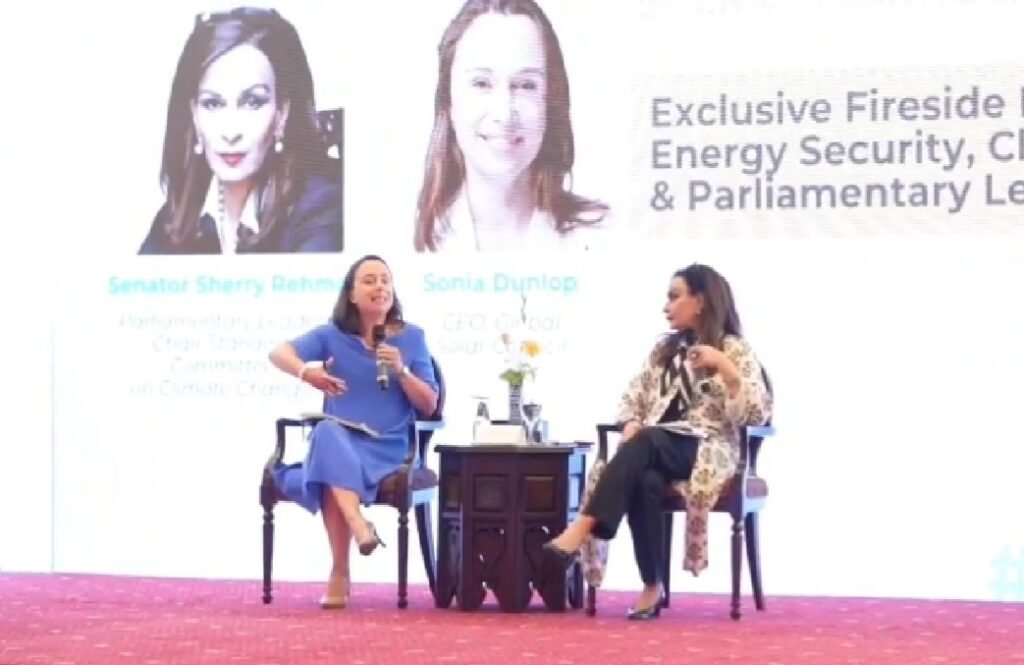
In a fireside conversation moderated by Sonia Dunlop, Senator Sherry Rehman discussed Pakistan’s vulnerability to climate change, the country’s consumer-driven solar success, and the policy framework needed to keep the transition going.
Closing out the first day of the conference, Senator Rehman noted that while Pakistan’s solar boom demonstrates what’s achievable through public initiative, sustaining the next phase of the energy transition will require a power grid built for a more decentralized energy future. She said investment must now shift toward modernizing the grid, expanding battery storage, and building smart grid systems, positioning these as key priorities for international climate financing. She added that global climate finance efforts need to move beyond large-scale utility projects and start supporting distributed energy systems that give households, communities, and businesses more control over their energy.
Experts at the conference agreed that Pakistan can keep its solar momentum going through smarter planning, a more adaptable grid, reforms to the energy market, and financing models that make battery storage systems more accessible.
Also read: SpaceX Rocket Stage Believed To Have Crashed Into the Moon
The conference — Solar, Storage, and Flexibility 2026 — was organized by Renewables First, the Global Solar Council, and the Pakistan Solar Association, and brought together Power Minister Awais Leghari, Senator Sherry Rehman, Global Solar Council CEO Sonia Dunlop, and other energy experts from Pakistan and abroad.

Sohail Majeed is a Special Correspondent at The Diplomatic Insight. He has twelve plus years of experience in journalism & reporting. He covers International Affairs, Diplomacy, UN, Sports, Climate Change, Economy, Technology, and Health.