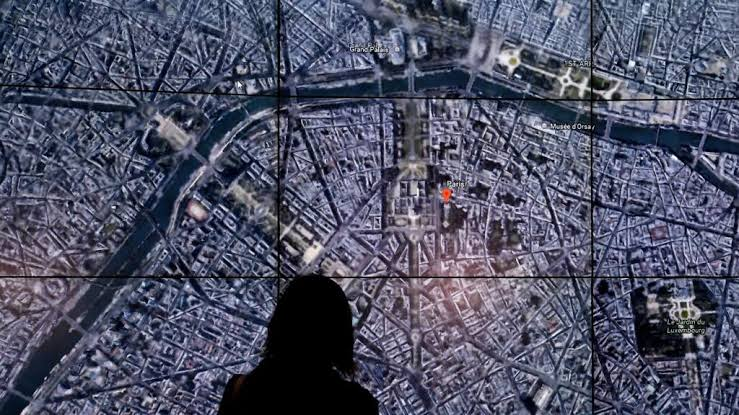
California (GNP): Google has introduced a new feature for Google Earth that allows users to generate AI-created visualisations directly on top of the platform’s satellite imagery, a move that has drawn concern from disinformation researchers and open-source intelligence experts over its potential for misuse.
The “create image” tool, rolled out this week, is built on Google’s Nano Banana 2 image-generation technology and enables users to zoom into any location and produce an AI-generated image within seconds, drawing on Google Earth’s existing satellite, aerial and 3D-mapping data as its foundation.
Google has framed the feature as a way for users to visualise historical scenes, plan real estate projects and explore other creative applications. However, experts who specialise in verifying imagery say the tool risks undermining one of the internet’s most trusted reference resources.
Digital investigations expert Henk Van Ess wrote that Google spent two decades building the standard the world relies on for verification, only to introduce a feature capable of fabricating content on top of it, arguing that a forgery generated this way does not need to be convincing on its own because it inherits the credibility of the authentic map data it is layered onto.
Also Read: Pakistan, Kazakhstan Expand Cooperation in IT & Telecom
That concern was echoed by Brady Africk, a research analyst at the American Enterprise Institute who specialises in satellite imagery analysis, who said the update makes it significantly easier to produce convincing fake satellite images capable of spreading quickly online and misleading the public.
Africk added that as AI-generated fakes of this kind become more common, they risk eroding public trust in satellite imagery more broadly, while complicating the work of journalists and researchers who rely on such imagery for verification and fact-checking.
In response to the criticism, Google said on social media that images produced using the new feature include SynthID digital watermarks, invisible markers embedded in content generated through its AI tools, and noted that users can check for the presence of a SynthID watermark by asking the company’s Gemini chatbot to verify an image.

Managing Editor at Global News Pakistan (GNP), with a Bachelor's degree in International Relations from Riphah International University, graduated with a Gold Medal. Reach out at sabahtareengnp@gmail.com