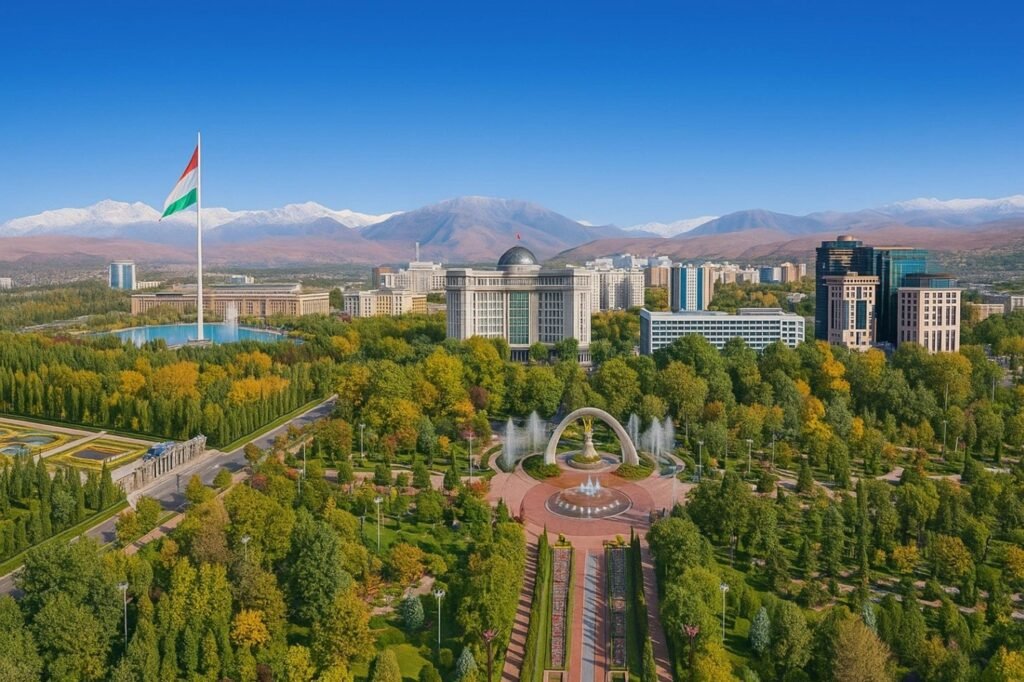
The proclamation of the state independence of the Republic of Tajikistan on September 9, 1991, became one of the most important events in the modern history of the Tajik people.
The modern statehood of the Republic of Tajikistan is the result of a complex historical process that combines elements of ancient state and legal traditions, the experience of various historical states of Central Asia, and modern institutions of a sovereign state. The formation of political culture, administrative mechanisms, and concepts of public authority took place over a long period of civilizational development associated with the history of ancient Iran and Central Asia.
The historical roots of Tajik statehood are associated with such ancient political entities as Bactria, Sogdiana, and Khorezm, as well as with major political formations of antiquity and the Middle Ages, including the Achaemenid and Sasanian Empires and the Samanid state. These states made a significant contribution to the development of administrative governance, legal culture, systems of public authority, and the cultural space of the region.
The Samanid era (9th–10th centuries) holds a particularly important place in the historical memory of the Tajik people. During this period, a powerful state was formed, representing an important stage in the development of Persian-Tajik culture, science, and statehood. It was during this period that state institutions developed, the position of the Persian-Tajik language was strengthened, and a cultural environment emerged that gave the world outstanding scholars and thinkers.
However, subsequent historical processes—including the Mongol conquests, the succession of political dynasties, the incorporation of a significant part of the region into the Russian Empire, and later Soviet national-territorial policies—led to changes in the forms of statehood and the transformation of traditional political institutions.
The Loss and Restoration of Statehood: The Historical Path to Independence
Following the collapse of the Samanid state, the political history of the region entered a new stage characterized by the succession of ruling dynasties, shifts in political centers, and transformations in forms of state organization. The Mongol conquests, the subsequent rule of various dynasties, and, later, the incorporation of a significant part of Central Asia into the Russian Empire had a substantial impact on the development of traditional state institutions.
At the beginning of the 20th century, political processes led to the incorporation of the region into the Soviet system of state organization. The national-territorial delimitation of 1924 established new administrative boundaries and laid the foundations for the future statehood of Tajikistan within the Soviet Union. During the Soviet period, modern administrative structures were established, while education, industry, and social institutions developed significantly. However, the republic’s state sovereignty remained limited within the framework of the union system.
The proclamation of the independence of the Republic of Tajikistan on September 9, 1991, marked the beginning of a new stage in the country’s state development. Independence created an opportunity for the autonomous formation of a political system, constitutional institutions, and an independent foreign policy. At the same time, the process of establishing a sovereign state was accompanied by serious political and socio-economic challenges.
The most difficult challenge was the civil conflict of 1992–1997, which threatened the stability and territorial integrity of the state. Under these circumstances, the primary objectives were to end the armed confrontation, achieve national reconciliation, and establish a stable system of public authority.
The experience of Tajikistan demonstrates that the attainment of independence is not merely a legal act proclaiming sovereignty, but also a long-term process of building effective state institutions, ensuring social cohesion, and strengthening the legal foundations of the state.
It was precisely during this period that the development of political mechanisms capable of preserving statehood and creating conditions for the country’s further development acquired particular significance.
The Role of the President of the Republic of Tajikistan, His Excellency Emomali Rahmon, in Strengthening and Preserving Independence
The central role in the revival, strengthening, and preservation of national statehood belongs to the President of the Republic of Tajikistan, Emomali Rahmon. His activities represent a direct continuation of the historical mission initiated by the great empires of the past and interrupted in the 20th century.
At a critical juncture, the 16th Session of the Supreme Council of the Republic of Tajikistan, held in November 1992, and the election of Emomali Rahmon as Head of State became a decisive turning point. His political leadership became a systemic factor in ending the armed conflict and achieving peace. The culmination of nearly 40 months of negotiations was the signing, on June 27, 1997, in Moscow, of the General Agreement on the Establishment of Peace and National Accord in Tajikistan—a document that, in the words of the President, “truly became for us the beginning of mutual understanding and unity, and the creation of conditions for the peaceful life of the Tajik people. The General Agreement … is a document symbolizing the salvation of the nation and the state” (Speech by the President of the Republic of Tajikistan on the occasion of National Unity Day, June 28, 2019).
Thus, the key role of President Emomali Rahmon consisted in ensuring the physical preservation and survival of the Tajik state, which subsequently became the foundation for the further development of Tajik statehood.
Having consolidated peace, the President of the Republic of Tajikistan focused on building and strengthening new institutions of state power. The transition to a presidential form of government in 1994 was a historic decision that contributed to the country’s political stability and sustainable development. Under his leadership, the national armed forces and border troops were established, state symbols were adopted, and the constitutional order was consolidated. The President’s policy was aimed at consolidating society around the idea of a unified Tajik nation, thereby contributing to overcoming regional divisions and strengthening national unity.
Historical Memory as a Factor in the Formation of Modern Statehood
One of the important directions in the development of modern Tajik statehood is the use of historical memory as a factor in shaping national identity and strengthening social unity. In this context, historical heritage serves not only as an object of studying the past, but also as an element of contemporary cultural and state policy.
The reference to the heritage of the Achaemenids, Sasanids, and Samanids is associated with an understanding of statehood as a long-term historical process encompassing the development of political institutions, legal concepts, and cultural values. This approach makes it possible to view the modern Republic of Tajikistan within the broader historical tradition of Central Asia.
A particularly important place in this historical framework is occupied by the legacy of the Samanid state. It is regarded as a significant period in the development of statehood, during which the language, literature, education, science, and administrative culture experienced substantial development. The promotion of this heritage has become one of the important directions in strengthening historical memory and cultural identity.
Contemporary policy concerning historical memory includes the preservation of cultural heritage, the development of research in the humanities, support for scholarly projects, and the promotion of the contributions made by prominent representatives of Tajik culture to world civilization.
At the same time, within the framework of the modern state, historical memory acquires not only cultural but also important socially cohesive significance. It contributes to shaping an understanding of the continuity of historical development, strengthening a sense of belonging to a common state space, and enhancing the importance of civic responsibility.
Thus, historical memory constitutes one of the instruments for shaping modern statehood, linking the cultural heritage of the past with the challenges and objectives of developing a sovereign state in the 21st century.
The International Activities of the Republic of Tajikistan as a Continuation of the State’s Historical and Humanitarian Mission
Modern statehood is manifested not only in a state’s ability to ensure internal stability and the development of national institutions, but also in its active participation in addressing international challenges. For the Republic of Tajikistan, foreign policy has become one of the most important avenues for exercising state sovereignty and strengthening its international legal personality.
Following the achievement of independence, the Republic consistently integrated into the system of international relations, became a member of the United Nations and other international organizations, established its own diplomatic service, and developed priority areas of foreign policy.
A distinctive feature of Tajikistan’s contemporary international engagement is the promotion of initiatives that address not only national interests but also global challenges. Particular importance is attached to issues related to water resources, climate change, sustainable development, peacebuilding, and international cooperation.
Water Diplomacy of the Republic of Tajikistan and Global Environmental Responsibility
One of the most significant areas of the Republic of Tajikistan’s international activities has been water diplomacy. The country’s geographical characteristics, substantial freshwater resources, and the importance of Central Asia’s mountain ecosystems have shaped its active position on the rational use and conservation of water resources.
Since the beginning of the 21st century, at the initiative of the Republic of Tajikistan, the United Nations General Assembly has adopted a number of important resolutions aimed at promoting international cooperation in the field of water resources and sustainable development.
These initiatives reflect the Republic of Tajikistan’s efforts to draw the attention of the international community to the interconnectedness of water security, climate change, and sustainable development.
Since 2018, the Dushanbe Water Process has served as an important mechanism for international cooperation, bringing together representatives of states, international organizations, the scientific community, and civil society to develop joint solutions in the field of water resources management.
Water and climate issues are of significance to Tajikistan not only from economic and environmental perspectives, but also from historical and cultural ones. For centuries, the development of Central Asian civilizations has been closely linked to the effective use of water resources, the development of irrigation systems, and the rational interaction between human societies and the natural environment.
Thus, the contemporary water diplomacy of the Republic of Tajikistan can be viewed both as a continuation of the historical tradition of responsible stewardship of natural resources and as the country’s contribution to addressing the global challenges of the 21st century.
Legal Awareness and the Development of Humanitarian Initiatives
Another important dimension of the international activities of the Republic of Tajikistan is the promotion of legal culture, education, and the enhancement of public legal awareness.
Tajikistan’s initiative to proclaim 2027 as the International Year of Legal Awareness reflects the state’s efforts to emphasize the importance of knowledge of law, the rule of law, and civic responsibility in contemporary society.
This initiative is part of a broader understanding of law as a foundation for sustainable development, social justice, and effective public administration. The development of legal culture is regarded as an important condition for strengthening state institutions and ensuring respect for human rights and fundamental freedoms.
Within the humanitarian dimension of these efforts, particular attention is devoted to the historical heritage of ancient civilizations. In this context, the Cyrus Cylinder is of particular interest, as it is regarded in contemporary scholarly and cultural discourse as an important historical artifact reflecting early ideas concerning the relationship between political authority, society, and cultural diversity.
Turning to such historical sources makes it possible to demonstrate the links between the heritage of the past and contemporary principles of international law, humanitarian cooperation, and respect for human dignity.
Initiatives to Strengthen Peace for the Sake of Future Generations
A special place in the foreign policy activities of the Republic of Tajikistan is occupied by the promotion of the idea of long-term peace and international security.
The proposal to proclaim 2027–2036 the International Decade for Strengthening Peace for Future Generations is aimed at promoting international cooperation in conflict prevention, confidence-building, and the development of a culture of peace.
This initiative is based on the understanding that maintaining peace is not only a responsibility of the present generation, but also an obligation toward future generations. Such an approach is consistent with contemporary concepts of sustainable development and the principle of intergenerational responsibility.
Tajikistan’s own experience of moving from internal conflict toward national reconciliation gives this initiative particular practical significance. Peace is understood not merely as the absence of armed confrontation, but also as the outcome of developing mechanisms of dialogue, mutual trust, and legal regulation of social relations.
The heritage of outstanding representatives of Persian-Tajik culture—including Jalal al-Din Rumi, Saadi, Hafez, and other thinkers—has played an important role in shaping humanistic values in the region. Their works developed ideas of justice, tolerance, respect for human dignity, and peaceful coexistence.
Thus, the contemporary international initiatives of the Republic of Tajikistan represent a combination of national experience, historical memory, and the country’s commitment to contributing to the resolution of global challenges.
Promoting the Scientific Heritage: From Avicenna to Contemporary International Projects
One of the directions of the humanitarian policy of modern Tajikistan is the preservation and promotion of the scientific heritage of outstanding thinkers of the past.
A particularly important place is occupied by the legacy of Abu Ali ibn Sina (Avicenna), whose works in medicine, philosophy, and the natural sciences had a profound influence on the development of world science. Avicenna’s legacy is regarded as part of the common heritage of humanity and as an example of the interconnection between science, education, and humanistic values.
The establishment of international mechanisms to support scientific research and the creation of the Abu Ali ibn Sina (Avicenna) Prize in Medicine are aimed at encouraging contemporary scholars and promoting international scientific cooperation.
Reference to the intellectual legacy of Avicenna, Omar Khayyam, and other thinkers underscores the importance of knowledge as a foundation for the development of society. This demonstrates the connection between historical experience and the contemporary objectives of the state in advancing science, education, and innovation.
Consequently, the international activities of the Republic of Tajikistan represent not only diplomatic practice, but also a means of expressing the state’s historical and cultural identity, grounded in the values of knowledge, peace, law, and cooperation.
Conclusion
Thus, the modern statehood of the Republic of Tajikistan is the result of a long historical and legal development in which the legacy of a centuries-old state and political tradition, the processes of institutional development during the period of independence, and the state’s active participation in contemporary international relations are closely intertwined.
The independence of the Republic of Tajikistan, proclaimed in 1991, was not merely the outcome of the political processes of the late 20th century, but also marked a new stage in the development of national statehood. It created an opportunity to establish an independent system of public authority, develop the constitutional order, and ensure the country’s full-fledged participation in international relations.
Also Read: Emomali Rahmon: Leader of the Nation and Architect of Modern Tajikistan
One of the most important factors in preserving and strengthening independence was the achievement of national reconciliation following the period of civil conflict. The establishment of stable state institutions, the adoption of the Constitution, the development of the system of public administration, and the strengthening of the legal foundations of the state became key directions in the construction of modern Tajik statehood.
The institution of the presidency played a significant role in the formation of the modern political system of the Republic of Tajikistan. Under the conditions of a complex transitional period, the establishment of stable mechanisms of state authority made it possible to restore stability, strengthen sovereignty, and ensure the country’s further institutional development.
A decisive role in preserving and strengthening this sovereignty belongs to the Founder of Peace and National Unity, Leader of the Nation, President of the Republic of Tajikistan, His Excellency Emomali Rahmon, who has journeyed from saving the state during the years of civil war to building its institutions and revitalizing national identity. He became a key figure in ensuring continuity between the great historical heritage of Tajik statehood and its present-day development.
An important element of modern statehood is also the reference to historical memory. The heritage of the Achaemenids, Sasanids, and Samanids is regarded as an integral part of the cultural and historical experience that contributes to the formation of national identity and an awareness of the continuity of state development.
At the same time, the modern Republic of Tajikistan pursues an active foreign policy aimed at addressing global challenges. Initiatives in the areas of water diplomacy, sustainable development, legal awareness, peacebuilding, and scientific cooperation demonstrate the state’s commitment to contributing to the international agenda and addressing issues of common concern to humanity.
Historical continuity and national responsibility are among the most important foundations of modern Tajik statehood, enabling independent Tajikistan to be viewed as an active participant in regional and global processes of the 21st century.
The views presented in this article are the author’s own and do not necessarily reflect the views of Global News Pakistan
Mahmadullozoda Nurullo Rahmatullo
The Author is a Doctor of Law and the Deputy Director for Science and Education at the National Academy of Sciences of Tajikistan's Institute for the Study of the Problems of Asian and European States.