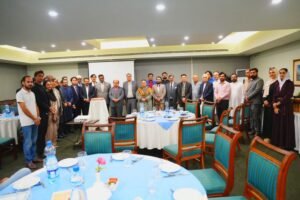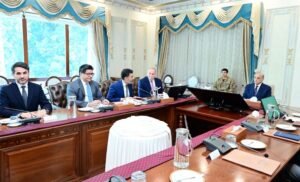
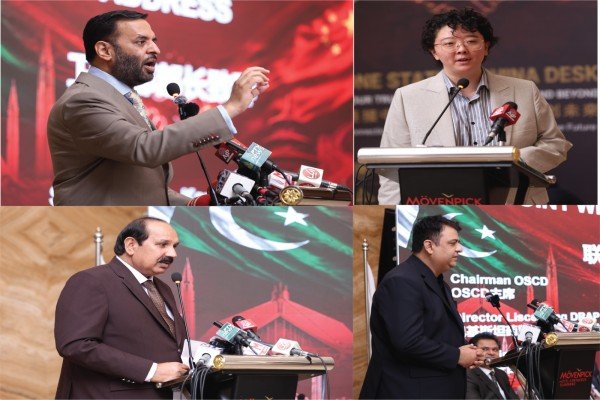
Islamabad (GNP): A high-level ceremony was held in Islamabad marking the signing of 10 strategic Memoranda of Understanding (MoUs) between Pakistani and Chinese pharmaceutical companies, reflecting the growing momentum of Pakistan-China cooperation in the healthcare and pharmaceutical sectors. The event was organized in collaboration with the Ministry of National Health Services, Regulations and Coordination, the Drug Regulatory Authority of Pakistan (DRAP), and the One Station China Desk (OSCD).
The ceremony marked a major milestone in Pakistan’s efforts to attract foreign direct investment, reduce dependence on imported pharmaceutical raw materials, strengthen local manufacturing capacity, and enhance healthcare security through strategic international partnerships.
Federal Minister for National Health Services Syed Mustafa Kamal, who witnessed the signing ceremony, underscored the strategic importance of the initiative. He said the government is working to ensure local vaccine manufacturing capacity before 2030 so that Pakistan can reduce its dependence on external supply chains. Referring to the COVID-19 pandemic, the Minister noted that vaccines played a critical role in reducing mortality and that future advances, including vaccines for diseases such as cancer, may transform healthcare outcomes even further.
Minister Kamal announced that for the first time in Pakistan’s history, a comprehensive National Vaccine Policy has been developed and approved by the federal cabinet. The National Institute of Health (NIH) is also being further activated to support vaccine-related development and manufacturing. He added that Pakistan is making efforts to achieve WHO Level 3 certification within the coming months, a milestone that would significantly expand pharmaceutical export access from the current 51 countries to more than 150 international markets.
The Minister also highlighted broader national healthcare challenges. Pakistan is currently the world’s fifth most populous country, adding approximately 6.2 million people annually to its population, placing enormous pressure on health, education, infrastructure, and employment systems. He further noted that approximately 11,000 mothers die each year due to pregnancy and childbirth-related complications, calling it a serious national concern requiring urgent preventive healthcare reforms.
Parliamentary Secretary for Commerce Dr. Zulfiqar Ali Bhatti, who personally played an active role in facilitating investor engagement and helping bring this Chinese pharmaceutical investment initiative to Pakistan, said the development reflects the government’s practical policy of strengthening industrial growth through strategic partnerships and international investment.
Moreover, he noted that after a careful review of Pakistan’s pharmaceutical trade structure, it became evident that dependence on imported medicines and pharmaceutical raw materials was placing sustained pressure on foreign exchange reserves and increasing the national import bill. The objective, he said, was to promote local manufacturing, attract investment, facilitate technology transfer, and build a stronger pharmaceutical ecosystem that supports both healthcare security and economic growth. Dr. Bhatti congratulated all participating institutions, investors, and stakeholders on the successful signing of the agreements.
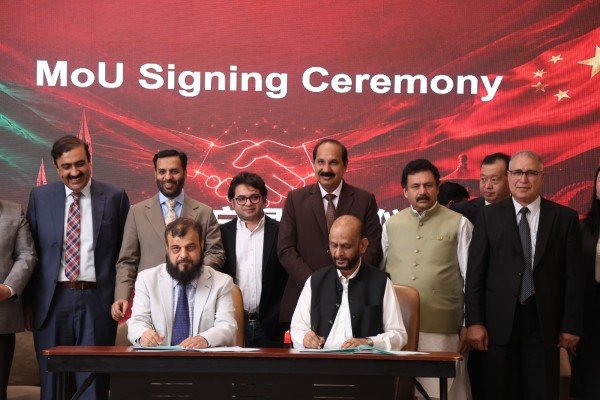
A key highlight of the ceremony was the signing of agreements between several major companies from both countries. Unichem Pharmaceuticals Pakistan and China’s Xinxu Group entered into a significant investment partnership valued at approximately Rs. 10 billion, under which technology transfer has formally commenced for local pharmaceutical manufacturing.
The project will enable domestic production of critical pharmaceutical raw materials, including Omeprazole API, around 95 percent of which has historically been imported into Pakistan, significantly reducing import dependence, conserving foreign exchange, and improving domestic pharmaceutical supply resilience. Another major agreement was signed between Lucky Core Group and Chinese pharmaceutical partners, further expanding industrial cooperation between the two countries.
Also Read: Ikram Sehgal Signs Youth Empowerment MoU with CITADEL
The MoUs were formally signed by Mr. Hamid, CEO of Unichem Pharmaceuticals Pakistan; Mr. Hou, CEO of Xinxu Group; Ms. Gong Yun (Alia), Head of Healthcare Department from the Chinese side; and Mr. Saboor representing Lucky Core Group. Senior representatives from the One Station China Desk, Chinese pharmaceutical companies, and Pakistani industry stakeholders also addressed the ceremony, highlighting Pakistan’s growing pharmaceutical potential and the investment opportunities it presents.
The event concluded with a press conference at which officials reaffirmed Pakistan’s commitment to facilitating pharmaceutical investment, technology transfer, local manufacturing, and stronger healthcare preparedness. Officials described the initiative as the beginning of a new chapter in Pakistan’s pharmaceutical industrial growth, foreign investment attraction, and healthcare self-reliance.

Sohail Majeed is a Special Correspondent at The Diplomatic Insight. He has twelve plus years of experience in journalism & reporting. He covers International Affairs, Diplomacy, UN, Sports, Climate Change, Economy, Technology, and Health.