
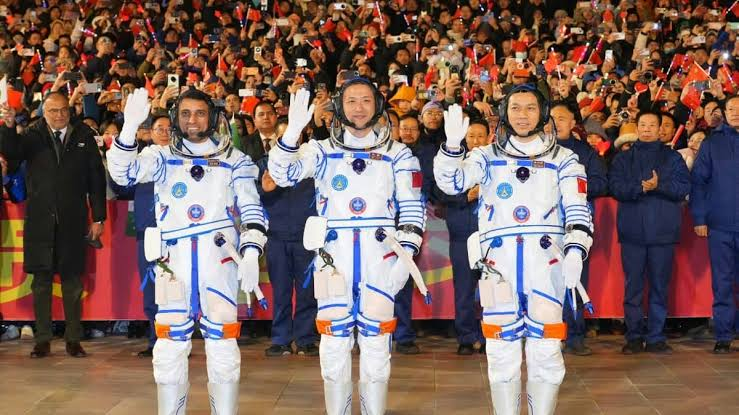
Jiuquan (GNP): China has named the three astronauts for its Shenzhou-24 crewed mission to the China Space Station. It also announced that one astronaut already in orbit will stay a full year, which would be the country’s longest spaceflight.
The China Manned Space Agency (CMSA) revealed both plans at a press conference on Tuesday at the Jiuquan Satellite Launch Center in northwest China.
Spokesperson Zhang Jingbo said Shenzhou-24 is scheduled to launch at 8:18 a.m. Beijing time on Wednesday.
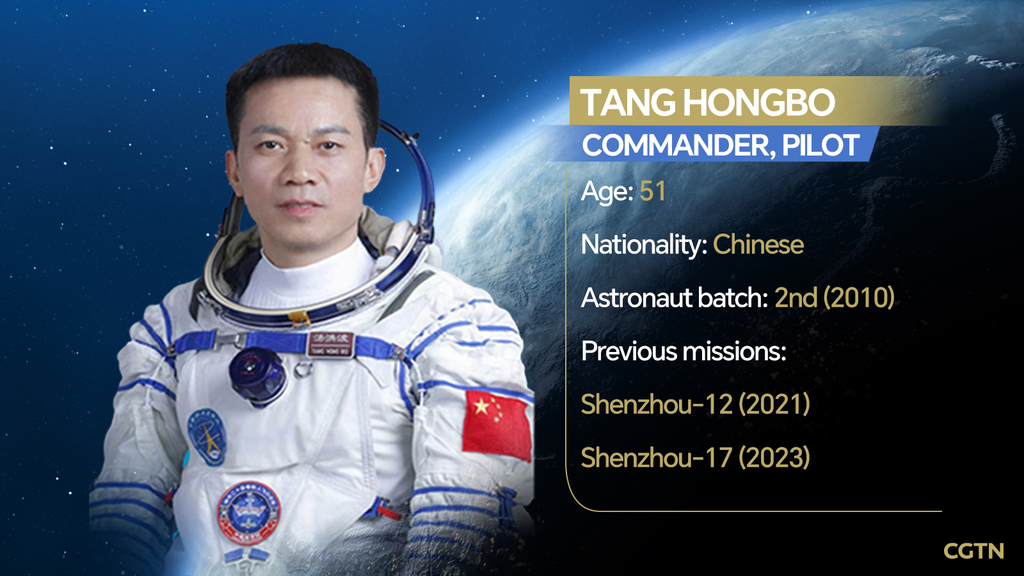
Tang Hongbo will command the mission and serve as pilot. Born in October 1975, he joined China’s second group of astronauts in May 2010 and has flown on Shenzhou-12 in June 2021 and Shenzhou-17 in October 2023.
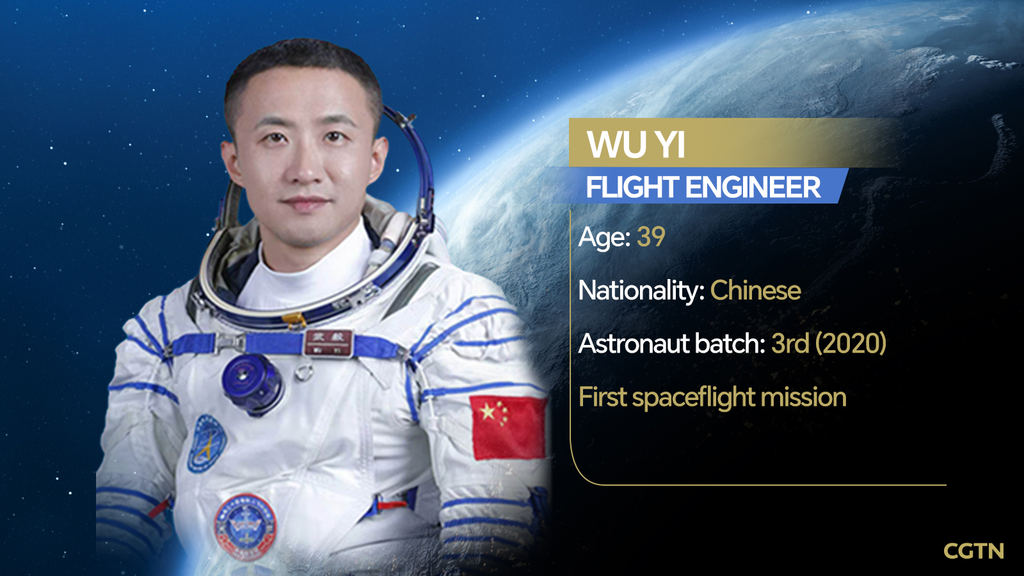
Wu Yi will be the flight engineer on what will be his first spaceflight. Born in October 1987, he was selected in September 2020 as part of China’s third group of astronauts.
Also Read: Shenzhou-24 Lifts Off Carrying Pakistan’s First Astronaut
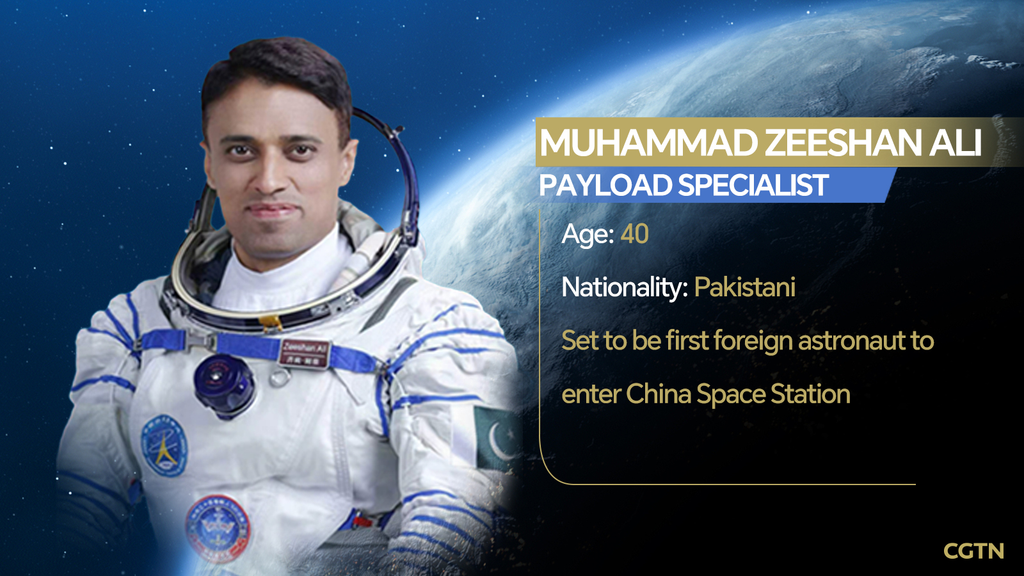
Pakistani astronaut Muhammad Zeeshan Ali completes the crew as a payload specialist. Born in August 1986, he was selected in April 2026 as one of the first group of foreign astronauts in China’s manned space program, and he will be the first foreign astronaut to enter the station.
Also Read: Ahsan Iqbal Hails Pakistan’s First Astronaut Mission, China Ties
The year-long stay belongs to Zhu Yangzhu, a member of the Shenzhou-23 crew. Zhu will remain aboard through the Shenzhou-24 rotation, and both missions are scheduled to last six months each.
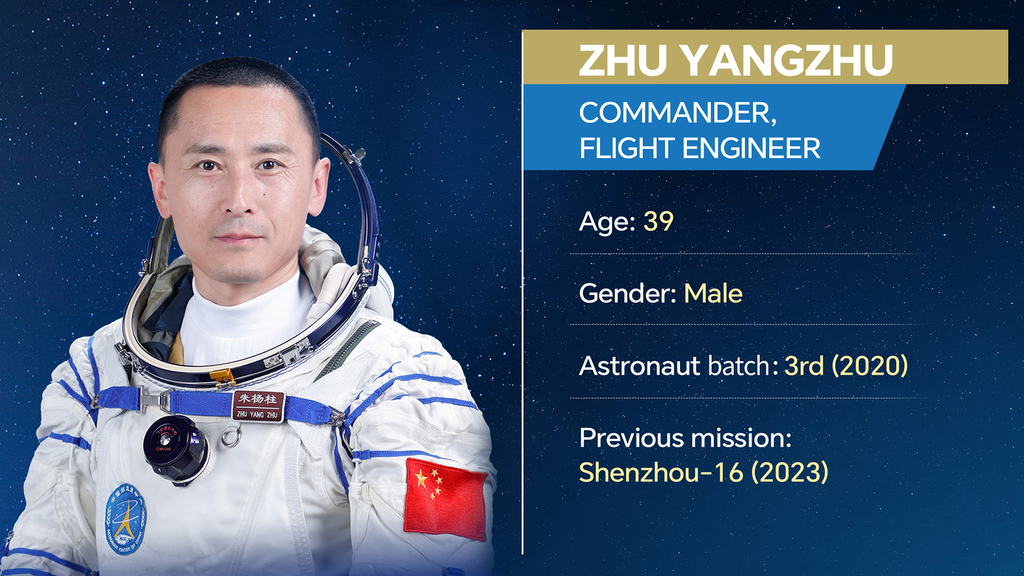
Zhang said the plan has two goals. One is to build a new human space research system that studies how the body adapts to spaceflight. The other is to check systematically whether the station can support an astronaut’s health, work and daily life over a long period.
The physical demands are significant. Bone loss in microgravity runs at 1% to 2% per month, and astronauts can still lose notable muscle mass despite roughly two hours of daily exercise. A continuous year removes the reset that comes when crews return to Earth between flights. Researchers can then see whether these changes level off, worsen or trigger new forms of adaptation.
The station’s life support system is the technical base for the plan. As of September, the regenerative system had run for more than five years without a shutdown. Official data show 100% oxygen regeneration and a water closure rate above 96%, which cuts resupply needs by more than 6 tonnes a year.
Earlier operations were validated mostly with multi-person crews on six-month rotations. The year-long stay will run the same hardware with a single astronaut for 365 days without interruption.
Mental health will be tested too. The Shenzhou-23 crew has completed emotional-state tests using virtual reality (VR) headsets and electroencephalogram (EEG) monitoring, which set a psychological baseline for the longer mission.
The plan reflects two decades of steady progress. Yang Liwei, China’s first person in space, spent 21 hours and 23 minutes in orbit on Shenzhou-5 in 2003. Shenzhou-11 stretched a crew’s stay to 33 days in 2016, and Shenzhou-12 reached 93 days in 2021.
Six-month rotations became routine from Shenzhou-13 onward. Shenzhou-20 set a single-mission record of 204 days, and Shenzhou-21 extended it to 210 days.
The world record for one continuous spaceflight is still 437 days, set by Russian cosmonaut Valery Polyakov aboard Mir between 1994 and 1995. Few people have gone near that mark, so a year in orbit would add meaningful data to a very small global pool.
Zhang Jingbo said, “This is by no means a simple accumulation of two six-month missions.”

Managing Editor at Global News Pakistan (GNP), with a Bachelor's degree in International Relations from Riphah International University, graduated with a Gold Medal. Reach out at sabahtareengnp@gmail.com