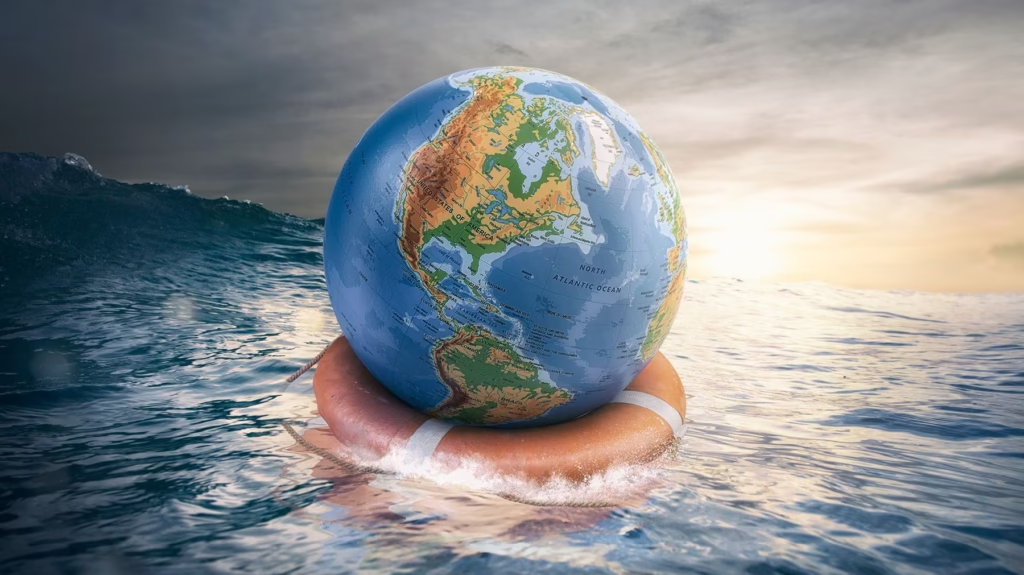
For decades, the traditional understanding of maritime security has been dominated by a focus on naval capabilities, border patrols, and the protection of international shipping lanes. While these elements remain undeniably vital, the escalating realities of climate change invite us to broaden our perspective in a highly constructive way. We are standing at a pivotal juncture where the health of our oceans, the efficacy of our environmental governance, and the well-being of our coastal communities are intrinsically linked to our broader national security. Rather than viewing the shifting climate solely as a vulnerability or a source of inevitable friction, we have a unique opportunity to construct a more resilient, inclusive, and forward-looking framework for maritime stability. By focusing on positive, community-centered environmental governance, we can empower coastal populations to become the most effective and natural stewards of our blue frontiers.
The nexus between climate change and maritime security is most visible along the shoreline, where rising sea levels, changing ocean temperatures, and unpredictable weather patterns directly impact daily life. In this dynamic environment, ecological changes can challenge traditional livelihoods, particularly fishing and localized aquaculture. However, this is precisely where collaborative environmental governance can make a transformative difference. Effective governance in this context is not about top-down restriction; it is about partnership. When state institutions, researchers, and local communities work together in a neutral, cooperative spirit to manage marine resources sustainably, they build a robust buffer against instability. This shared approach shifts the narrative toward adaptive resilience, demonstrating that proactive, inclusive planning can successfully navigate the complexities of ecological shifts.
At the heart of this resilient framework are the coastal communities themselves. For generations, these populations have possessed a profound, intimate understanding of the sea. They are the daily observers of the tides, the marine life, and the subtle changes in the coastal ecosystem. By seamlessly integrating this grassroots knowledge into formal environmental governance structures, policymakers can design more effective, culturally resonant strategies. When local fishers and coastal residents are given a genuine, constructive voice in managing their shared resources, they transition from being passive observers to active partners in regional security. A community that feels invested in and uplifted by its environment is naturally inclined to safeguard it, effectively serving as the eyes, ears, and guardians of the coastal frontier.
A crucial component of this empowerment is the preservation and enhancement of food security. The oceans are a vital source of nutrition, and the stability of coastal populations is deeply tied to their ability to harvest these resources reliably and sustainably. Forward-thinking environmental governance addresses this by promoting sustainable fishing practices, protecting vital ecological nurseries like mangrove forests, and working harmoniously to prevent the over exploitation of marine life. When a coastal community is economically secure and its food sources are well-managed, social cohesion thrives. In this light, ensuring the ecological health of our waters is a direct, positive investment in the socio-economic stability of the region, which organically reinforces broader security and peacebuilding objectives.
Furthermore, cultivating this resilience requires acknowledging and elevating the diverse roles within these communities, particularly the vital agency of women. While sometimes less visible in the physical harvesting of marine resources, women frequently lead the post-harvest processing chains, manage household food security, and hold communities together during times of environmental adaptation. A truly positive governance model recognizes and amplifies this quiet leadership. By providing women with greater access to climate-smart training, collaborative resource management programs, and a seat at the local decision-making table, we weave a much stronger social fabric. Empowered women foster stable families and cohesive neighbourhoods, which are the fundamental building blocks of a secure society.
Looking ahead, the harmonious integration of climate adaptation, cooperative environmental governance, and community empowerment lays the foundation for a thriving blue economy. This economic model champions the sustainable use of ocean resources to generate inclusive economic growth, improved livelihoods, and the restoration of ocean ecosystems. It is a unifying, optimistic vision that brings together conservationists, security strategists, economic planners, and local citizens around a shared, constructive goal. By investing in eco-tourism, sustainable aquaculture, and protective coastal infrastructure, we can create new economic avenues that uplift populations without depleting the natural capital they depend upon.
Also Read: Uzbekistan’s Child Protection Reform: A New Legal Response to Digital Threats
Ultimately, the security of our maritime borders is inseparable from the prosperity and resilience of the people who live along them. The modern challenges posed by a changing climate are significant, but they invite a deeply positive evolution in how we govern and protect our spaces. By embracing a collaborative, neutral, and community-driven approach to environmental governance, we can turn ecological pressures into powerful catalysts for sustainable development. A thriving, empowered coastal community, secure in its food systems and united in its purpose, is the greatest asset any region can possess. As we navigate the complex waters of the future, our strongest defense will undoubtedly be the resilience, agency, and prosperity of our coastal citizens.
Syed Haider Ali is a PhD scholar in department of Political Science at University of Gujrat and a Non-Resident Fellow at Maritime Centre of Excellence, Lahore. His area of research is climate change, food security, water security and climate-induced migration in Pakistan.