The United States held its midterm elections on November 3, 2026. These elections are important because they determine which political party controls the two chambers of the US Congress: the Senate and the House of Representatives.
Midterm elections take place halfway through a president’s four-year term, allowing voters to elect members of Congress and influence the country’s legislative direction. In the 2026 elections, the Democratic Party won control of both chambers, changing the balance of power in Washington.
What Are US Midterm Elections?
Midterm elections are elections held halfway through a US president’s four-year term. They allow American citizens to elect members of Congress without choosing a new president.
The US Congress is the legislative branch of the federal government. It consists of two chambers: the Senate and the House of Representatives. Both chambers play an important role in making laws, approving government spending and overseeing federal government activities.
During midterm elections, voters choose all members of the House of Representatives and approximately one-third of the Senate. Elections for governors, state legislatures and local government positions may also take place during the same period.
The results determine which political party holds the majority in each chamber of Congress for the next two years.
How Often Do Midterm Elections Take Place?
US congressional elections take place every two years. However, presidential elections take place every four years.
Midterm elections are held between two presidential elections, usually two years after the previous presidential election. For example, the United States held its presidential election in 2024, followed by midterm elections in 2026. The next presidential election is scheduled for 2028.
The election schedule follows this pattern:
- 2024: Presidential and congressional elections.
- 2026: Midterm elections.
- 2028: Presidential and congressional elections.
- 2030: Midterm elections.
It is important to understand that the 2024 elections were not midterm elections. They were presidential-year elections in which voters also elected members of Congress. The 2026 elections were the midterm elections held halfway through the presidential term.
Why Are Midterm Elections Important?
Midterm elections are important because they can change which political party controls Congress. This directly affects the legislative process and the relationship between Congress and the president.
The US Congress has the authority to introduce, discuss and pass federal laws. It also plays a major role in approving the national budget, deciding government spending and examining the activities of the federal administration.
When the president’s political party controls both chambers, the administration may find it easier to gain support for its proposed legislation. However, when the opposing party controls one or both chambers, proposed laws may face greater challenges in Congress.
Midterm elections also give voters an opportunity to express their views about the government’s performance by choosing new representatives or re-electing existing ones.
The results can therefore influence national policies, government investigations, budget decisions and political discussions until the next congressional elections.
How Many Seats Are in the US Senate?
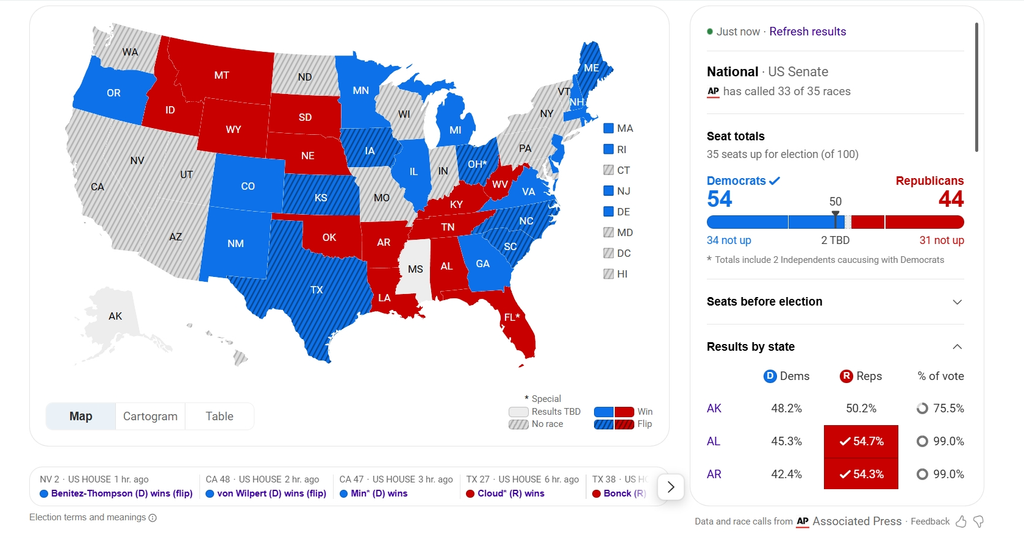
The US Senate has 100 seats, with each of the 50 states represented by two senators. Regardless of population, every state receives equal representation in the Senate.
Senators serve six-year terms. Unlike members of the House of Representatives, all senators are not elected at the same time. Their terms are arranged in three groups, with approximately one-third of the Senate seats contested every two years.
In the 2024 congressional elections, 34 Senate seats were regularly scheduled for election, alongside special elections. In 2026, 35 Senate seats were scheduled to be contested, including regular and special elections.
This system allows the Senate to maintain continuity while giving voters regular opportunities to choose their representatives.
How Many Seats Are in the US House of Representatives?
The US House of Representatives has 435 voting seats. Its members are called representatives or congressmen and congresswomen.
ALSO READ: The Silent Pandemic: How Loneliness Is Affecting Us
Unlike senators, members of the House serve two-year terms. Therefore, all 435 voting seats are contested during every congressional election, including presidential and midterm election years.
The number of representatives allocated to each state depends on its population. States with larger populations receive more seats, while states with smaller populations receive fewer. However, every state is guaranteed at least one representative.
A political party generally needs at least 218 seats to secure a majority in the 435-member House. The party holding the majority has greater influence over the chamber’s leadership, committees and legislative decisions.
How Many Seats Did Republicans Win in the 2024 Elections?
The US congressional elections took place on November 5, 2024, alongside the presidential election. During this election cycle, the Republican Party secured control of both chambers of Congress.
In the Senate, Republicans won 53 seats, while Democrats held 47 seats, including two independent senators who caucused with them.
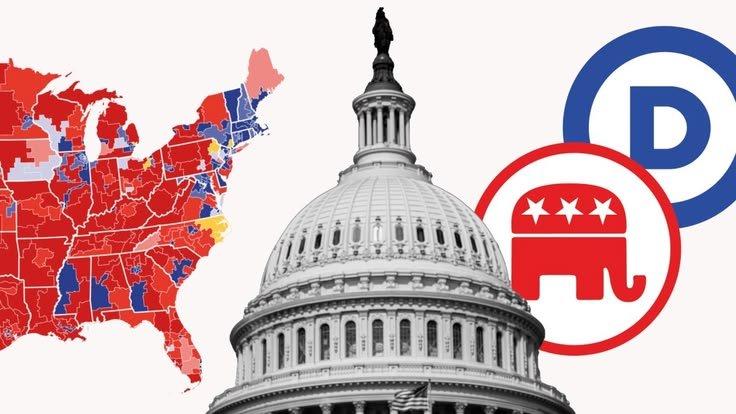
In the House of Representatives, Republicans won 220 seats, compared with 215 seats secured by Democrats. These results allowed Republicans to maintain their majority in the House and gain control of the Senate.
The 2024 results established Republican control of both chambers before the 2026 midterm elections.
| Chamber | Republicans | Democrats and Democratic-aligned independents |
|---|---|---|
| Senate | 53 | 47 |
| House of Representatives | 220 | 215 |
Who Won the US Midterm Elections in 2026?
The 2026 US midterm elections were held on November 3. According to election results reported by the Associated Press on November 4, the Democratic Party won control of both the Senate and the House of Representatives.
In the Senate, Democrats gained several seats previously held by Republicans. Their victories included important races in Texas, South Carolina, North Carolina, Kansas, Iowa, Ohio and Maine. These results allowed Democrats to regain control of the chamber after two years of Republican leadership.
In the House of Representatives, Democrats also secured a majority, taking control of the chamber from Republicans. This means that the Democratic Party will hold the majority in both chambers of Congress during the next congressional term.
The change is significant because Republicans had controlled both chambers following the 2024 elections. The 2026 results therefore changed the balance of power in Congress for the remaining two years of President Donald Trump’s term.
The Associated Press reported that Democrats had won control of both chambers. However, individual election counts and certification processes may continue after Election Day, so exact seat totals should be distinguished from the overall result of which party won control.
US midterm elections take place every two years, halfway through a president’s four-year term. During these elections, all 435 voting seats in the House of Representatives and approximately one-third of the 100 Senate seats are contested.
These elections are important because they determine which political party controls Congress and influences the country’s legislative decisions. In the 2024 elections, Republicans won 53 Senate seats and 220 House seats, gaining control of both chambers.
However, the results changed in the 2026 midterm elections, when Democrats regained control of both the Senate and the House of Representatives. This change established a new balance of power in the US Congress for the next two years.

I am Areesha, a 3rd-year International Relations student with a strong academic focus on Foreign Policy, International Law, History of International Relations, Non-State Actors, and Diplomacy & Statecraft. With a diverse internship background including HESCO, ISPR, and a current Research and Media Newsletter internship focused on Climate and Economy, I bring a unique blend of analytical thinking, research skills, and media understanding. I am passionate about translating complex global affairs into engaging, reader-friendly, and SEO-optimized content. My academic training in IR has equipped me with excellent research, critical analysis, and structured writing skills, which I now aim to apply in the field of SEO writing and digital content creation. Seeking an opportunity as an SEO Writer Intern where I can contribute with well-researched, impactful, and search-optimized content.