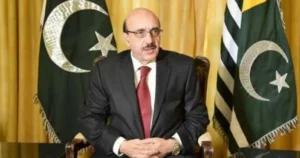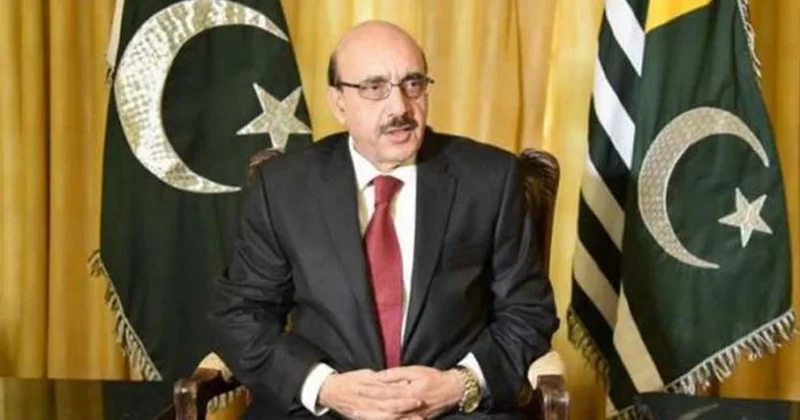
Rawalpindi (GNP): Sardar Masood Khan, a former Pakistani ambassador to the United States, China and the United Nations and a past President of Azad Jammu and Kashmir, said that South Asia cannot enjoy lasting stability while the Jammu and Kashmir dispute remains unresolved and the Kashmiri people are denied their right to self-determination.
Khan was speaking to students and teachers at Rawalpindi Law College, where he gave a detailed lecture covering the historical, political and legal aspects of the issue. He opened by commending the college for its long record in legal education, praising its management and faculty, and noting the success of alumni now working in the judiciary, bar councils and other legal bodies.
Khan traced the roots of the conflict to the 1947 partition of British India. Under the Indian Independence Act, he said, princely states were to join either India or Pakistan, with geographic proximity and the religious makeup of their populations as guiding factors. He noted that the Muslim Conference, which spoke for the people of Jammu and Kashmir, passed a resolution on July 19, 1947 favouring accession to Pakistan.
He went on to describe the events that followed, including the state’s accession to India and the developments of October 1947. He also spoke about the Jammu massacre, which he called one of the worst tragedies in the region’s history, and about the displacement and abduction of thousands of Muslims. These events, he argued, remain a vital yet poorly understood chapter of Kashmir’s past, especially for young people.
Khan said the right of Kashmiris to self-determination gained recognition when the UN Security Council took up the dispute. He pointed to India’s pledge to hold a plebiscite and insisted that the people of the territory must be given the chance to decide their own political future.
Turning to events after 2019, he spoke of restrictions, arrests, enforced disappearances and the use of pellet guns on civilians in Indian-administered Jammu and Kashmir. He urged students to see the dispute not only as a political quarrel but also as a matter of humanitarian concern and international law.
On the May 2025 military confrontation between India and Pakistan, Khan cited a joint statement by five UN Special Rapporteurs which, by his account, questioned the legality of India’s actions and its claim of self-defence. He also cautioned that the danger of conventional conflict persists, as does what he described as proxy warfare directed at Pakistan.
Also read: 8th Global Ambassador Awards Honor Ambassadors and Global Leaders in Islamabad
In closing, Khan encouraged students to study Kashmir’s history, international law and regional security more closely. He said South Asia’s future depends on a peaceful and just settlement of the Kashmir issue, and called on young people to embrace their duty to humanity, justice and peace.

Sohail Majeed is a Special Correspondent at The Diplomatic Insight. He has twelve plus years of experience in journalism & reporting. He covers International Affairs, Diplomacy, UN, Sports, Climate Change, Economy, Technology, and Health.