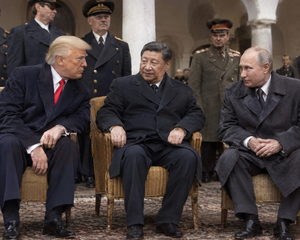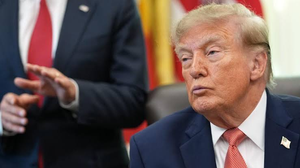
Shenzhen (GNP): The fall of former Nvidia CEO Jensen Huang is shadowing this week’s meeting between US President Donald Trump and Chinese President Xi Jinping. What began as a personal scandal has become a new flashpoint in an already fragile US-China relationship.
The controversy centers on Huang’s affair with Chinese businesswoman Alice Huang. US intelligence reports claim she had ties to Beijing’s intelligence apparatus, in particular the Ministry of State Security, China’s main civilian spy agency. The claim remains unproven, but it has already reopened the debate in Washington over exports of advanced chips to China.
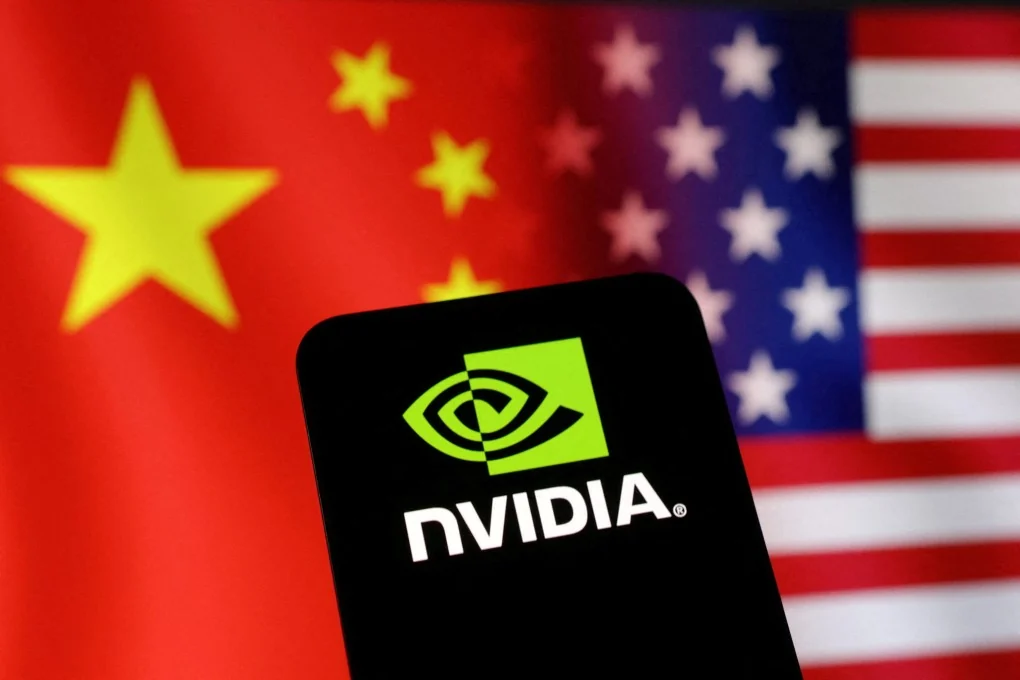
That debate carries weight because advanced chips are essential for AI, supercomputing and military technology, and have been a key battleground in the rivalry between the two powers. Chinese officials are worried the scandal could strengthen voices in Washington arguing for tighter limits on Chinese access to cutting-edge American technology.
The timing adds to those concerns. This week, the Trump administration introduced new export restrictions on Chinese firms that access advanced US chips in third countries such as Malaysia, Thailand and Brazil. These firms typically rent computing power in overseas data centers to train their AI models. Some of them, including the one Alice Huang worked for, are accused of smuggling chips to China, which they deny.
Beijing has called the new rules “economic coercion,” and the remark came on the eve of Trump’s arrival in Shenzhen. A dispute that had appeared to be a sideshow now risks becoming a much bigger problem.
Pressure is also building in the US Congress, which Democrats will control from January. Democrat Ted Lieu said last Wednesday that the Trump administration had been “1,000%” too deferential to Nvidia, putting national security at risk. Fellow Democrat Zoe Lofgren suggested Congress would now be more likely to restrict AI chip sales to China.
This sits uneasily with the administration’s own recent approach. For the past year, Trump and Xi have been seeking to stabilize relations after a damaging tariff war that nearly brought trade between the two countries to a standstill. Washington’s decision in late 2025 to permit sales of advanced Nvidia H200 chips to China was widely seen as a sign that both sides were looking for areas of cooperation, even as competition intensified.
That move was rare, given that Washington had spent years trying to limit China’s access to the most advanced chips. Many in the US view such chips as a national security issue, arguing they could strengthen China’s military and surveillance capabilities. Huang rejects that claim and had advocated lifting export bans, while Beijing argues the restrictions are an attempt to contain its rise.
History explains why Beijing is uneasy. Analysts in China see echoes of the 2023 incident in which a suspected surveillance balloon drifted over the US before an American fighter jet shot it down. Beijing insisted it was a civilian weather airship that had strayed off course, but a planned trip by then Secretary of State Antony Blinken was cancelled and communication between the two governments deteriorated sharply.
Chinese state media has drawn a direct comparison with the Nvidia affair. It argued that the balloon episode alarmed American politicians and public opinion, and that no one on the US side has apologized for the damage it caused. It also asked whether someone was pushing an agenda to stir up confrontation so soon after the detente that followed the leaders’ meeting in September.
Even so, a collapse of the summit looks unlikely, because both leaders have strong reasons to keep talking. China’s economy remains under pressure and is increasingly reliant on exports, and Xi needs trade to keep flowing. This meeting is a key step toward replacing the current trade truce, which is due to expire in January.
Trump, meanwhile, has repeatedly promoted his close relationship with Xi and argued that dialogue is essential to managing competition. He is in his last two years in office and faces an uphill struggle to pass domestic legislation after the midterms, so he may be looking for foreign policy wins. He may also hope for Xi’s help in ending the war in the Middle East.
Also Read: Trump Warns Iran Over Reported Dirty Bomb Plot in Washington
Beijing has staged the summit carefully to show off its technological strength. Shenzhen, home to some of the country’s biggest tech companies, has become a showcase for China’s ambitions in AI and advanced manufacturing.
Beijing also has options if the chip restrictions tighten. One of its most powerful tools is its dominance of key rare earth minerals, which are used in everything from electric vehicles and smartphones to military equipment. Analysts have long warned that technology restrictions can trigger a cycle of retaliation in which each side reaches for its strongest economic leverage. That would push US-China relations from engagement back toward mutual suspicion.
Chinese Foreign Ministry spokesperson Mao Ning said, “The US should stop fabricating so-called espionage narratives.”

Managing Editor at Global News Pakistan (GNP), with a Bachelor's degree in International Relations from Riphah International University, graduated with a Gold Medal. Reach out at sabahtareengnp@gmail.com