Islamabad (GNP): Dr Mahir Binici, the IMF’s Resident Representative in Pakistan, called on the country to move beyond macroeconomic stabilisation and pursue deeper structural reforms, including provincial tax mobilisation, better governance, restructuring of the energy sector and lower business costs. He spoke at the closing plenary, “Where Reforms Matter the Most for Growth,” at the concluding ceremony of the 29th Sustainable Development Conference organised by the Sustainable Development Policy Institute (SDPI).
Binici said Pakistan has already done the hard work of restoring macroeconomic stability, but keeping those gains requires well-sequenced and consistent structural reforms, so that stability turns into higher investment, productivity and exports. He named five priorities: preserving macroeconomic stability, improving resource allocation, reducing the cost of doing business, building a growth-friendly fiscal system and strengthening governance.
Emerging and developing economies like Pakistan, he said, need revenues of at least 15 percent of GDP to sustain a state able to deliver essential services, and Pakistan remains well below that level. Revenue mobilisation should not rest on federal taxation alone, he argued, and provinces should widen their own bases by harmonising General Sales Tax (GST) on services and by taxing agricultural income and property. Public spending should also be redirected toward high-return infrastructure, healthcare, education and targeted social protection, and away from inefficient and preferential activities.
Citing IMF research, he identified governance, national tariff policy and the business environment as the three areas with the greatest potential to unlock growth. High energy costs, taxation and multiple layers of taxes, he said, discourage firms from keeping existing investments, starting new projects and attracting foreign direct investment.
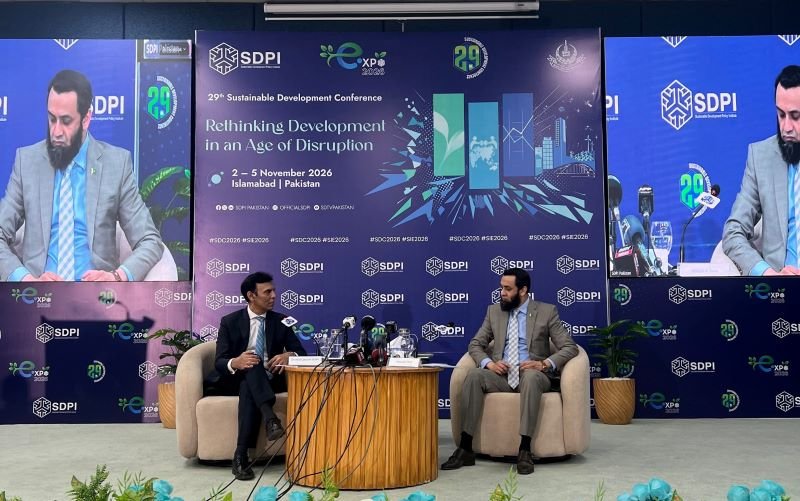
Former federal minister Syed Naveed Qamar warned that consumers are abandoning the inefficient power system through solarisation and other alternatives. People, he said, have started “voting with their pockets,” and policymakers are trying to preserve an outdated system by shifting its costs onto other consumers instead of fixing its structural weaknesses. He saw solar’s growth as a sign of public frustration as well as better technology, and called for urgent deregulation and competition.
He cited the move of industrial consumers from gas to electricity as flawed policy: industries did not shift to the grid as expected, and the change took paying customers away from gas companies and left them with non-paying ones. Circular debt, in effect, moved from the power sector to the gas sector without the underlying inefficiencies being addressed. Deregulation and competition, he said, could deliver faster results than privatisation, which he called slow and painful, and he urged letting more companies enter the power market.
Qamar also warned of renewed instability after the current IMF programme ends in September 2027 unless the government starts preparing a transition to sustainable, growth-oriented policies. With only about 18 months between the programme’s expected end and the next general elections, he said, there is a risk of higher spending and a reversal of economic discipline. He urged the government to use the remaining time to build the necessary institutional and policy framework, to avoid a disorderly adjustment.
He further called for a fundamental overhaul of education, saying policymakers have focused too much on enrolment and out-of-school numbers while neglecting learning outcomes, practical skills and productivity, and that the curriculum still reflects an old model designed to produce clerks.
Dr Emma Xiaoqin Fan, ADB Country Director for Pakistan, said consistent reform implementation, macroeconomic stability and private-sector-led growth are essential to end the country’s recurring boom-and-bust cycle. Since the 1990s, she noted, Pakistan has seen repeated expansions and crises without significant gains in per capita income, poverty reduction or well-being.
The government, she said, must clearly define the public and private sectors’ roles, since growth cannot come from higher government spending alone. Its job is to create an enabling environment, ensure stability and catalyse private investment, not to run businesses. She cited the privatisation of Pakistan International Airlines (PIA) as an example, saying a single transaction cannot transform the economy and steady progress across the whole reform agenda is needed.
Fan also called for civil service reforms to improve accountability, cut unnecessary procedures and paperwork, and foster a more service-oriented approach. Reforms carry short-term political and economic costs, she cautioned, so governments should provide education, training and social protection to workers affected by restructuring.
Sam Waldock, Development Director at the FCDO at the British High Commission Islamabad, said export competitiveness is the key to breaking Pakistan’s growth ceiling. Growth has repeatedly stalled at around 3.8 percent, he said, because imports outpace exports, creating balance-of-payments pressure and sending the country back to the IMF.
He named five priorities for export-led growth: regulatory reform, trade facilitation, trade promotion, market-oriented skills development and better access to foreign exchange for exporters. He pointed to weaknesses in export certification, documentation, branding and reliance on foreign intermediaries, noting that Pakistan’s surgical instruments industry lacks laboratories certified to facilitate medical-device exports to the European Union.
Also read: Dastgir Urges Energy Diversification and Western-Border Engagement
Pernille Ironside, Acting UN Resident Coordinator and UNICEF Country Representative, said reforms should be judged by their tangible impact on people’s lives, not by policy announcements or budget allocations. She called for outcome-based public spending that delivers schools where children actually learn, effective healthcare and inclusive employment opportunities.

Sohail Majeed is a Special Correspondent at The Diplomatic Insight. He has twelve plus years of experience in journalism & reporting. He covers International Affairs, Diplomacy, UN, Sports, Climate Change, Economy, Technology, and Health.