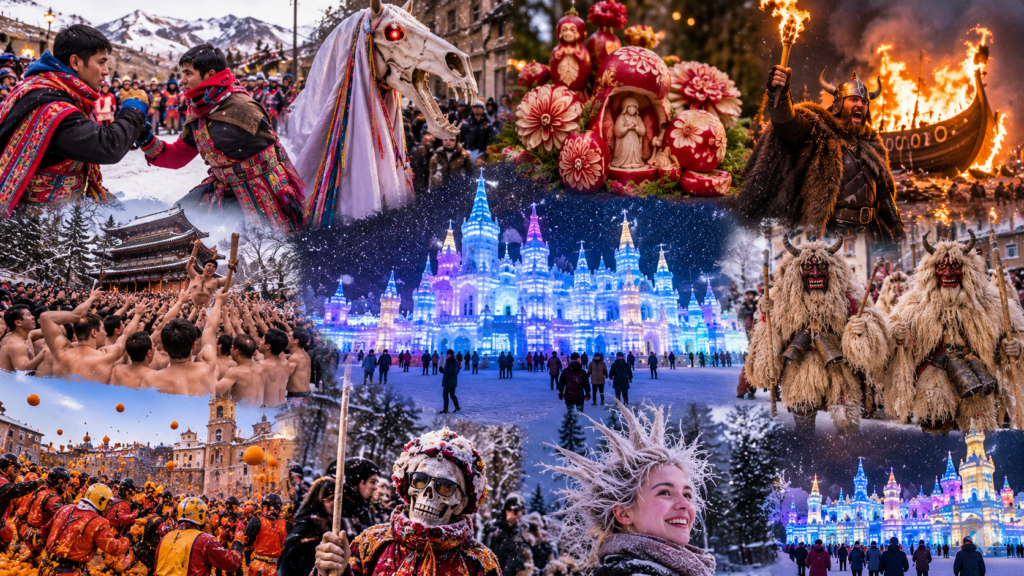
While millions of people are familiar with Christmas, New Year, and Diwali, there are many lesser-known festivals that reveal the fascinating cultures, histories, and customs of different communities. Some welcome the new season with fire, others use food as a symbol of celebration, and a few involve costumes and competitions that would leave visitors speechless.
What makes these celebrations especially interesting is that they are not simply random events. Many have deep historical or cultural meanings that have been passed down through generations. They bring communities together, preserve local identities, and give people a reason to celebrate even during the coldest months of the year.
Here are 10 unusual winter festivals from around the world that you may never have heard of, but will certainly remember.
1. Takanakuy – Peru
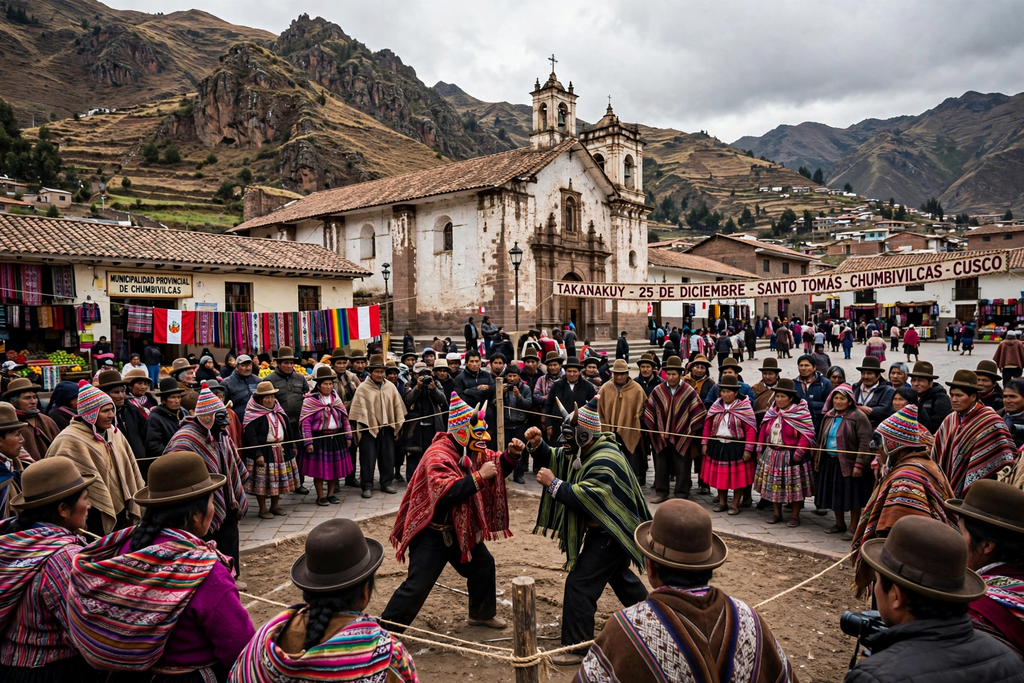
Takanakuy takes place on December 25 in the Chumbivilcas region of Peru.
Imagine celebrating Christmas by fighting your neighbours in front of an entire village. It may sound like the beginning of a strange movie, but it is a real tradition in the Peruvian region of Chumbivilcas.
Takanakuy is a traditional festival whose name is commonly translated as “to hit each other.” It takes place on Christmas Day and gives community members an opportunity to settle personal disagreements through organised public fights. Instead of allowing old arguments to continue throughout the year, participants face one another in a controlled setting.
People gather to watch the fights, and the atmosphere is filled with music, dancing, traditional clothing, and excitement. Participants may have disagreements involving family matters, personal conflicts, or disputes that have remained unresolved for months. The fights are generally understood as a way to bring these issues into the open rather than allowing resentment to grow.
However, the most surprising part comes after the fighting. Once the confrontation ends, participants are expected to make peace. They may hug, shake hands, and share drinks, leaving their disagreements behind.
Takanakuy is more than an unusual Christmas celebration. It reflects the importance of reconciliation, community relationships, and starting again. While the physical fights attract attention, the deeper message is about resolving conflicts and entering the new year without carrying old grudges.
2. Mari Lwyd – Wales
Mari Lwyd takes place from late December to January across South Wales in the United Kingdom.
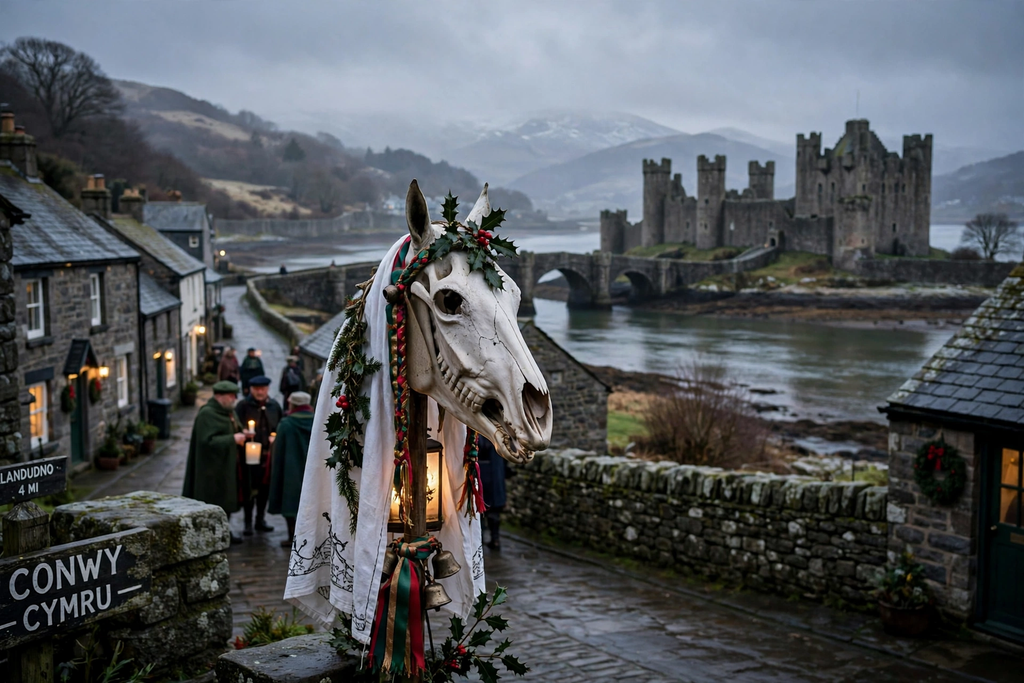
If someone knocked on your door carrying a decorated horse skull, your first reaction would probably be to close it immediately. In parts of Wales, however, this unusual visitor is part of a traditional winter celebration known as Mari Lwyd.
Mari Lwyd, often associated with the Welsh Christmas season, involves a group of people carrying a horse’s skull mounted on a pole. The skull is covered with a white cloth, decorated with ribbons, and sometimes given glowing eyes. The person carrying it moves beneath the cloth, bringing the mysterious figure to life.
The tradition becomes even stranger when the group reaches someone’s home. Rather than simply asking to enter, they challenge the people inside to a battle of rhyming verses and songs. This playful exchange is known as a pwnco.
The visitors and the household take turns creating clever rhymes, jokes, and sometimes humorous insults. Both sides attempt to outsmart the other through their words. If the visitors win, they may be allowed inside for food and drinks. The household must be prepared to defend itself with creativity and humour.
The origins of Mari Lwyd are not completely clear, but the tradition has been documented since around the early nineteenth century. Despite its unusual appearance, it represents an important part of Welsh folklore and community life.
What makes this festival memorable is the combination of mystery, humour, music, and hospitality. A horse skull may seem frightening at first, but the real purpose is to bring neighbours together through friendly competition and celebration.
3. Night of the Radishes – Mexico
Night of the Radishes takes place on December 23 in Oaxaca, Mexico.
Most people see radishes as ordinary vegetables used in salads and meals. In Oaxaca, Mexico, however, they become the centre of an extraordinary artistic celebration.
ALSO READ: November Awaits Global Leaders Major Diplomatic Meetings
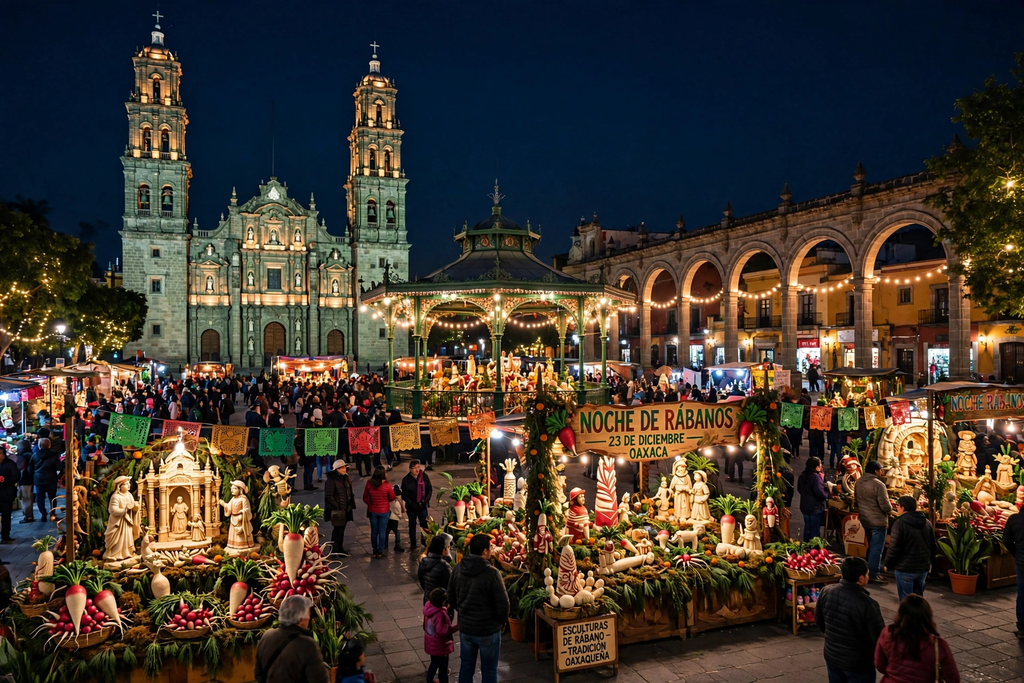
Known as the Night of the Radishes, or Noche de Rábanos, this annual event takes place on December 23. Artists and local participants transform large radishes into detailed sculptures, creating scenes that can include religious figures, animals, monsters, buildings, and characters from everyday life.
The vegetables are carefully carved into different shapes and designs. Some sculptures represent traditional nativity scenes, while others show imaginative stories and cultural symbols. The results can be surprisingly detailed, especially considering that the artists are working with vegetables that naturally have uneven shapes and limited lifespans.
The festival is connected to local markets and traditions. Its development is associated with the nineteenth century, when radishes were used to attract attention and promote agricultural products. Over time, this practice developed into an organised public celebration.
One of the most interesting things about the event is that the sculptures are temporary. Because radishes are fresh vegetables, they cannot remain in perfect condition for very long. The artwork is displayed for visitors, photographed, and eventually disappears as the vegetables deteriorate.
Thousands of people visit to admire the creativity and skill involved. It is a reminder that art does not always require expensive materials, special equipment, or permanent displays. Sometimes, an ordinary vegetable and a creative imagination are enough to produce something extraordinary.
4. Up Helly Aa – Scotland
Up Helly Aa takes place on the last Tuesday in January in Lerwick, Shetland Islands, Scotland.
For anyone who enjoys history, dramatic performances, and spectacular displays of fire, Up Helly Aa is a winter celebration worth knowing about.
Held in Lerwick in the Shetland Islands, Up Helly Aa is a festival inspired by the region’s Norse heritage. Shetland has strong historical connections with Norway, having been under Norwegian rule before becoming part of Scotland in 1469. Elements of this Scandinavian past remain visible in local traditions and cultural celebrations.
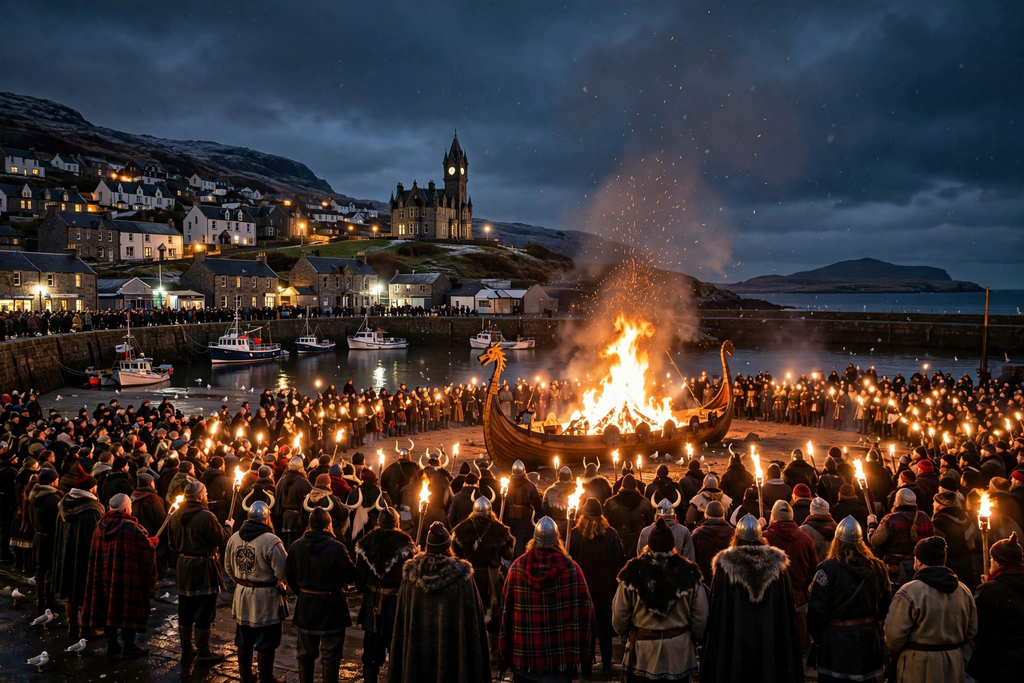
The most famous part of the festival is its torchlight procession. Hundreds of participants dress in Viking-inspired clothing and march through the streets carrying burning torches. The procession creates an impressive sight, especially during the dark winter evening.
At the centre of the celebration is the Guizer Jarl, a leading participant who traditionally wears elaborate Viking-style clothing. The procession eventually reaches a specially constructed Viking longship, known as a galley.
The highlight comes when participants throw their torches onto the wooden vessel, setting it on fire. Watching the flames consume the longship is a dramatic way to bring the festival’s main celebration to a close.
However, Up Helly Aa is not only about fire and costumes. Months of preparation go into organising the event, creating the galley, preparing clothing, and arranging performances. It is a community effort that brings people together and celebrates the history of the Shetland Islands.
For visitors, it offers an opportunity to experience a fascinating mixture of heritage, teamwork, and winter entertainment.
5. Busójárás – Hungary
Busójárás takes place in late February in Mohács, Hungary.
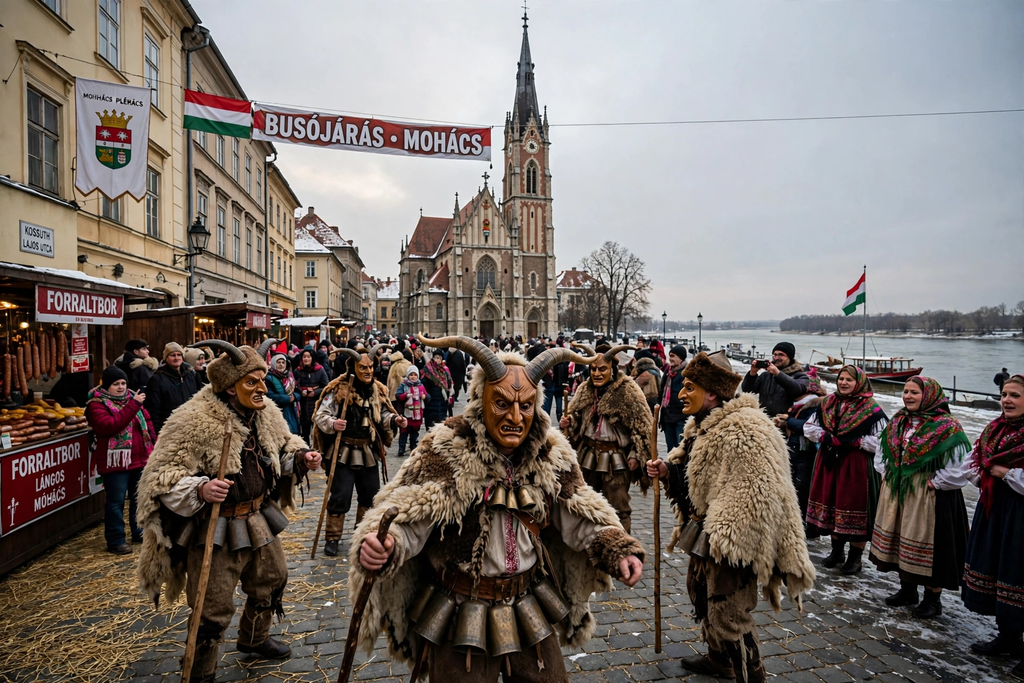
If you ever see a crowd of people wearing frightening wooden masks, heavy sheepskin coats, and large cowbells, you might think you have entered a fantasy film. In Mohács, Hungary, however, these figures are part of a traditional festival known as Busójárás.
The festival takes place near the end of winter and is famous for its Busós, who wear hand-carved wooden masks with horns, exaggerated facial features, and frightening expressions. Their costumes usually include thick sheepskin clothing and accessories that make loud noises as they move through the streets.
One of the most important parts of the celebration is the arrival of the Busós by boat across the Danube River. They then parade through the town, making noise, dancing, and entertaining the crowds. The strange masks and loud cowbells are intended to create a dramatic atmosphere.
The festival is traditionally associated with saying goodbye to winter and welcoming the arrival of spring. According to local folklore, the frightening figures help drive away the cold season and bring better days.
A symbolic coffin-burning ceremony is also associated with the celebration, representing the end of winter. Music, dancing, food, and public gatherings make the event an important part of local cultural life.
Busójárás has also received international recognition and is included on UNESCO’s Representative List of the Intangible Cultural Heritage of Humanity.
What makes it especially interesting is how an entire community uses costumes, folklore, and performance to express its cultural identity. It is not simply a parade of frightening characters; it is a celebration of tradition and the changing seasons.
6. Setsubun – Japan
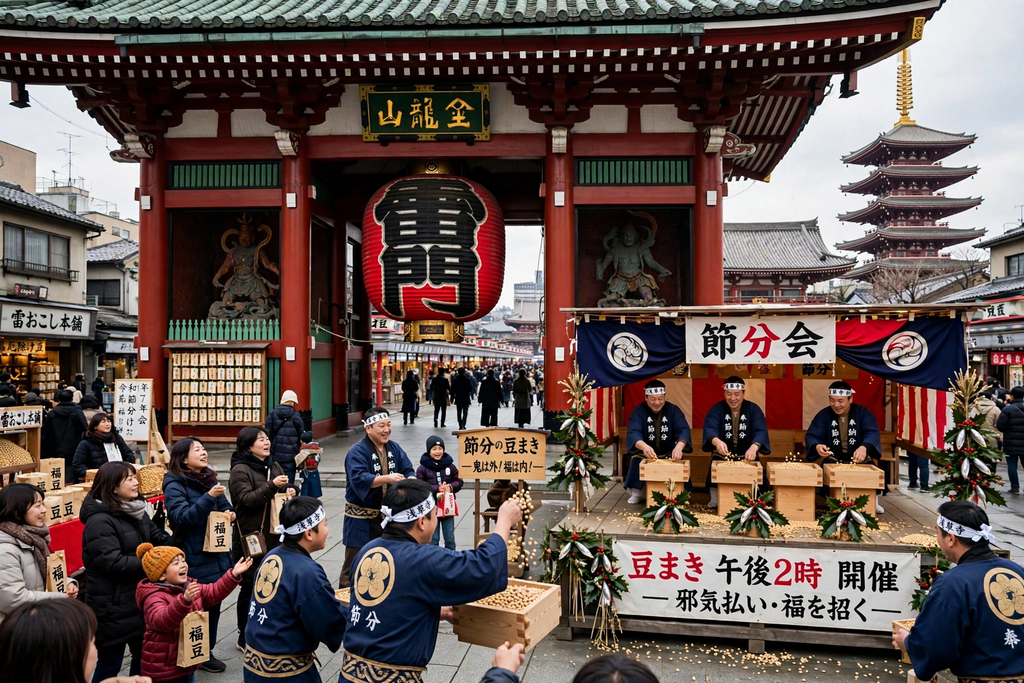
Setsubun takes place on February 3 at the Senso-ji Temple in Asakusa, Tokyo, Japan.
The most famous part of the event involves the ritual of throwing beans called mamemaki. Celebrities and priests throw soybeans into the crowd, and participants attempt to catch them. According to the tradition, obtaining one can bring good luck and ward off evil spirits.
As thousands of people gather closely together, the competition can become intense. Participants struggle to reach the sacred beans while dealing with the cold winter temperatures and the pressure of the crowd.The event requires organisation and preparation, and it is not simply an ordinary public gathering.
Its religious background gives it a deeper meaning for those who take part.For outsiders, the sight of famous figures throwing beans from a temple stage during winter may seem unbelievable. However, for participants, the experience represents purification, protection, and a chance to welcome better fortune.
Setsubun demonstrates how religious traditions can develop into large community celebrations that continue to attract attention across generations.
7. International Hair Freezing Contest – Canada
The International Hair Freezing Contest takes place in February in Yukon, Canada.
Winter usually encourages people to cover their heads with warm hats and scarves. In Canada’s Yukon region, however, there is an event where people deliberately expose their wet hair to freezing temperatures to create unusual hairstyles.
The International Hair Freezing Contest takes place at Takhini Hot Pools, where participants use the contrast between warm water and extremely cold outdoor air to freeze their hair into creative shapes.
The process is surprisingly simple. Participants soak their hair in the hot spring water, step outside into the freezing air, and allow the water to turn into ice. They then shape their frozen hair into imaginative styles, creating dramatic spikes, curls, waves, and other unusual designs.
The result is a collection of photographs that look almost unreal. Some hairstyles resemble sculptures, while others look like frozen works of modern art.
The contest has become popular because of its unusual concept and entertaining photographs. Participants compete in different categories, including male, female, and facial hair styles. Prizes have also been offered to winners.
The event began as a playful activity connected with the hot spring business and gradually developed into an internationally recognised winter attraction.
Unlike traditional festivals based on ancient history or religious customs, this competition celebrates creativity and humour. It proves that even extremely cold weather can become an opportunity for entertainment.
For anyone who enjoys unusual experiences, the idea of turning frozen hair into artwork is certainly difficult to forget.

8. Battle of the Oranges – Italy
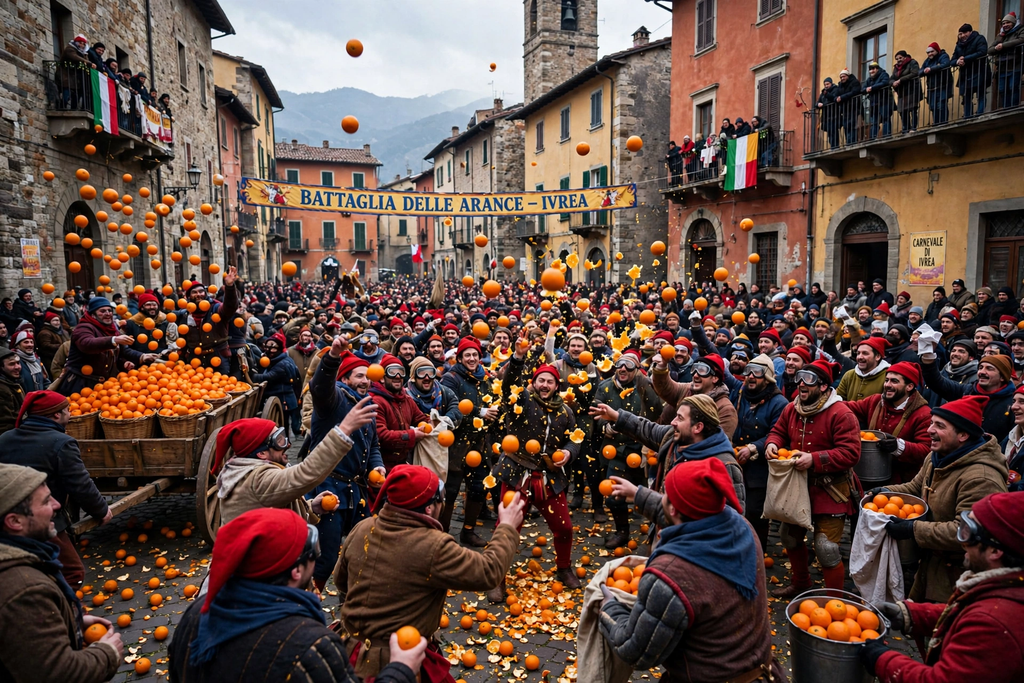
The Battle of the Oranges takes place in February in Ivrea, Italy.
Food festivals are common around the world, but few involve throwing enormous quantities of fruit at other people. In Ivrea, Italy, the annual Battle of the Oranges turns the streets into the setting for a massive and colourful food fight.
The event is part of the town’s historic Carnival celebrations. It is associated with a story about the liberation of the town from a tyrant. According to the traditional legend, a young woman challenged the ruler’s authority, helping inspire a popular uprising.
Today, the festival recreates this story through an organised orange-throwing competition. Participants are divided into teams, with some representing the people defending themselves and others taking the role of the ruler’s forces.
The teams throw oranges at one another across designated areas of the town. The streets become filled with orange pulp, juice, and flying fruit as spectators watch the dramatic action.
Although it may appear chaotic, the Battle of the Oranges is based on local history and has become a major part of Ivrea’s cultural identity.
It is also a reminder that historical stories can survive through unusual traditions. Instead of simply telling the story of a rebellion, the people of Ivrea bring it to life through a public event that attracts visitors from different parts of the world.
9. Frozen Dead Guy Days – United States
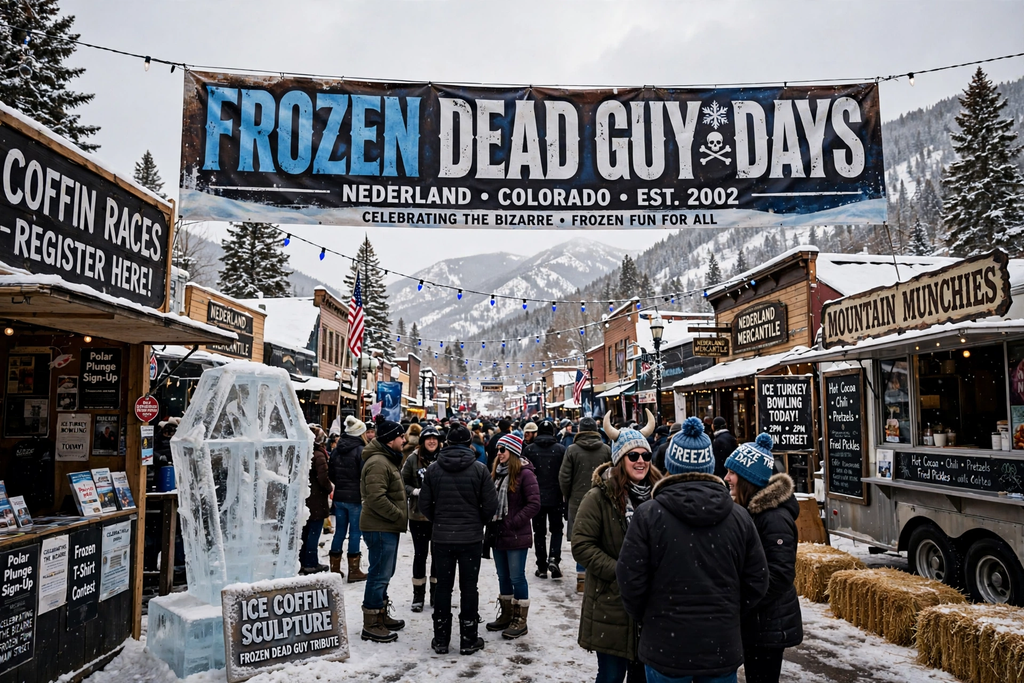
Frozen Dead Guy Days takes place in March in Estes Park, Colorado, USA.
Some festivals celebrate the arrival of spring, others honour cultural traditions, and some are created around stories that sound almost too strange to be true. Frozen Dead Guy Days belongs firmly in the last category.
The festival is connected with Bredo Morstoel, a Norwegian man who died in 1989 and whose body was cryogenically preserved. His unusual story attracted attention after his remains were stored in a shed in Colorado.
Rather than allowing the story to remain a local curiosity, the community eventually turned it into a distinctive festival. The event became known for combining humour, music, competitions, and unusual activities.
Among its attractions are coffin races, polar plunges, hearse parades, and live music. Participants compete in entertaining events while visitors gather to enjoy the unusual atmosphere.
The coffin races are particularly memorable. Teams decorate and race coffin-shaped structures, turning a subject normally associated with sadness into a playful competition.
The festival has changed location over time, with Estes Park becoming its more recent home. Its unusual theme continues to attract people who enjoy events that are different from ordinary seasonal celebrations.
What makes Frozen Dead Guy Days interesting is the way a strange historical story became part of a community’s identity. It combines humour with a subject that is normally treated very seriously, creating a festival that is difficult to compare with anything else.
10. Harbin Ice and Snow Festival – China
The Harbin Ice and Snow Festival takes place from January to February in Harbin, China.
Unlike some of the smaller and stranger festivals on this list, the Harbin International Ice and Snow Festival is famous for its enormous scale. However, many people outside China may still be unfamiliar with the extraordinary work that goes into creating it.
Held in Harbin, a city in northeastern China known for its extremely cold winters, the festival transforms the landscape into a world of ice and snow.
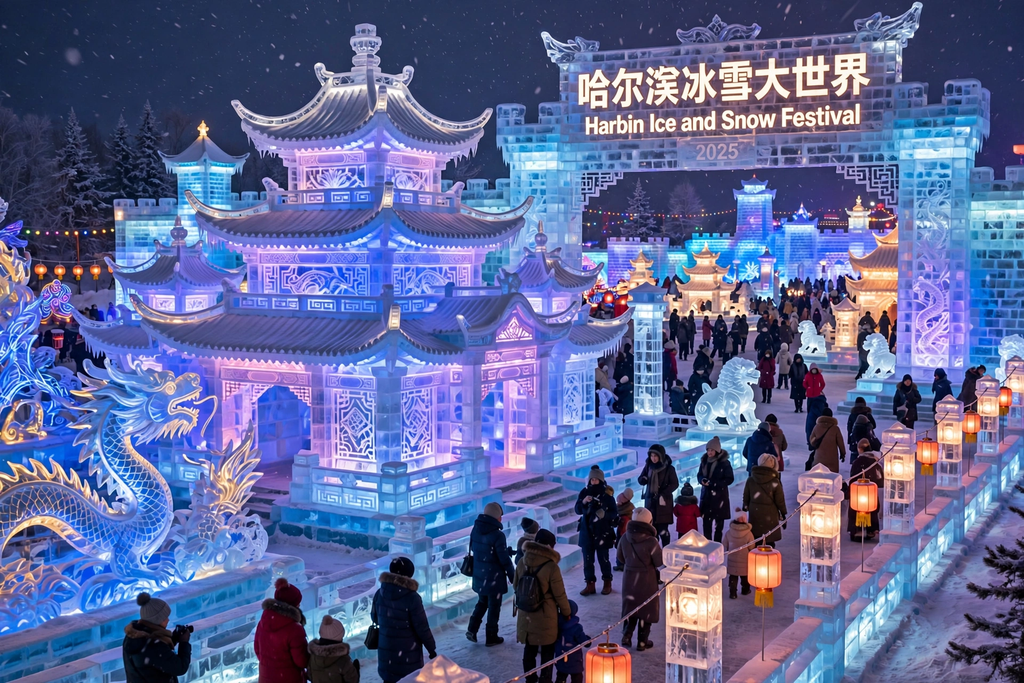
Artists and construction teams use enormous blocks of ice, often taken from the frozen Songhua River, to create impressive structures. These can include castles, palaces, towers, bridges, sculptures, and enormous decorative displays.
During the day, visitors can admire the size and detail of the structures. At night, colourful lights illuminate the ice, creating a glowing landscape that looks almost magical.
The festival is not limited to looking at sculptures. Visitors can also enjoy ice slides, winter activities, performances, and other attractions. Some editions have featured enormous ice structures that are large enough to resemble entire buildings.
One of the most fascinating aspects of the festival is its temporary nature. The structures are built during winter and gradually disappear as temperatures rise. The next year, artists and workers return to create a completely new collection of designs.
The Harbin festival demonstrates how cold weather can become an opportunity for artistic expression, tourism, and economic activity. It also requires a remarkable amount of teamwork, planning, and technical skill.
Which Winter Festival Would You Actually Visit?
From public fistfights in Peru to frozen hairstyles in Canada, these ten festivals prove that winter celebrations can be far more unusual than most people imagine. Some preserve centuries-old traditions, others bring local history to life, and a few exist simply to make people laugh and enjoy the season.
What makes them special is not just their unusual activities but also the communities behind them. Each festival offers a glimpse into a different culture and shows how people turn the coldest months of the year into opportunities for connection and celebration.
If you could attend only one of these events, which would you choose?
Personally, Up Helly Aa would be fascinating for its dramatic Viking procession and spectacular longship burning, while Takanakuy would be unforgettable because of its unusual approach to resolving conflicts.

I am Areesha, a 3rd-year International Relations student with a strong academic focus on Foreign Policy, International Law, History of International Relations, Non-State Actors, and Diplomacy & Statecraft. With a diverse internship background including HESCO, ISPR, and a current Research and Media Newsletter internship focused on Climate and Economy, I bring a unique blend of analytical thinking, research skills, and media understanding. I am passionate about translating complex global affairs into engaging, reader-friendly, and SEO-optimized content. My academic training in IR has equipped me with excellent research, critical analysis, and structured writing skills, which I now aim to apply in the field of SEO writing and digital content creation. Seeking an opportunity as an SEO Writer Intern where I can contribute with well-researched, impactful, and search-optimized content.