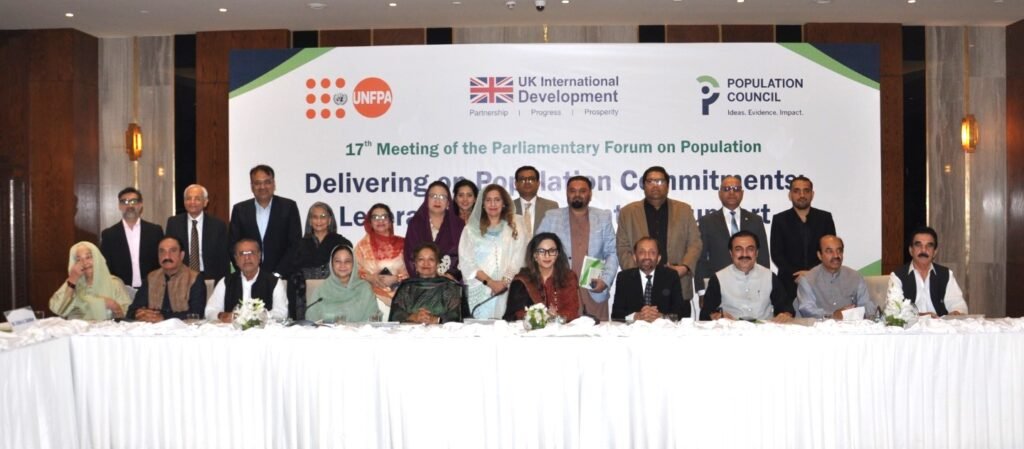
Islamabad (GNP): The 17th Meeting of the Parliamentary Forum on Population (PFP) brought together parliamentarians from the Senate, National Assembly, provincial assemblies, and Azad Jammu & Kashmir Legislative Assembly to discuss concrete actions for addressing Pakistan’s population challenges. Convened by the Population Council with support from the United Nations Population Fund (UNFPA), the meeting focused on strengthening parliamentary leadership, improving accountability and translating national commitments into action.
Senator Sherry Rehman, Chairperson of the PFP, emphasised the need for sustained parliamentary ownership and stronger public awareness. “Addressing Pakistan’s population challenges requires sustained parliamentary leadership, stronger oversight and coordinated action across federal and provincial governments,” she said. She highlighted the role of Lady Health Workers and local governments in reaching communities and called for public awareness campaigns through television, radio, digital platforms in national and local languages. She also stressed that rapid population growth contributes to child stunting, food insecurity, and poor maternal and child nutrition by placing increasing pressure on household resources, public services, and food systems.
In his Welcome Remarks, Dr. Ali Mohammad Mir, Country Director of the Population Council Pakistan, highlighted the PFP’s role in promoting evidence-informed policymaking and parliamentary accountability. “The Parliamentary Forum on Population provides an important platform to strengthen parliamentary oversight, provide evidence-informed recommendations to the government, and hold institutions accountable for action. Above all, it seeks to ensure that population dynamics are addressed not as a burden, but as a strategic national priority and an opportunity to accelerate inclusive, equitable, and sustainable development. he said,
Delivering the keynote address, Prof. Ahsan Iqbal, Federal Minister for Planning, Development and Special Initiatives, underscored the need to integrate population considerations into national development planning. “Development is not only about infrastructure; it is about ensuring that every child has a fair chance to thrive and every woman has access to quality healthcare,” he said. He highlighted the importance of girls’ education, women’s empowerment and coordinated federal and provincial action, noting that Pakistan’s population growth rate increased from 2.4 per cent in 2017 to 2.55 per cent in 2023. He called for a revision of the National Finance Commission (NFC) Award to eliminate the perverse incentives embedded in the existing resource distribution formula, which allocates funds primarily on the basis of population.
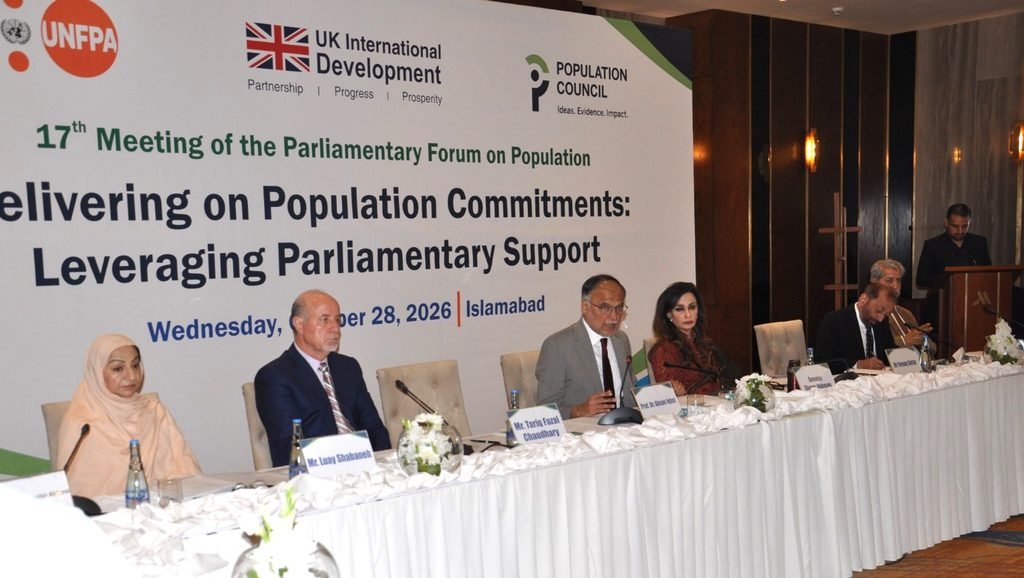
MNA Dr. Farooq Sattar, Vice Chairperson of the PFP, called for a more active role for Parliament and provincial assemblies in legislation, oversight and implementation. “Parliament must move beyond resolutions and take a more active role in legislation, oversight and implementation,” he said. He emphasised the importance of engaging local governments and strengthening accountability to ensure that population-related commitments lead to practical action at the community level.
The plenary discussion highlighted the need for a time-bound national action plan, stronger provincial ownership, adequate budget allocations and effective monitoring. Participants also stressed the importance of public awareness, improved coordination between population and health services, girls’ education and addressing malnutrition and other human development challenges. They called for greater parliamentary engagement to ensure that commitments are followed through with measurable results.
In his remarks, Syed Naveed Qamar, Chairman of the National Assembly Standing Committee on Finance and Revenue, emphasised the need to translate national commitments into a practical and accountable framework. “Pakistan needs a clear, time-bound plan of action backed by provincial ownership, adequate budget allocations and effective monitoring,” he said, calling for coordinated efforts by federal and provincial governments to achieve measurable progress.
Dr. Luay Shabaneh, Representative UNFPA Pakistan, also underscored the importance of parliamentary leadership and coordinated action in addressing Pakistan’s population challenges. He emphasised the need to translate national commitments into concrete measures that advance sustainable development and improve the well-being of families.
Also read: Finance Minister, Saudi Envoy Discuss Investment Ties
The meeting concluded with the adoption of the PFP Islamabad Statement, reaffirming the importance of parliamentary support, coordinated national action and stronger oversight to advance Pakistan’s population and development priorities.

Sohail Majeed is a Special Correspondent at The Diplomatic Insight. He has twelve plus years of experience in journalism & reporting. He covers International Affairs, Diplomacy, UN, Sports, Climate Change, Economy, Technology, and Health.