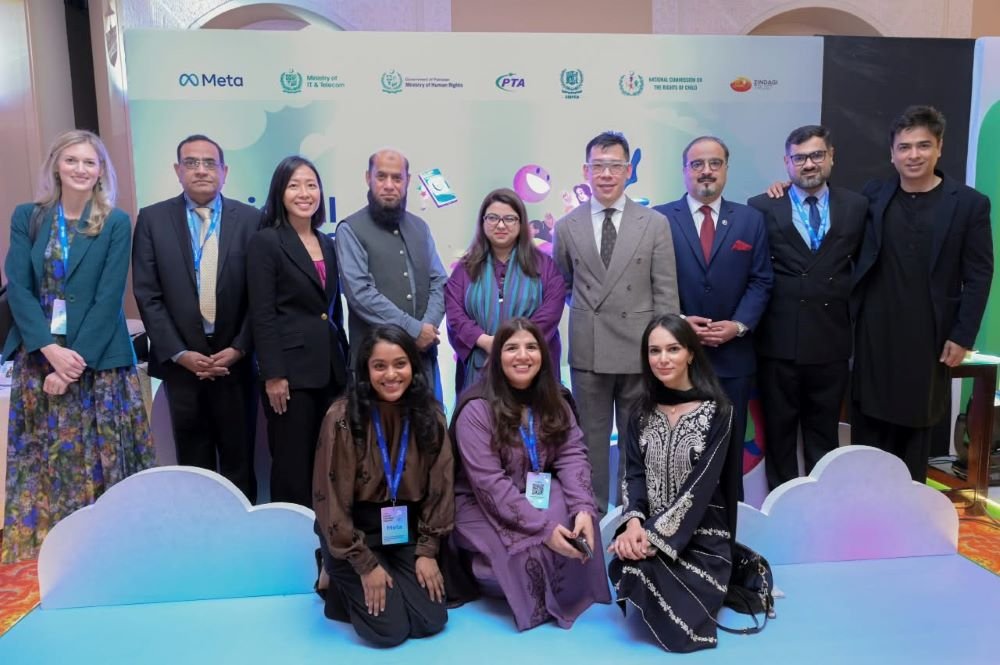
ISLAMABAD (GNP): Meta held a one-day Digital Safety Summit in Islamabad focused on youth safety and online well-being. It was organised with the Ministry of Information Technology and Telecommunication (MoITT), the Ministry of Human Rights, the Pakistan Telecommunication Authority (PTA), the Social Media Protection and Regulatory Authority (SMPRA), the National Commission on the Rights of Child (NCRC) and Zindagi Trust.
Policymakers, educators, parents, civil society representatives and digital creators met to discuss how young people can thrive online while remaining protected. The main theme was helping youth benefit from the internet without compromising their safety.
Speakers examined models that build privacy, age-appropriate design and safety-by-default into platforms, as well as practical, privacy-preserving age-assurance approaches suited to Pakistan. They noted that safety measures work best when young people understand them and feel able to turn to a trusted adult.
NCRC Chairperson Ayesha Raza said the goal must be a safe digital world for children, and that outright bans can push young people toward less regulated, riskier spaces. The best approach, she argued, involves the whole ecosystem: platforms accountable through safety-by-design features such as private-by-default settings, limits on addictive features and swift removal of inappropriate content; a state that guarantees child-friendly grievance mechanisms and raises awareness; and parents and educators equipped to guide children confidently.
SMPRA Member Salman Zafar said online safety should never rest on the child alone. It requires secure platforms, respect for privacy, accountable reporting systems and close cooperation among regulators, technology platforms and parents.
Zindagi Trust President Shehzad Roy said children are growing up in an increasingly digital world and that equipping them to navigate it safely is a collective duty. He described the partnership between Meta, Zindagi Trust and Durbeen as a step toward giving parents and guardians the tools to monitor their children’s social media use and act early.
The summit also stressed the need for industry-backed national digital safety education initiatives and Pakistan’s potential to lead the region in evidence-based youth protection policy.
Meta introduced “Digital Dialogues in Real Life,” a free, browser-based interactive tool that helps youth, parents, teachers and community groups talk through everyday digital situations. Built after research and testing with young people and educators, it aims to familiarise parents and teens with the built-in safety features of Teen Accounts.
Teen Accounts have protections switched on by default, limiting who can contact teens, controlling the content they see and managing screen time. Content settings introduced this year align with 13+ film ratings and parental input, and teens under 16 need parental permission to change default settings.
Users work through five illustrated discussion cards, Social Spaces, Feed Control, Beyond Likes, Kindness Online and Know Your Limits, each presenting a relatable scenario and pointing to practical tools. Separate pathways are tailored for teens aged 13 to 17 and for adults.
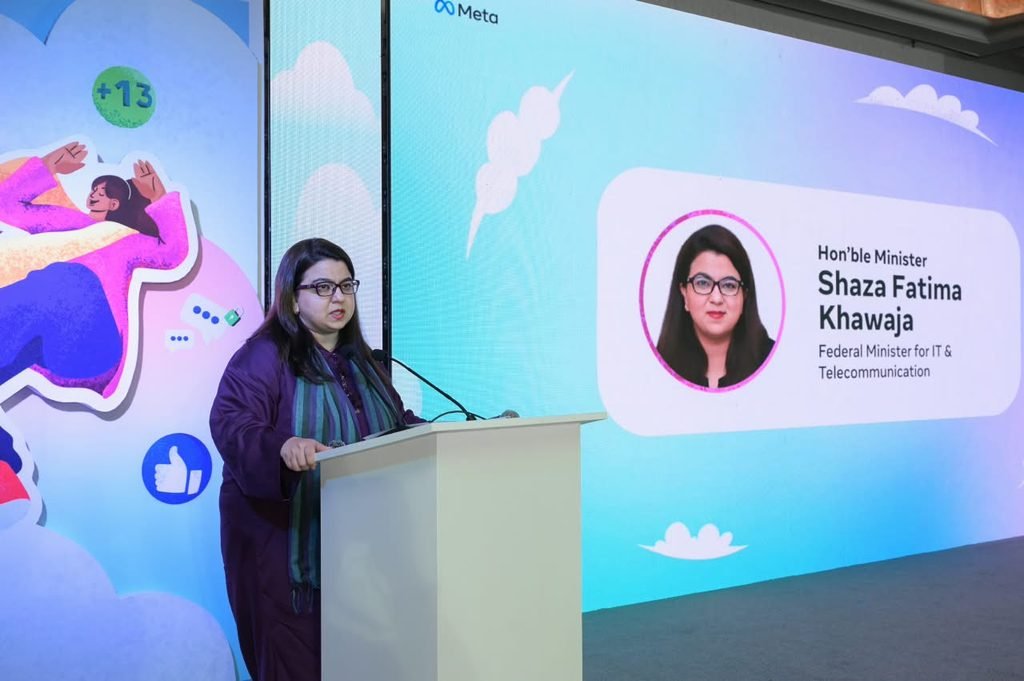
IT and Telecommunication Minister Shaza Fatima Khawaja said Pakistan cannot build a digital future that is not safe for children. Child safety cannot be left to parents alone to manage through complex settings; it must be built into technology, backed by digital literacy and sustained by shared responsibility. The summit, she said, showed what that looks like when government, industry, educators and families work together, with the aim of a digital Pakistan where no child faces online risks alone.
She said platforms and global technology companies such as Meta must take a more proactive role in ensuring safety messages reach both children and parents. Awareness must extend beyond major cities to rural and remote areas and enter every classroom, involving every teacher and parent, and not be limited to social media.
She noted that the PTA is running awareness campaigns, that children need to understand online risks and know how to seek help, and that they should feel free to speak openly about online problems. Safety initiatives, she added, will only have impact when people know about them and how to use them.
Yuen-Ting Chai, Meta’s Director of Public Policy (South & Central Asia), said online safety is a shared responsibility of parents, educators, governments and civil society. Meta designed Teen Accounts on Facebook, Instagram and Messenger with default protections, she said, but open conversation between youth and adults matters just as much, which is why the new tool was created.
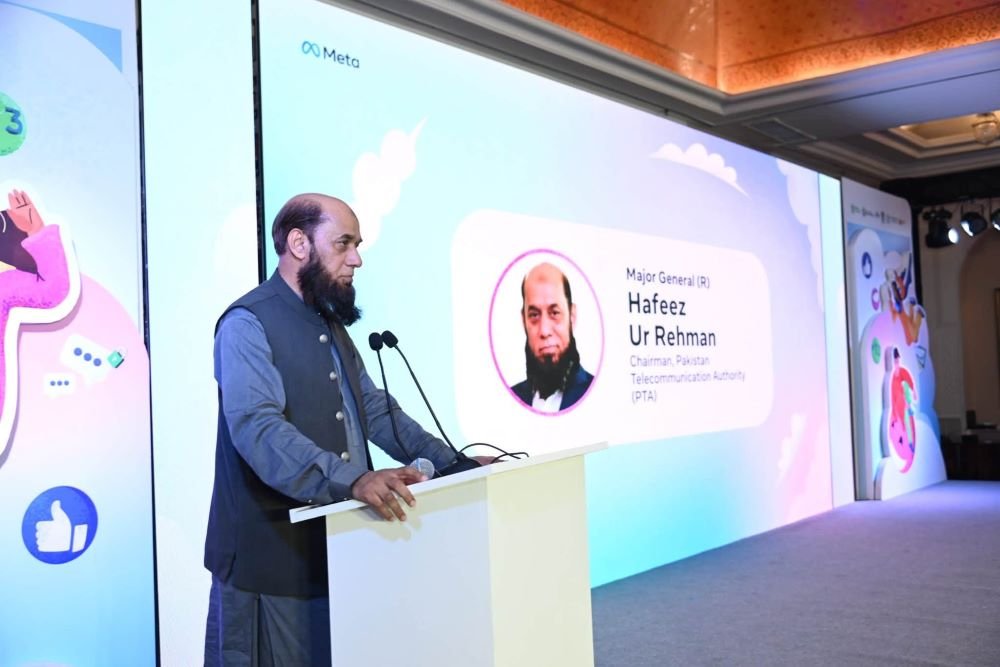
PTA Chairman Major General (R) Hafeez Ur Rehman said child online safety is a shared responsibility. Alongside technical safeguards, children need digital safety knowledge and parents need the means to guide them. Through its partnership in “Digital Dialogues in Real Life,” he said, the PTA remains committed to promoting digital awareness and a safer online environment for Pakistan’s children.
Also read: BingX Opens Anthropic Pre-IPO Trading Access
The summit continues Meta’s work on youth safety in Pakistan, in partnership with local stakeholders, toward industry-wide safety standards.

Sohail Majeed is a Special Correspondent at The Diplomatic Insight. He has twelve plus years of experience in journalism & reporting. He covers International Affairs, Diplomacy, UN, Sports, Climate Change, Economy, Technology, and Health.