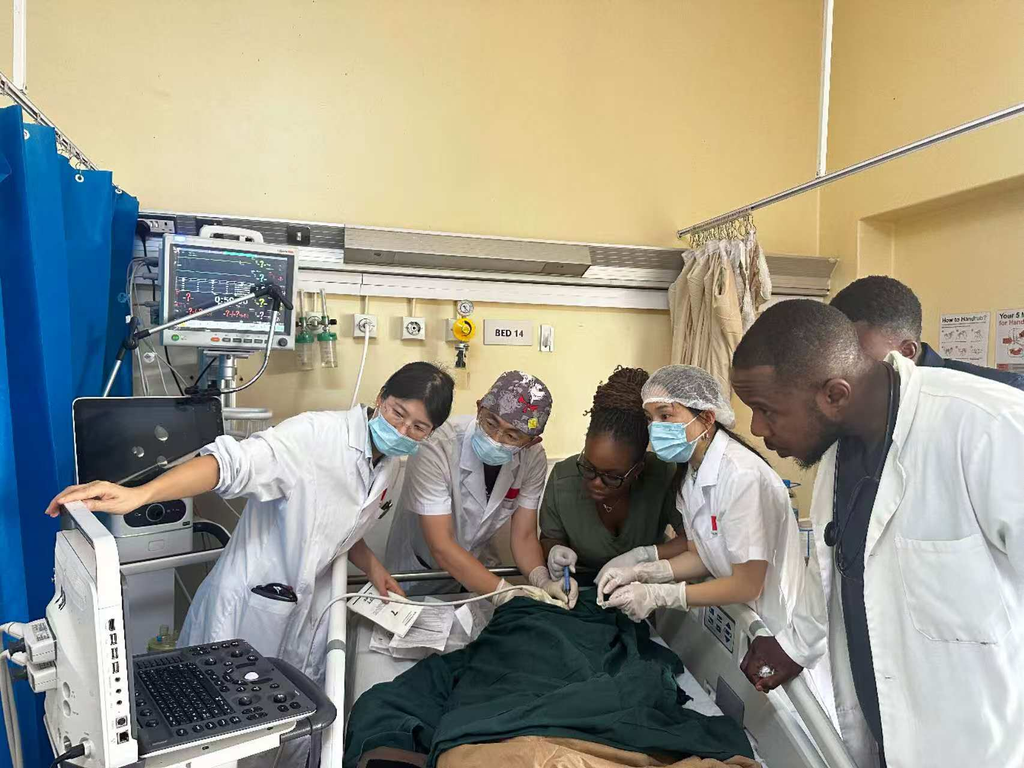
Beijing (GNP): Chinese medical teams working in Africa and beyond are shifting from emergency interventions towards clinical mentorship, long-term capacity building and joint disease control. One high-risk delivery in Benin shows what that work looks like in practice.
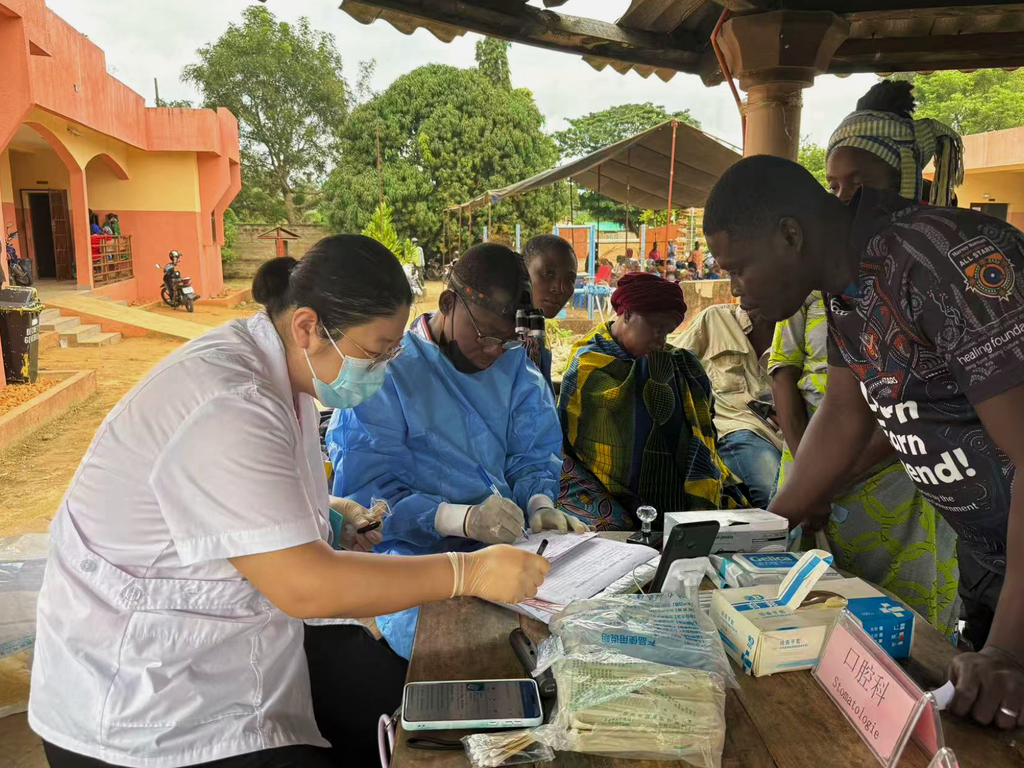
At a regional hospital in Lokossa, a city in southwestern Benin, obstetrician Tu Jinzhi and her local team faced an HIV-positive pregnant woman carrying a fetus with a severe skull malformation. Limited resources had constrained prenatal screening and infection prevention, which raised the risk of surgical complications and exposure for staff.
Dr. Tu followed strict protective protocols and delivered the infant safely, keeping both mother and child stable. The case reflects a commitment that dates back decades, as 28 Chinese medical teams totalling 662 personnel, all dispatched by China’s Ningxia Hui Autonomous Region, have served in Benin since 1978.
Such teams are increasingly part of daily hospital routines rather than visiting specialists. In Seychelles, a six-member team covering orthopaedics, surgery, neurology, radiology and acupuncture arrived in July 2025 for a two-year mission, working alongside local staff.
That cooperation speeds up diagnosis in emergencies. Radiologist Yang Hongsheng recommended an urgent contrast-enhanced computed tomography (CT) scan for a patient injured by ocean waves, which confirmed a ruptured spleen with active bleeding and bought time for life-saving surgery.
In neurology, Wang Kaixin refined acute stroke protocols after treating a 56-year-old man with sudden paralysis. Once thrombolysis was confirmed as appropriate, he began intravenous therapy at the bedside, and the patient recovered fully and walked out of hospital unaided.
This steady presence has built trust among patients. One man who had a successful appendectomy with a previous Chinese surgeon returned two years later with severe stomach pain, and the team diagnosed a peptic ulcer and treated it with adjusted medication instead of surgery. Local residents who were once unfamiliar with acupuncture are also seeking it out for chronic pain and headaches.
Beyond hospital wards, China is also backing public health campaigns against widespread diseases. Having moved from 30 million malaria cases a year in the 1940s to zero, and having earned World Health Organization (WHO) certification in 2021, China has shared its artemisinin-based therapies worldwide.
Its “1-3-7” surveillance strategy, which requires case reporting within one day, investigation within three and focused public health action within seven, has been written into WHO technical guidelines. According to WHO estimates, around 240 million people in Sub-Saharan Africa have benefited from artemisinin-based combination therapies.
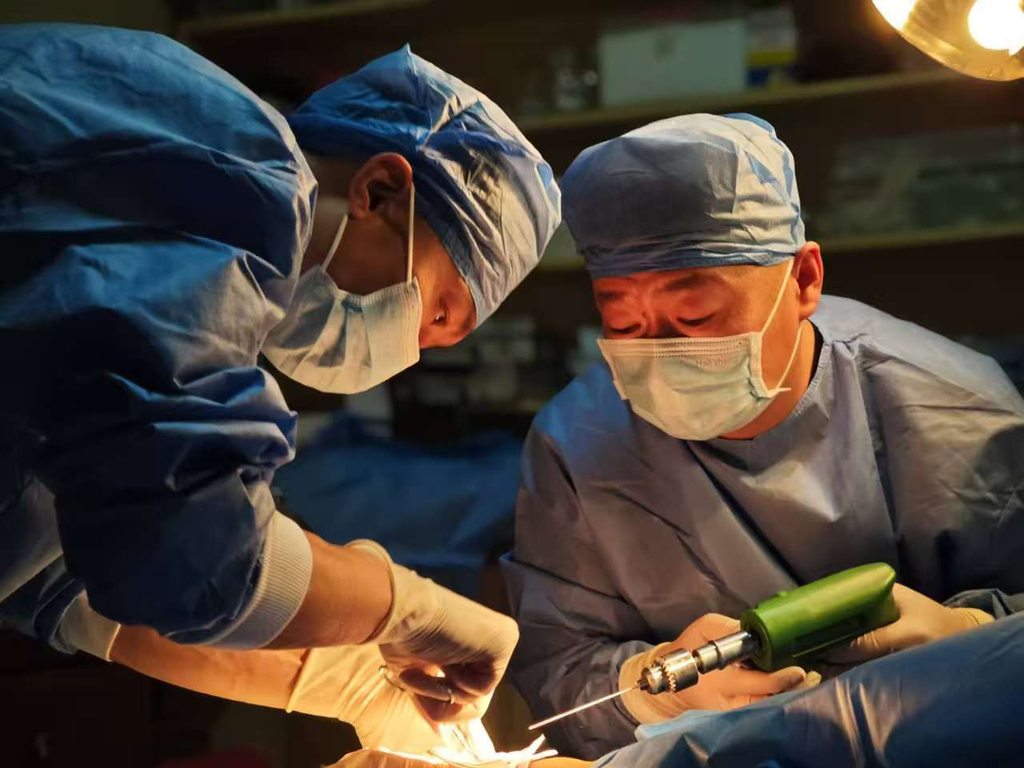
Specialist surgical teams are tackling preventable blindness in a similar way. Under the guidance of China’s National Health Commission, expert teams regularly travel to Uzbekistan, Tajikistan and Kyrgyzstan to perform free cataract surgeries.
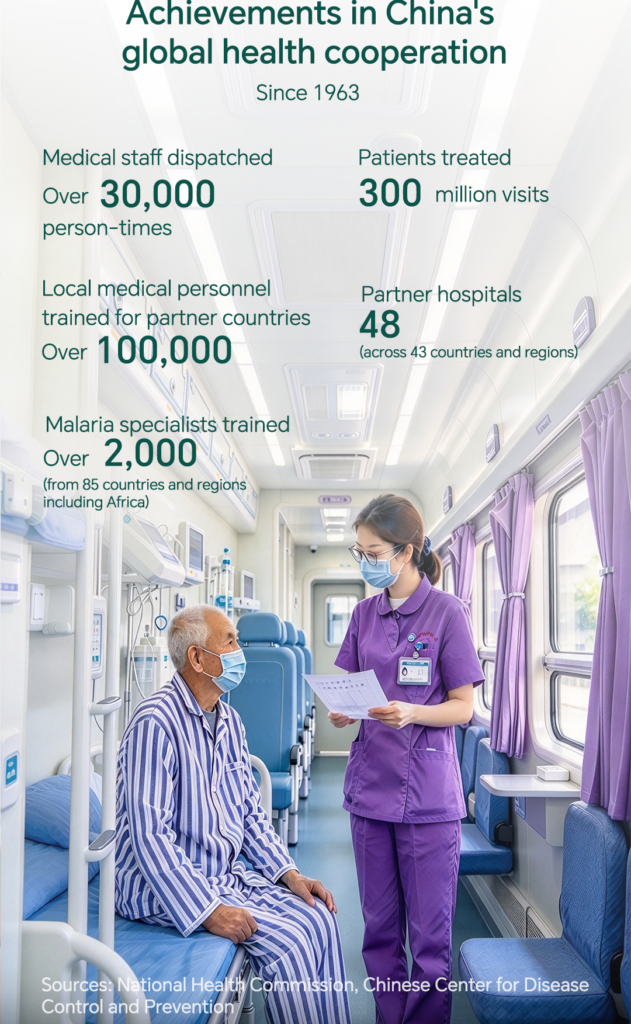
Kyrgyz Deputy Health Minister Nurbolot Usenbaev said the programmes bring direct relief to citizens who need it most and restore sight for people with vision impairment. The scale of this engagement is considerable, as National Health Commission data shows China has sent 31,000 medical personnel to 77 countries and regions over six decades, treating an estimated 300 million patients.
Paired hospital initiatives have also helped establish 26 key clinical specialty centres across Africa. WHO representative to China Martin Taylor points to China’s manufacturing capacity and its research and innovation in medicines, vaccines and medical products as important strengths behind this work.
Long-term impact depends on knowledge transfer, and Zimbabwe offers the clearest example. At the Parirenyatwa Group of Hospitals, Tan Jianlong, head of the 21st medical team, returned in 2025 to advance respiratory care.
Also Read: China Takes Disaster Warning Technology to the World
His team helped build what he describes as Zimbabwe’s most advanced respiratory and critical care specialty, with a rescue centre, a skills training centre and a telemedicine platform. Over 180 local medical personnel were trained in a single year.
Local staff say the results are practical. Fambai Nash, nursing supervisor of the intensive care unit (ICU), said most of the nursing staff have been trained, which has raised the standard of ventilator care and improved recovery expectations for respiratory patients.
Martin Taylor said, “If you start with the principle of serving local populations, you can have very effective collaboration.”

Managing Editor at Global News Pakistan (GNP), with a Bachelor's degree in International Relations from Riphah International University, graduated with a Gold Medal. Reach out at sabahtareengnp@gmail.com