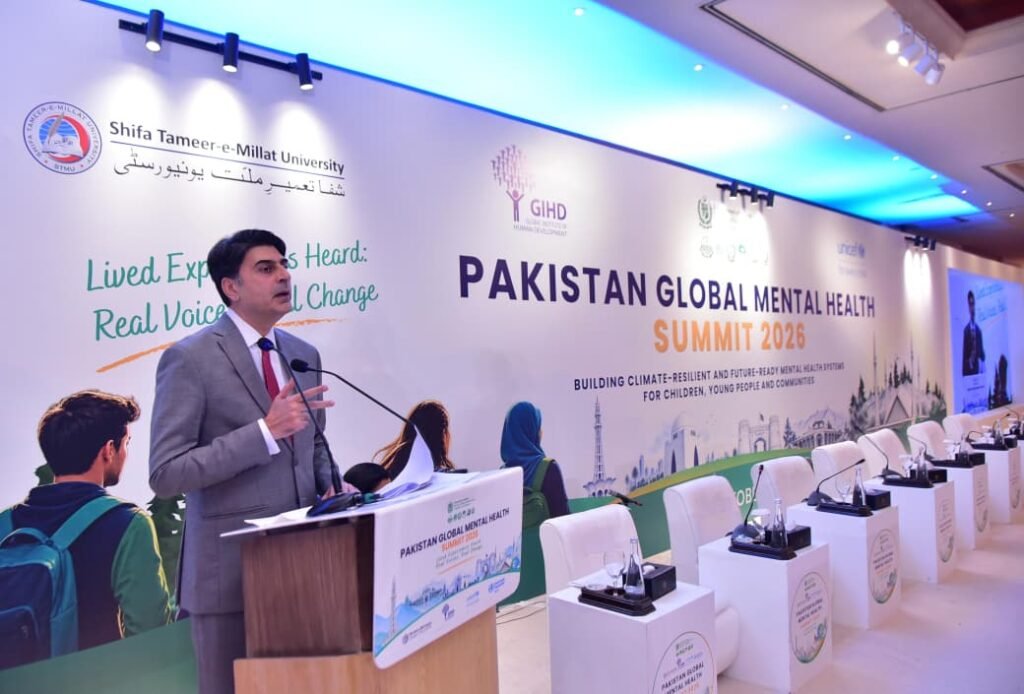
Islamabad (GNP): Minister of State for National Health Services, Regulations and Coordination Dr. Malik Mukhtar Ahmad Bharath called for coordinated, sustained action to make quality mental health care accessible across Pakistan, speaking at the close of the Pakistan Global Mental Health Summit 2026.
The two-day summit, held October 1-2 in Islamabad to coincide with World Mental Health Day 2026, brought together national and international experts, policymakers, development partners, UN agencies, academics, civil society representatives, and other stakeholders to discuss emerging mental health challenges and opportunities for collaboration.
Addressing the closing ceremony, Dr. Bharath said that over the course of the summit, stakeholders had engaged with evidence, partners, and young people, reaffirming a shared vision of a Pakistan where every child, young person, and adult can access mental health care close to home, with services integrated into primary healthcare and schools across every province and federating area.
He noted that roughly 32 million people in Pakistan require mental health care, yet the treatment gap stands at approximately 95 percent — stressing that behind these numbers are millions of real lives affected by mental health conditions, and that closing this gap is the summit’s central aim.
Dr. Bharath highlighted that mental health conditions remain a leading cause of compromised health among women and a significant factor for men as well, with suicide continuing to pose a serious public health concern. He emphasized that mental illness is treatable, and recovery is achievable with timely, accessible care.
He pointed to several milestones reached during the summit, including the launch of the National Mental Health Policy, new national programmes for child and adolescent mental health delivered through schools, and the adoption of the Islamabad Declaration for Global Mental Health.
Calling for stronger provincial ownership, the Minister asked all provinces and federating areas to submit written endorsement of the policy within 45 days to support its implementation on the ground. He also announced the establishment of a National Hub of Excellence, developed in partnership with provincial authorities, to serve as a technical platform for translating research into policy, building capacity, and supporting the mental health workforce.
Dr. Bharath said that within the next 12 months, a sustainable, costed, and time-bound implementation and monitoring plan would be developed in consultation with the provinces. Looking further ahead, over the next two to three years, he outlined three key priorities: expanding mental health services through primary and community-based care across all provinces and regions; strengthening the mental health workforce, including school psychologists; and ensuring mental health is reflected in national laws, budgets, benefit packages, and health data systems.
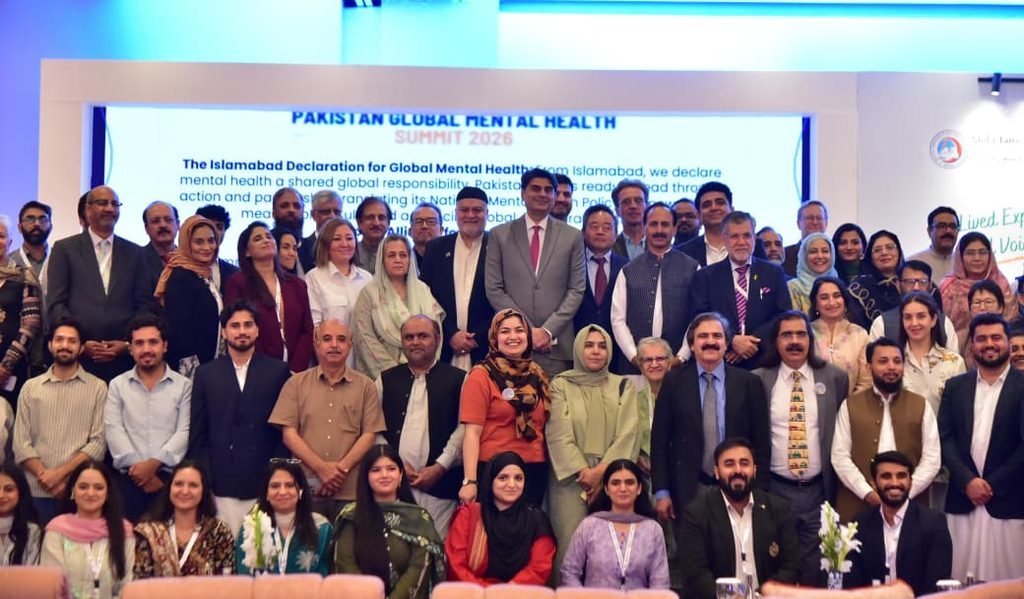
He thanked WHO, UNICEF, the Global Institute of Human Development at Shifa Tameer-e-Millat University, provincial governments, development partners, young people, and individuals with lived experience of mental health challenges for their contributions to the summit.
Also read: Pakistan Rolls Out National Mental Health Policy in Islamabad
Dr. Bharath called on all partners to unite behind a single national action plan, urging stakeholders to turn the commitments made at the summit into concrete action to ensure accessible, affordable, and quality mental health services for children, adolescents, young people, women, and marginalized communities throughout Pakistan.

Sohail Majeed is a Special Correspondent at The Diplomatic Insight. He has twelve plus years of experience in journalism & reporting. He covers International Affairs, Diplomacy, UN, Sports, Climate Change, Economy, Technology, and Health.