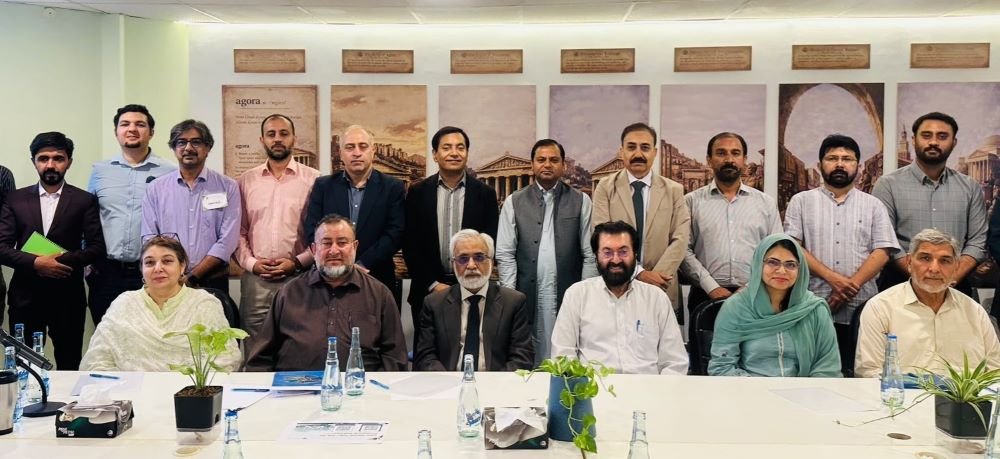
Islamabad (GNP): Reclaiming Green Islamabad, a citizens’ group committed to protecting the capital’s natural environment, has raised concerns over the rapid loss of green spaces, tree cover and ecological balance in Islamabad, calling for urgent action by public authorities, planners and communities before further damage is done.
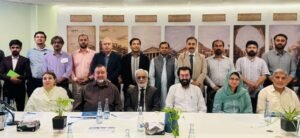
The citizens’ dialogue, held under the banner of “Reclaiming Green Islamabad, by Institute of Urbanism” brought together policymakers, urban planners, researchers, government officials, journalists and civil society representatives to spotlight growing public concern about how Islamabad can continue to grow without losing the green spaces, trees and ecological systems that make it liveable.
Residents’ concerns are backed by data. Often called Pakistan’s “Green Capital,” Islamabad’s population has grown from just over 100,000 in the early 1960s to an estimated 2.4 million in 2023, while the city lost approximately 1,622 hectares of tree cover between 2020 and 2022 alone.
“Greening isn’t just about nature, it’s about us, and especially about fairness,” said Tariq Banuri, Chairperson of IoU’s Board of Directors. “Pollution, heat, and tree loss don’t affect everyone equally. When water is polluted, those who can afford it buy bottled water, others are left exposed. When the city overheats, the well-off switch on air conditioning, the poor are left to sweat it out. And tree cover itself isn’t disappearing at random: it’s vanishing fastest in the city’s poorer neighbourhoods.”
Banuri called on planners and decision-makers to respond to these citizens’ concerns by treating environmental protection as a core part of every future development decision, not an afterthought. That means restoring lost green cover, managing rainwater and drainage naturally instead of paving over it, and preserving corridors that let parks, trees, and waterways connect across the city rather than sit as isolated patches.
Dr. Ejaz Ahmad, Executive Director of IoU, framed the challenge as one of coordination and public accountability rather than conflict. “Urban development and environmental protection are too often treated as opposing forces — in reality, they don’t have to be,” he said. “When government, communities, and technical experts plan together from the start, growth and conservation can reinforce each other instead of competing for the same land.”
Citizens and experts also raised concerns over recent tree removals and the gaps they expose in how Islamabad tracks, protects and restores its natural assets. The discussion moved toward concrete next steps, including training students and young volunteers as community organisers and securing formal government backing for community-led plantation and conservation drives. Participants agreed that citizen concern must now translate into visible, coordinated action for a greener, healthier and more resilient Islamabad.
The timing is critical. With Islamabad’s Master Plan currently under revision, participants stressed that citizens have a narrow window to ensure environmental sustainability, liveability, biodiversity and climate resilience are placed at the centre of the city’s next phase of growth, rather than retrofitted later after further loss has occurred.
Also read: Mental Healthcare to Every Pakistani Family: Kamal
The dialogue brought together representatives from the Society for Alternative Media and Research (SAMAR), NUST, the Ministry of Climate Change and Environmental Coordination (MoCC&EC), Allama Iqbal Open University (AIOU), IUCN, the Pakistan Climate Change Authority (PCCA), WWF-Pakistan, the International Water Management Institute (IWMI), the Pak Alumni Group network, the Islamabad Wildlife Management Board (IWMB), the Asian Development Bank, and the Friedrich-Ebert-Stiftung (FES). Their shared message was clear: Islamabad’s green spaces are not only environmental assets, but public goods central to the quality of life of every resident. Reclaiming Green Islamabad urged authorities to listen to citizens’ concerns and act decisively to protect the natural systems that keep the capital liveable for this generation and the next.

Sohail Majeed is a Special Correspondent at The Diplomatic Insight. He has twelve plus years of experience in journalism & reporting. He covers International Affairs, Diplomacy, UN, Sports, Climate Change, Economy, Technology, and Health.