New York (GNP): The latest round of China-US economic and trade consultations in New York is significant not because it produced a sweeping settlement, but because it signals both sides are becoming more willing to separate contested issues from areas where practical cooperation remains possible, according to Sun Taiyi, associate professor of political science at Christopher Newport University.
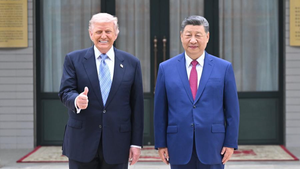
Writing for CGTN, Sun said the timing of the talks adds to their significance, coming just months after President Xi Jinping’s visit to the United States from 23 to 25 September, itself following President Donald Trump’s visit to Beijing in May.
He said such high-level exchanges create a political deadline, giving negotiating teams incentive to narrow disagreements, identify deliverable outcomes, and prevent new disputes from overwhelming the summit agenda.
According to Sun, the two sides held candid and constructive exchanges on economic and trade issues in New York, including the implementation of previous understandings, while also discussing artificial intelligence, a sign that bilateral economic engagement is gradually moving beyond tariffs alone.
Sun pointed to the emerging “Board of Trade” mechanism as one avenue for creating more room for ordinary commerce, noting that US officials have discussed using it to reduce barriers on selected non-strategic goods.
He said this approach could allow competition over semiconductors and other sensitive technologies to proceed without automatically restricting trade in consumer goods, medical products, agricultural commodities or intermediate inputs.
On artificial intelligence, Sun said China and the United States would remain strong competitors, given the technology’s influence over future productivity and national capabilities, adding that there was little reason to expect either country to abandon that competition.
He said AI nonetheless presents risks that cross national borders, including major cyber incidents, misuse by non-state actors, or failures affecting critical infrastructure, giving both countries reason to maintain communication even as competition continues.
Sun cited US Treasury Secretary Scott Bessent’s remarks following the New York meeting, in which Bessent said the two sides had agreed to formalise an AI dialogue, explore an “incident line” for significant AI safety events, and continue discussions in Shenzhen in approximately two months.
He said cooperation on AI does not require the two countries to agree on technological leadership, only to recognise that some risks are shared even where ambitions differ.
Also Read: China’s Envoy Urges Action on Strategic Stability Ahead of Xi’s US Visit
Sun noted a similar preference for avoiding escalation on trade, with the current tariff pause running through 10 November and its extension discussed in New York, although no final decision was announced.
He said the negotiating mechanism now in place has accumulated experience since the Geneva talks in 2025, through which the two sides reduced some additional tariffs and suspended certain countermeasures while continuing negotiations.
Sun said fundamental disagreements over semiconductors, critical minerals and market access remain unresolved, but argued that disagreement in one area need not define the entire relationship.
He concluded that the more realistic objective for both countries is to enlarge areas of overlapping interest and preserve channels capable of handling future disputes, rather than pursue a return to comprehensive partnership.
Sun Taiyi said, “In a relationship of such global consequence, managing differences effectively can itself be a meaningful form of progress.”