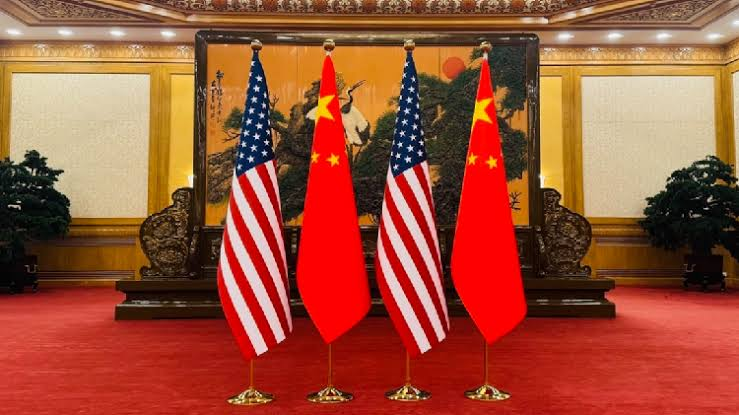
Beijing (GNP): Chinese President Xi Jinping is paying a state visit to the United States from 23 to 25 September at the invitation of US President Donald Trump, with the two sides expected to discuss major bilateral and global issues.
The visit comes as China-US relations continue to be framed around the concept of “constructive strategic stability,” described as a positive stability built on cooperation, a sound stability with moderate competition, a constant stability with manageable differences, and an enduring stability underpinned by commitments to peace.
Hu Bo, director of the South China Sea Strategic Situation Probing Initiative at Peking University, said the concept represents a repositioning of China-US relations following a prolonged period of strategic competition, noting that the process of stabilisation began in earnest during the later Biden administration as both sides recognised the costs of unchecked rivalry.
Hu said stability was, to some extent, a result of necessity and was likely to remain a long-term feature of the relationship regardless of changes in US administration. He added that maintaining open military-to-military communication and reducing ideological approaches to bilateral policy were essential to sustaining this stability.
Wang Honggang, director of the Institute of Peaceful Development at the Chinese Academy of Social Sciences, said the new concept rested on three foundations: a growing convergence in relative strength between the two countries, the depth of shared interests despite structural competition, and a more long-term US view of strategic competition with China.
Wang said the biggest obstacle to the concept was cognitive, cautioning that both sides needed strategic patience and should treat constructive strategic stability as a long-term direction rather than an outcome achievable overnight.
Zhang Tengjun, associate research fellow at the Institute of American Studies at the Chinese Academy of Social Sciences, said the concept set a bottom line of preventing conflict while allowing competition to avoid becoming a zero-sum game through practical cooperation.
Also Read: China and US Deepen Cooperation Against Transnational Crime
Zhang identified three main obstacles to the relationship, including persistent US views of China as a strategic competitor, continued tension over the Taiwan question, and the influence of domestic US political factors such as electoral politics on China-related policy.
On managing differences, Hu Bo said military-to-military relations had continued to stabilise since the San Francisco meeting, while economic and trade dialogue mechanisms had produced notable results since the Busan meeting, adding that preventing third-party actions from affecting bilateral ties remained a priority.
Wang Honggang said the most effective approach was to institutionalise communication at multiple levels under the guidance of head-of-state diplomacy, combining official and unofficial channels to gradually build strategic understandings and crisis-management mechanisms.
Zhang Tengjun outlined a three-layer mechanism for managing the relationship, spanning head-of-state diplomacy, institutionalised dialogue on diplomatic and economic affairs, and operational crisis-management arrangements including emerging government-to-government dialogue on artificial intelligence.
Wang Honggang said, “Head-of-state diplomacy remains the most important element because it provides overall strategic direction for the relationship.”

Managing Editor at Global News Pakistan (GNP), with a Bachelor's degree in International Relations from Riphah International University, graduated with a Gold Medal. Reach out at sabahtareengnp@gmail.com