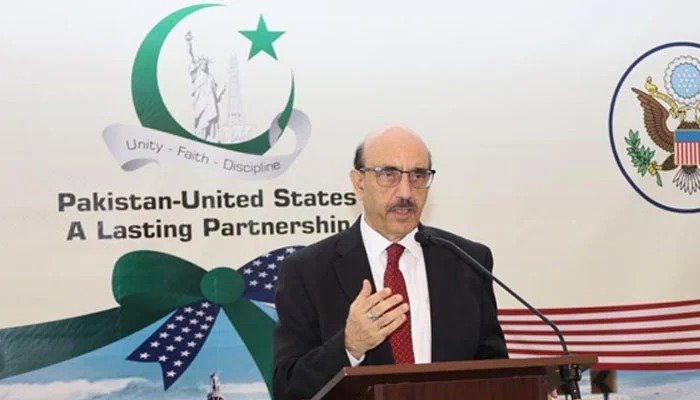
Islamabad (GNP): Pakistan must use all its political and diplomatic capital to help de-escalate the widening conflict in the Gulf and bring the parties back to negotiations, said Sardar Masood Khan, Former Ambassador of Pakistan to the United States, China and the United Nations, and former President of Azad Jammu and Kashmir.
Speaking about the rapidly expanding regional conflict, Sardar Masood Khan said the situation had become highly complicated, with several countries and fronts now involved. He expressed particular concern over the reported attack in the vicinity of Makkah, stressing that the holy places were sacred to Muslims and that the circumstances and responsibility for any such incident must be carefully established. He cautioned that uncertainty surrounding such incidents could further inflame the conflict.
He said Saudi Arabia and other Gulf states had become increasingly vulnerable as the geographical and strategic framework of the war expanded. This had raised important questions regarding the responsibilities, limits and mechanisms of the Makkah Defence Alliance. The Makkah Joint Defence Agreement signed by Pakistan, Saudi Arabia and Türkiye provides for collective defence and regards an armed attack against one member as an attack against all three.
Sardar Masood Khan said Pakistan had two principal roles to play. The first was diplomatic and political: to continue efforts for de-escalation and return to negotiations. He said Pakistan had the support of the Gulf states and maintained close relations with other important countries, including China, giving it space to pursue a mediatory role. “Pakistan has to spend all its political and administrative capital” to achieve results, he said, adding that the parties had previously come close to negotiations but had subsequently moved away from them.
The second role, he said, was military and strategic. Pakistan was bound by its bilateral Strategic Mutual Defence Agreement with Saudi Arabia and the trilateral Makkah Defence Agreement with Saudi Arabia and Türkiye. However, he noted that the institutional mechanisms, terms of reference, activation triggers and thresholds of the trilateral arrangement were still developing. The three countries have already begun institutionalising cooperation through political and defence mechanisms.
He further noted that Pakistan had already been providing defence support to Saudi Arabia, including the deployment of personnel and the provision of JF-17 aircraft, drones, communications equipment and other capabilities. At the same time, he stressed that there was no clearly defined operational framework under discussion concerning the Houthis.
Also read: Founders Group Sweeps ICCI Elections, Wins All Seats
Sardar Masood Khan also cautioned against any expansion of the conflict into a wider war involving the United States. Referring to the enormous financial costs of previous US wars, he argued that Washington would face significant economic and political considerations before committing ground forces to another major conflict. He concluded that the prevailing circumstances made sustained diplomacy, restraint, and de-escalation essential to prevent the conflict from widening further.

Sohail Majeed is a Special Correspondent at The Diplomatic Insight. He has twelve plus years of experience in journalism & reporting. He covers International Affairs, Diplomacy, UN, Sports, Climate Change, Economy, Technology, and Health.