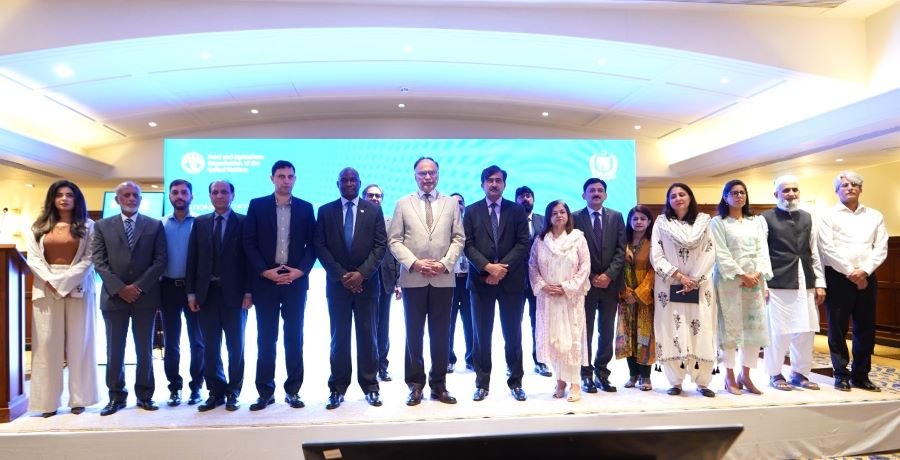
Islamabad (GNP): “Food security is at the core of FAO’s mandate, and few issues are more important than the one that brings us together today: how to protect the agricultural land that feeds our people while meeting the demands of a growing population and protecting our natural resources especially water,” said James Okath, FAO Representative in Pakistan.
Government of Pakistan and the Food and Agriculture Organization of the United Nations (FAO) today launched a Technical Working Group (TWG) to strengthen evidence-based land and water use planning and safeguard productive agricultural land as part of efforts to advance Pakistan’s long-term food security.
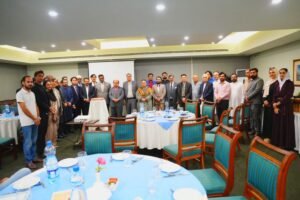
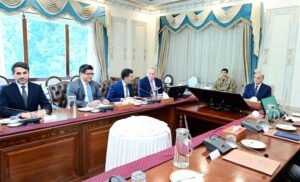
The initiative was inaugurated through an Inception Workshop, during which Prof. Ahsan Iqbal, Federal Minister for Planning, Development and Special Initiatives, formally launched the National Technical Working Group (TWG) established under FAO’s Technical Cooperation Programme (TCP). The Programme is being implemented in partnership with the Ministry of National Food Security and Research (MNFSR) and the Ministry of Planning, Development and Special Initiatives (MoPD&SI).
Pakistan’s food demand is projected to increase by at least 50 percent by 2050, while rapid urban expansion is placing growing pressure on productive agricultural land and water resources. The initiative will strengthen the evidence base land-use planning and support practical approaches to safeguard agricultural land and water resources.
FAO Representative to Pakistan, James Robert Okoth, during his opening remarks, Your physical presence here, colleagues, means a great deal to us. It demonstrates the commitment of your respective ministries and departments to sustainable food and nutrition security, as well as export-driven growth through better and integrated land-use planning.
During the Green Revolution, the focus was largely on expanding agricultural land. To produce enough food, we increased the area under cultivation.
Today, we no longer have the luxury of unlimited land. We face the dual challenge of population growth and climate change, which makes better planning and management of our available resources essential.
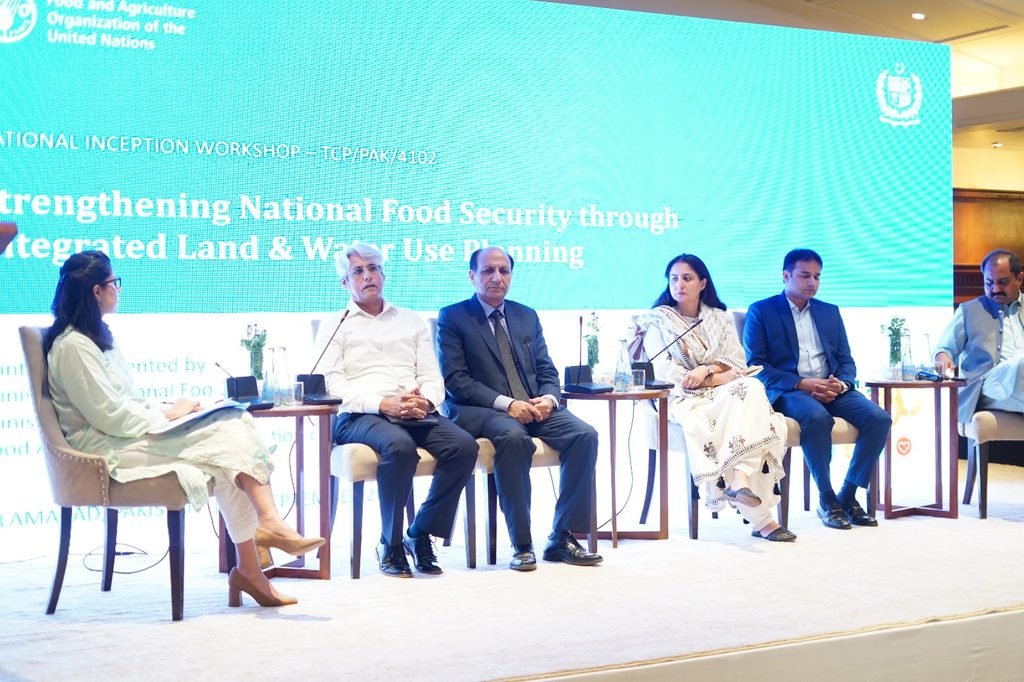
This is why this technical cooperation programme was developed jointly with the two ministries and the respective provinces, to find practical ways of addressing these challenges.
The programme we are launching today aims to protect the agricultural land that feeds our people while meeting the needs of a growing population and safeguarding our natural resources, particularly water.
We cannot stop urbanization simply because we want to grow crops. Urbanization is not necessarily bad, but we must ensure that agricultural production and food security are protected.
Our shared objective is to strengthen the evidence and coordination needed for better land and water-use planning.
The initiative is based on a simple principle: sustainable solutions must be homegrown and implemented by and with the people on the ground.
You are the policymakers and technical experts in your respective departments. Your input will be critical to the successful implementation of this programme.
The initiative is aligned with Pakistan’s national aspirations. Its direction and outputs will be shaped by national priorities and guided by a technical working group led by the Ministry of National Food Security and Research and the Planning Commission.
Together, the project will develop a stronger evidence base for decision-making, including a *national digital land-use atlas* and practical approaches for integrated land and water-use planning in selected districts.
FAO’s role will be to provide technical support. We will take a supportive role, while you, as the policymakers and national stakeholders, will be at the forefront of driving these initiatives.
Ladies and gentlemen, in conclusion, I once again thank you for attending this event and making time for this important initiative.
FAO remains committed to working with all of you on issues related to food security, nutrition security, and the income security of the communities we serve as we transform our agri-food systems.
The Working Group brings together federal and provincial governments, academia and technical experts to promote coordination, data sharing and evidence-based policymaking. The initiative aligns with Government priorities under URAAN Pakistan, the National Water Policy and the National Food Security Policy, while building on existing national and provincial efforts.
“When different studies, using different methods and different sources of evidence, arrive at the same conclusion, we should pay attention. And the conclusion is clear: Pakistan can no longer afford to treat the protection of agricultural land as a secondary concern,” said Prof. Ahsan Iqbal, Federal Minister for Planning, Development and Special Initiatives.
Also read: US Sinks Iranian Tanker as Tehran Fires Missiles at Jordan Base
Over the next two years, the Programme will strengthen integrated land and water-use planning through enhanced institutional capacity, policy support and digital tools. Key initiatives include a Land Use Zoning Framework and a Digital Land Use Change Assessment Platform to improve decision-making, protect productive agricultural land and promote sustainable development across Pakistan.

Sohail Majeed is a Special Correspondent at The Diplomatic Insight. He has twelve plus years of experience in journalism & reporting. He covers International Affairs, Diplomacy, UN, Sports, Climate Change, Economy, Technology, and Health.