The regional tensions in South Asia are of no surprise to anyone even remotely aware of the global political landscape. Whether it’s the Taliban in Afghanistan or the bitter relationship between Pakistan and India, the subcontinent and its surrounding region is a hotbed of instability.
In the modern era, these tensions have evolved beyond simply direct confrontation and delved into the realm of using proxies as well as other subliminal methods to incur instability in rival nations.
While India has long claimed that Pakistan funds terrorists along its borders to disrupt India’s security, Pakistan has also made assertions that India has been backing several terrorist groups along the Pakistani border areas in Balochistan and KPK especially.
One such entity is the Tehreek-e-Taliban Pakistan (TTP), a terrorist organisation plaguing Pakistan’s stability. Pakistan has provided evidence numerous times to organisations such as the UN in effort to curb these proxy tactics.
The claim that the TTP may be backed by a state and is acting as their proxy is not an implausible claim when you look at the evidence, not just provided by Pakistan. The UN itself reported that $43,000 were given to FAK chief Noor Wali by the Afghan government.
The UN did not claim Indian involvement but this evidence coupled with Pakistan’s already submitted dossiers, and Pakistan’s assertions of ill intents by rival nations do not seem so far-fetched. The evidence seems to link towards some form of tacit understanding between India and Afghanistan in order to destabilize a mutual rival i.e. Pakistan. Further proof of this collaboration comes from the confession of former GDI General Sami Sadat who asserted that India was funding TTP.
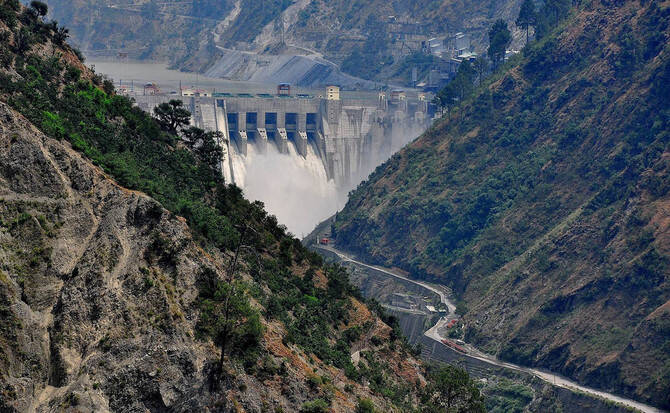
The mutual enmity between Pakistan and India comes as no surprise. However, in recent years especially under the BJP, India’s enmity seems to run far deeper. We see this in India’s decision to hold the Indus Waters Treaty in abeyance and demand its unilateral overhaul. Weaponizing critical downstream river flows not only threatens regional agricultural survival but undermines basic international water law.
These new strategies, including proxies or other methods like tampering with treaties, have replaced conventional warfare largely and are much more devastating. Traditional warfare contains rules of engagement and has a likely end that can be victory, loss or mediation.
However, these new methods do not seem to have an end. They are long-term non-conventional war strategies that continue to damage a nation, and more importantly its people, continually.
Both Pakistan and India have a deep rooted hatred of each other that can be traced to colonial machinations. Manipulated by the seeds sown by the British, these two nations have locked horns for over 70 years and don’t intend to slow down. Before the recent aggressions, Pakistan had shown a willingness to move towards co-operation with India, however the Indian government is not keen.
The BJP weaponises conflicts with Pakistan to invoke national sympathy and garner sympathetic votes. But if we want to be completely fair we must also acknowledge that Pakistan has had its own severe governance failures as well. These failures have allowed the domestic situation to worsen to its current condition and have had foreign policy implications as well leading to such relations with India.
However, with their recent rise in reputation in the global stage due to their role in the US-Iran war as well as their strategic positioning in the conflict with India last year, Pakistan has a rare opportunity to frame their own stance towards its neighbours as one that welcomes peace and negotiations.
Also Read: Human Respect Philosophy: The Science of Human Society
Many have suggested that the way forward can only be collaboration if the two nations wish to achieve prosperity. However with relations soured to such an extent, the best we can hope for is an end to the current descent into mutual sabotage. Whether it is through direct communications or third-party mediation, relations need to at least shift from severely hostile to slightly amicable.
Otherwise, the toll on the civilian population on both sides will continue to pile up, hindering the progress of both nations. The best course of action for Pakistan, if bilateral communication is truly impossible, would be to seek mediation through a third party such as the World Bank (which brokered the initial IWT itself) and solve the most immediate issues, such as the suspension of the Indus Water Treaty.
As for the proxy warfare that has pervaded the space of Pak-India conflicts, a solution seems out of reach so long as the BJP-led Indian government maintains such strict anti-Pakistani sentiments.
The views presented in this article are the author’s own and do not necessarily reflect the views of Global News Pakistan

Shamikh Jehangir
Shamikh Jehangir is a researcher at the Islamabad Policy Research Institute (IPRI). He holds a Master’s degree in International Affairs and Diplomacy from SOAS University of London, specializing in international relations and global diplomacy.