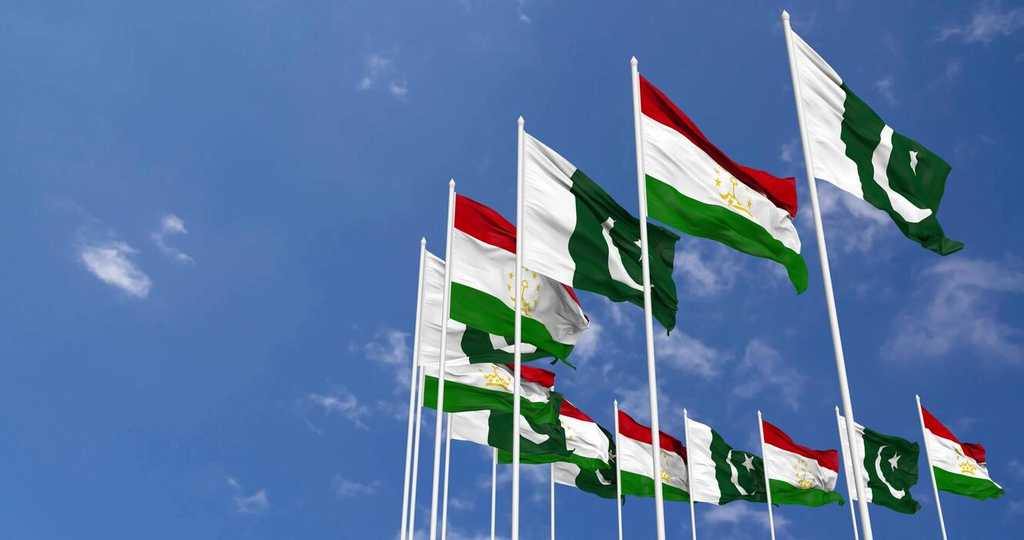
Tajikistan and Pakistan’s role in public diplomacy for enhancing regional and global connectivity is significant. Tajikistan and Pakistan gained independence on 9th September 1991 and 14th August 1947, respectively. Tajikistan, by adopting its “open door” policy, and Pakistan, as a regional peace facilitator, began their external relations with the regions and countries of the world accordingly. The country’s diplomatic relations with South Asian regions, especially Pakistan, started on 6th June 1992, and with India on 28th August 1992, respectively.
Tajikistan, as part of Central Asia, and Pakistan and India, as South Asian nations, having an ancient history, widespread culture, language and literature, and being located along the historical Silk Route, with vast natural resources and hydro-energy potential, high mountains, and pure fresh waters and historical rivers, are considered main role-playing states in the process of building a multipolar world.
These states, as nations full of tradition and peace-loving values, always promote SCO member regions through public diplomacy toward mutual socio-economic coordination. Tajikistan’s National Unity (Vahdati Milli) has been adopted as a model of peace in the charter of the UN, to be followed by conflicted regions and nations of the world.
Pakistan’s involvement as a peace moderator in the Middle East and the Shanghai Cooperation Organization (SCO) is significant for regional connectivity and cooperation. As key members of the SCO, both states are positioned as a bridge between South Asia, Central Asia, and beyond, promoting stability, economic collaboration, and infrastructure development.
Strategic Position in the Region
Tajikistan, Pakistan, and India’s geographic locations make them a hub for trade and connectivity within the SCO framework. Pakistan’s direct access to the Arabian Sea and its proximity to China, Afghanistan, and the Central Asian Republics play a critical role in enhancing regional trade routes. Projects and global initiatives like the China-Pakistan Economic Corridor (CPEC) and CASA further strengthen this position, connecting Gwadar Port to China and other SCO nations, thereby providing a vital link between landlocked Central Asia and global markets.
As active members of the SCO, both states enhance their influence in shaping regional connectivity projects, as well as energy pipelines and digital corridors that could benefit the entire region. The states’ engagement with the SCO includes active participation in ministerial meetings and other dialogue formats covering security, defence, economy, and other areas of cooperation. Through their contributions to the SCO’s day-to-day functioning, the states have each deputed officers to the SCO Secretariat and the SCO Regional Anti-Terrorist Structure in Tashkent, marking a gradual expansion of their role in the grouping.
The grouping has provided SCO members with a platform to pursue cooperation not only in traditional areas such as regional security and counter-terrorism, but also in connectivity, trade, innovation, digital inclusion, health, culture, and people-to-people exchanges.
The countries’ relationships with SCO members are rooted in longstanding ties based on mutual trust and goodwill. Pakistan and India, first as observers and later as full members, were provided with a platform to participate in discussions and initiatives spanning regional security, economic cooperation, connectivity, and cultural exchanges. The leaders’ emphasis on Security, Connectivity, and Opportunity will provide a Civilizational Dialogue Forum.
India’s role in the Shanghai Cooperation Organization (SCO) is pivotal in shaping regional dynamics, and its participation reflects its commitment to multilateralism and regional stability. India hosted the first SCO Cultural Ministers’ Meeting, showcasing its soft power diplomacy. India’s emphasis on connectivity projects aligns with its broader regional integration goals.
Also Read: Dar Holds Bilateral Talks With World Leaders at SCO Summit
Promoting Economic Integration
Tajikistan, Pakistan, and India’s commitment to economic integration within the SCO is crucial for regional development and vital for strengthening trade ties among members. The states’ focus on digitalization and modernization offers a platform for collaboration in areas like the digital economy, e-commerce, and cross-border investment. Tajikistan, Pakistan, and India’s role in facilitating economic partnerships is vital; their young populations, strong freelance economies, and growing emphasis on digital innovation make these states key players.
Counter-Terrorism and Security Cooperation
Tajikistan, Pakistan, and India have contributed significantly to the SCO’s counter-terrorism efforts, having experience in combating extremism and protecting human lives in the fight against terrorism while promoting regional security. Since joining, the states have actively participated in SCO summits and initiatives focused on combating terrorism, promoting economic cooperation, and enhancing cultural exchanges.
The states’ active participation in SCO initiatives to combat terrorism, drug trafficking, and transnational crime not only strengthens their security but also contributes to the broader goal of regional peace.
Driving Regional Connectivity Forward
Tajikistan, Pakistan, and India’s commitment to regional connectivity is a cornerstone of engagement among SCO members. The SCO is a Eurasian political, economic, and security alliance, gathering China, Russia, and several Central Asian countries, marking a significant step in member states’ foreign policy.
It is worth mentioning that under the Kyrgyz Republic’s presidency of the SCO, members maintained high-level participation across the grouping’s different mechanisms. The Republic of Tajikistan congratulated the Islamic Republic of Pakistan on assuming the chairmanship of the Shanghai Cooperation Organization and expressed its support for the initiative declaring the city of Lahore, twin city of Dushanbe, as the Tourism and Cultural Capital of the Shanghai Cooperation Organization for 2026–2027.
Cooperating and working together to enhance infrastructure and trade routes, strategic location, and economic policies, and actively participating in key projects, will help shape the future of connectivity in the region. Both states, by fostering collaboration on critical issues like climate change, security, and trade, play a central role in building a more connected, prosperous, and secure region under the SCO’s framework. The states’ global initiatives, leadership, and strategic partnerships underscore their importance in driving forward the agenda of regional friendship, connectivity, and cooperation.
Mirsaid Rahmonov
Mirsaid Rahmonov is a Senior Researcher in the Department of South East Asia at the Institute of Asia and Europe Studies, Tajikistan, where his work focuses on regional cultural heritage, historical connectivity, and diplomatic relations between Central and South Asia.