Washington (GNP): President Donald Trump has announced a sweeping agreement giving the US Partial control over more than 65 billion barrels of Venezuela’s proven oil reserves, roughly a fifth of the OPEC nation’s total holdings.
The move, reached through a partnership with private business, marks one of the most significant expansions of US involvement in Venezuela’s energy sector in decades, with Washington betting that American companies can revive an industry battered by years of underinvestment, mismanagement and sanctions.
Trump credited Secretary of State Marco Rubio and Secretary of War Pete Hegseth with negotiating the arrangement alongside Venezuela’s interim leadership. Announcing the deal on Truth Social, he says the US secured majority control of the reserves at no cost to American taxpayers.
The agreement follows weeks of negotiations aimed at giving American companies long-term access to a group of Venezuelan oilfields located primarily in the Orinoco Belt and Lake Maracaibo regions, in exchange for guaranteeing crude supply to the United States.
Rubio describes the deal as mutually beneficial, saying it will secure stable, low-cost oil for the United States while helping bring down domestic gasoline prices. For Venezuela, he says the arrangement is expected to bring close to 100 billion dollars in private investment and support thousands of high-paying jobs as the country’s economy recovers.
Venezuela’s interim leader, Delcy Rodriguez, who took office after the removal of former President Nicolas Maduro in January, has welcomed the agreement, saying it will enable a major increase in output through the development of seventeen strategic oilfields and generate an estimated 209 billion dollars in tax revenue for the country over time.
Despite the scale of the announcement, key details remain undisclosed, including the exact structure of the arrangement, the specific companies involved, and how the United States intends to exercise majority control over reserves that fall under Venezuelan state ownership.
Officials in Caracas are expected to finalise agreements in the coming days, granting new exploration and production rights primarily to American firms, with a lease-based model reportedly among the options under consideration for auctioning fields to US producers.
The legal footing for such an arrangement remains uncertain. David Goldwyn, president of Goldwyn Global Strategies, says there is no precedent for the US government entering into a lease to operate oil fields, and questions whether the plan under Venezuela’s constitution and hydrocarbons law can hold up to scrutiny.
He adds that political uncertainty, a weak power grid and limited export capacity are among the deeper obstacles that have kept investment away from Venezuela for years, regardless of the new agreement’s terms.
Also Read: President Tokayev’s Address at the Opening of the First Session of the Kurultai
The timing of the announcement coincides with mounting pressure on the Trump administration ahead of November’s midterm elections, as rising gasoline prices weigh on consumer sentiment. Washington has also been exploring ways to replenish its Strategic Petroleum Reserve, including potential crude swaps with US producers, as it continues efforts to secure a steady flow of Venezuelan crude for domestic refineries.
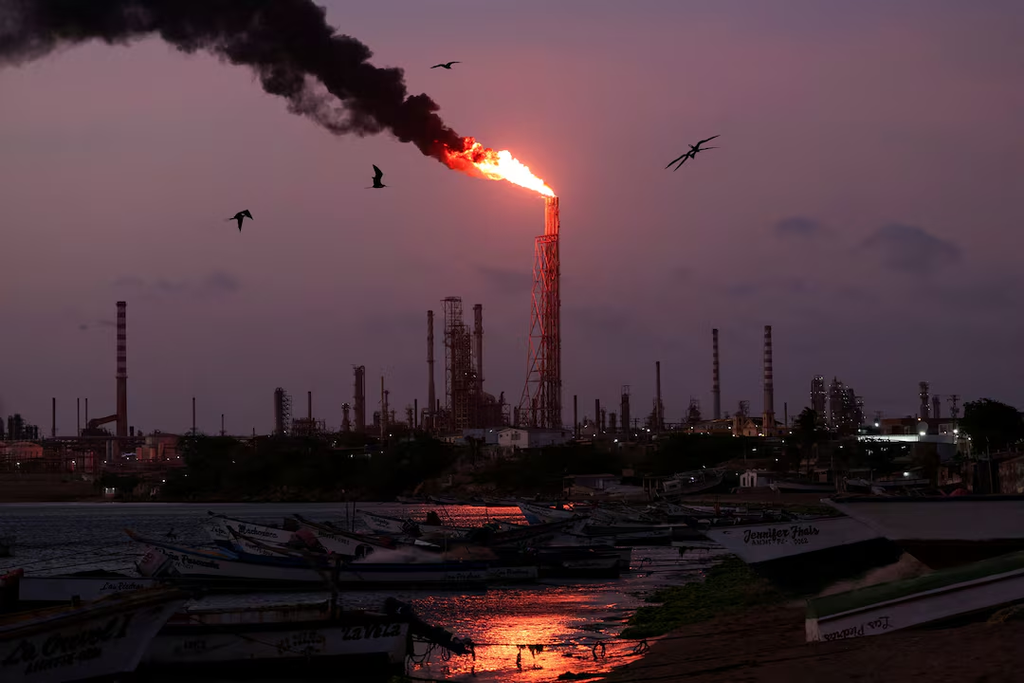
Venezuela currently produces around 1.25 million barrels of oil per day, a fraction of its potential given the size of its reserves, the largest proven reserves of any nation in the world.
The deal also marks a notable reversal of decades of Venezuelan energy policy. The country nationalised its oil industry in the 1970s, placing state-run PDVSA at the centre of production, and further tightened state control under former President Hugo Chavez, who forced foreign producers into joint ventures and later expropriated assets held by companies including ExxonMobil and ConocoPhillips.
Output declined sharply during Maduro’s rule, setting the stage for the current push to draw American capital and expertise back into the country’s oil sector.

Managing Editor at Global News Pakistan (GNP), with a Bachelor's degree in International Relations from Riphah International University, graduated with a Gold Medal. Reach out at sabahtareengnp@gmail.com