New Delhi (GNP): Amnesty International has called on Indian authorities to launch a prompt and impartial investigation into the police response to the Cockroach Janata Party (CJP)-led “Chalo Sansad” march, saying that a month after the crackdown, no officer in Delhi has faced accountability for the force used against protesters.
The call follows a digital investigation by the organisation’s Evidence Lab, which verified witness testimony along with video and photographic evidence documenting the police response between July 20 and July 24 in Delhi and in Siwan town in Bihar state.
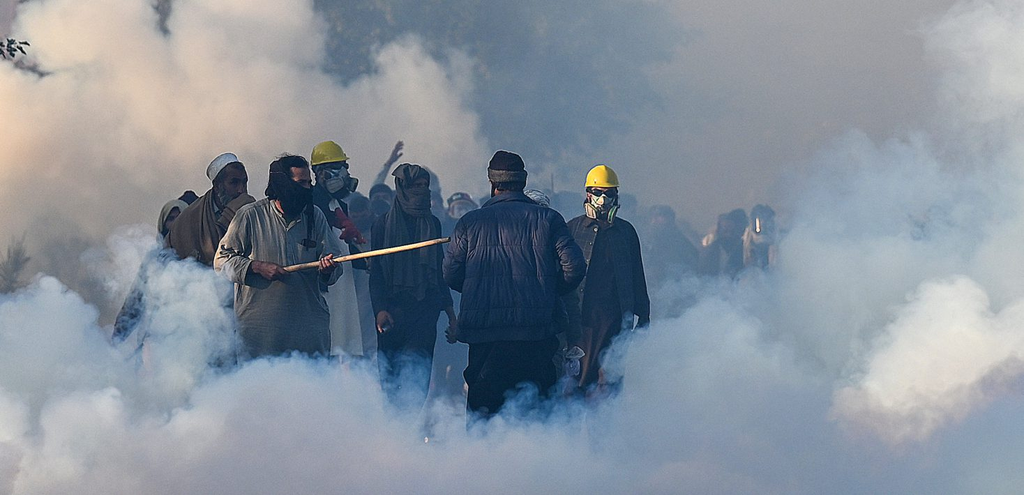
Amnesty International said the material showed police using pellet-firing shotguns, tear gas launchers, grenades, batons and electric shock devices in a manner that breached international law and standards as well as domestic policing guidelines, including two verified instances of an officer unlawfully using lethal force against a crowd.
The investigation traces back to the circumstances surrounding the march itself. Authorities denied permission for the demonstration, imposed an internet shutdown in the areas where it was scheduled to take place, issued orders barring gatherings of more than five people, closed several Delhi metro stations and erected barricades across the city centre.
Amnesty International said this combination of measures amounted to a blanket restriction that did not meet the standards of legality, necessity and proportionality required under international human rights law, which does not permit an assembly to be made subject to prior authorisation.
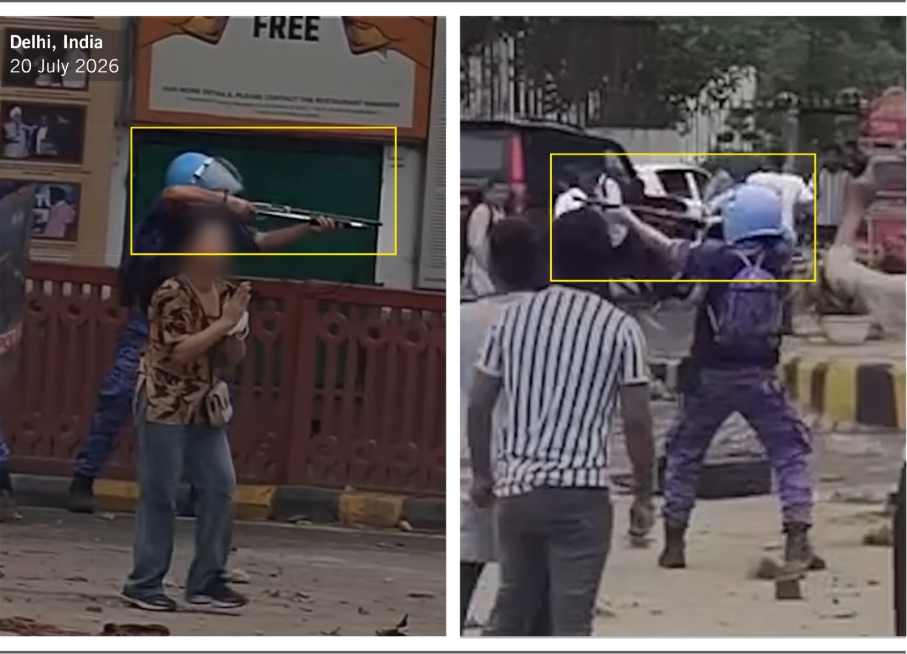
Once the march began, the Evidence Lab verified 17 videos filmed on July 20 across Jantar Mantar, Sansad Marg and Connaught Place in central Delhi, along with two videos filmed on July 24 in Siwan, identifying personnel from Delhi Police, the Rapid Action Force (RAF) and the Central Reserve Police Force (CRPF) at the scenes. Among the most serious findings, footage showed an RAF officer firing a shotgun loaded with birdshot into the crowd, with two protesters found nearby bearing wounds consistent with pellet injuries.
Amnesty International noted that birdshot ammunition was never designed for law enforcement, spreads inaccurately enough to endanger bystanders, and has previously been linked to deaths and blindings in Egypt, Iran and Jammu and Kashmir. Domestic guidelines call for a warning before such force is used, and a protester interviewed by the organisation said none was given before the shotgun was fired.
Separately, verified footage showed a tear gas grenade exploding near a group of peaceful protesters, launched directly at demonstrators rather than at the angled trajectory required under United Nations guidance, and eight videos showing officers striking peaceful protesters, including a young boy, with lathis, the long batons used by Indian police, in some cases continuing to strike people already on the ground.
One video showed an RAF officer using an electric shock baton on a peaceful protester, a category of weapon Amnesty International and the UN Special Rapporteur on Torture have jointly called to have banned from law enforcement use altogether. In Siwan, two further videos showed a state police officer firing an AK-type assault rifle at protesters, a level of force Amnesty International said is lawful in an assembly only as an absolute last resort against an imminent threat to life, and one it found no evidence justified in this case.
Also Read: Escalating US-Iran Economic Standoff Threatens Global Oil Supply and Regional Stability
Delhi Police has rejected these findings, describing its handling of the protest as professional in statements made on social media and before India’s Supreme Court, and labelling reports of pellet injuries as false.
Amnesty International said its verified evidence directly contradicts that account, and noted that separate reporting has cited an internal inquiry finding that RAF personnel fired at least seven rounds of metal-pellet ammunition, with a Right to Information request indicating at least ten people were injured by pellets.
Delhi Police has said more than 400 people, including officers and protesters, were injured overall, while at least three people were hurt in Siwan, including a bystander shot in the neck.
Aakar Patel, Chair of the Board of Amnesty International India, said the continued absence of accountability a month on reflects a heavy-handed response against peaceful protesters, including children, that amounted to state-sanctioned violence carried out under the guise of crowd control.
The organisation pointed to its earlier documentation of injuries, blindings and deaths caused by pellet-firing shotguns used for crowd control in Jammu and Kashmir, a practice a 2018 United Nations human rights office review also urged India to end, and noted that a petition seeking to stop the use of such shotguns in policing assemblies remains before India’s Supreme Court.
Says Aakar Patel, “We call on Indian authorities to order a prompt, impartial and effective investigation and to publish its findings.”

Managing Editor at Global News Pakistan (GNP), with a Bachelor's degree in International Relations from Riphah International University, graduated with a Gold Medal. Reach out at sabahtareengnp@gmail.com