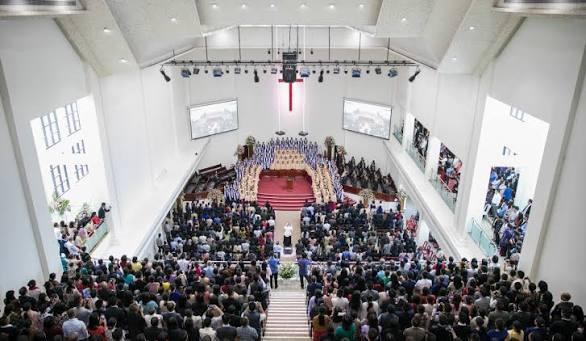
New delhi (GNP): The Nagaland Baptist Church Council has opposed directives requiring the singing or playing of India’s national song, Vande Mataram, at official events, arguing that compulsory participation could infringe on freedom of conscience and religious belief.
The council, a prominent Christian body in the north-eastern state of Nagaland, issued its position in a statement on August 13, stating that national unity should not be confused with religious or cultural uniformity.
The church council‘s statement comes amid a wider debate in India over the government’s decision to give Vande Mataram greater prominence at official functions alongside the national anthem, Jana Gana Mana. The move has drawn objections from sections of India’s religious minorities, largely because several later stanzas of the song contain Hindu religious imagery, including references to Hindu goddesses. India maintains a formal distinction between Jana Gana Mana as the national anthem and Vande Mataram as the national song, though both hold equal official status.
While the council said it respects India’s national symbols, patriotic traditions and constitutional values, it maintained that matters involving faith, conscience and personal conviction require sensitivity.
NBCC General Secretary Rev Dr Mar Pongener and Secretary for Social Concern Dr Villo Naleo said in the statement that compelling Christians or other citizens to sing a song conflicting with their religious beliefs could undermine freedom of conscience, arguing that genuine patriotism should come from personal commitment rather than coercion.
Vande Mataram, meaning “I bow to thee, Mother,” was written by Bankim Chandra Chattopadhyay in Sanskrit and Bengali in the late nineteenth century and included in his 1882 novel Anandamath. The song became a rallying cry during India’s independence struggle and has since held a lasting place in the country’s national life.
Its opening verses describe the motherland in patriotic terms, but later passages invoke Hindu deities including Durga, Lakshmi and Saraswati, a shift that has raised questions for Muslim, Christian and other minority communities about whether compulsory singing of the full song aligns with India’s constitutional commitment to religious freedom and pluralism.
The debate gained fresh momentum after the government introduced a protocol requiring the full national song to be played before the national anthem at official functions, departing from earlier practice in which Jana Gana Mana was used at state and ceremonial occasions while Vande Mataram was more closely associated with cultural and patriotic events.
Also Read: The Hidden Pressure Behind Being the “Good Child”
On August 15, during Independence Day celebrations at the Red Fort in New Delhi, Vande Mataram was sung before Jana Gana Mana, marking a departure from the traditional order and drawing criticism from those who argue the change could diminish the national anthem’s symbolic standing. Supporters of the shift, meanwhile, view Vande Mataram as an important expression of India’s nationalist history and cultural heritage.
The NBCC said India’s Constitution rests on principles of liberty, equality, pluralism and freedom of conscience, and stressed that respect for national symbols does not require every citizen to express patriotism in an identical manner.
The council added that a citizen’s love for the country cannot be measured solely through participation in a prescribed patriotic practice, framing the matter as part of a broader debate over how India balances patriotic tradition with the religious freedoms of its diverse population.
Says the Nagaland Baptist Church Council, “Patriotism must never be reduced to compulsory conformity”

Managing Editor at Global News Pakistan (GNP), with a Bachelor's degree in International Relations from Riphah International University, graduated with a Gold Medal. Reach out at sabahtareengnp@gmail.com