
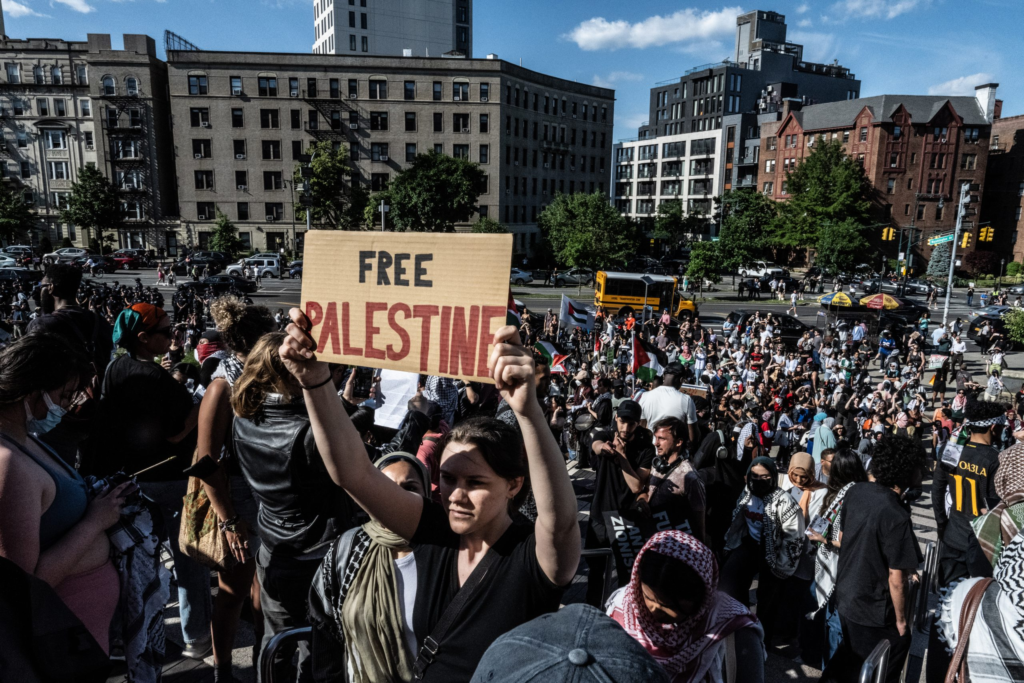
NEW YORK (GNP): Palestinian Rights remain at the center of Palestine’s international message as the State of Palestine reaffirms its commitment to self-determination, independence and the right of return for Palestinian refugees while calling for continued support from the international community.
The statement, shared by the State of Palestine, emphasized that the Palestinian people would continue to pursue what it described as their legitimate national rights. It highlighted self-determination, independence and the right of return as fundamental elements of the Palestinian position on the long-running Israeli-Palestinian conflict.
According to the statement, Palestinian representatives stressed that their struggle for national rights should be understood within the broader history of peoples seeking freedom from colonial rule and foreign domination. The message also appealed to countries and international actors that have previously supported Palestinian aspirations to continue their diplomatic and political engagement.
The issue of Palestinian Rights has remained an important subject at the United Nations for decades. General Assembly Resolution 3236, adopted in 1974, reaffirmed the Palestinian people’s rights to self-determination, national independence and sovereignty. The resolution also reaffirmed the right of Palestinians to return to their homes and property from which they had been displaced.
The United Nations continues to discuss these issues through its Committee on the Exercise of the Inalienable Rights of the Palestinian People. In May 2026, the committee reaffirmed that the right to return, self-determination and independence remain central elements of international discussions concerning Palestine.
The latest Palestinian message therefore comes within a broader diplomatic framework in which Palestinian representatives continue to seek international recognition and support for an independent state. The question of statehood remains closely connected with issues involving territory, refugees, security, sovereignty and a potential two-state settlement.
The principle of self-determination is particularly significant in international relations. It refers to the ability of peoples to determine their political status and pursue their economic, social and cultural development. For Palestinian representatives, this principle forms a central component of their diplomatic efforts and their demand for an independent and sovereign state.
The question of refugees is another major element of Palestinian Rights. Millions of Palestinians are registered as refugees, and the issue of their future remains one of the most sensitive questions in negotiations concerning the Israeli-Palestinian conflict. The right of return has been repeatedly referenced in United Nations discussions and resolutions concerning the Palestinian question.
International diplomacy surrounding Palestine has also increasingly focused on the two-state solution. The New York Declaration on the peaceful settlement of the question of Palestine called for the realization of a sovereign, unified and independent Palestinian state living alongside Israel in peace and security. It also reaffirmed the Palestinian people’s right to self-determination.
From an international relations perspective, the renewed emphasis on Palestinian Rights demonstrates how the Palestinian question continues to influence multilateral diplomacy. Palestine has used international institutions, diplomatic missions and political forums to maintain international attention on statehood, sovereignty and the rights of Palestinian refugees.
The issue also remains connected to wider debates concerning international law and the responsibilities of states. Palestinian officials have repeatedly called on the international community to support the implementation of relevant United Nations resolutions and international legal principles.
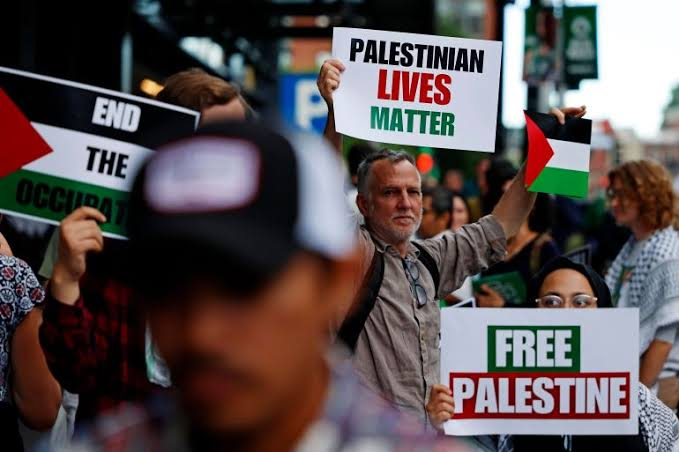
At the same time, the Israeli-Palestinian conflict remains highly contested, with different parties holding competing positions concerning territory, security, settlements, refugees and statehood. A lasting political settlement would therefore require addressing these interconnected issues through sustained diplomatic engagement.
Also Read: 9th Pakistan–Belarus JMC Held in Islamabad today
The latest statement from the State of Palestine reinforces its longstanding position that Palestinian Rights should remain an important part of international diplomatic efforts. Its emphasis on self-determination, independence and the right of return reflects issues that have remained central to the Palestinian diplomatic agenda for decades.
For the international community, the continuing challenge is to translate diplomatic commitments into meaningful progress toward a sustainable political settlement. The United Nations and other international actors continue to discuss pathways toward peace, including the establishment of an independent Palestinian state alongside Israel.
The renewed emphasis on Palestinian Rights consequently highlights the continuing importance of the Palestinian question in international affairs. As diplomatic efforts continue, questions of self-determination, sovereignty, refugees and statehood are expected to remain central to discussions concerning peace and stability in the Middle East.