Kabul (GNP): August 15, 2026, will mark five years since the Taliban returned to power in Afghanistan, a period that Human Rights Watch has documented as one of the world’s gravest human rights crises, particularly for women and girls. Soon after taking power, the Taliban barred women and girls from secondary and higher education, while also imposing severe restrictions on employment, freedom of expression, and movement outside the home, restrictions that have made it difficult for humanitarian organizations to reach them.
Journalists, activists and people perceived as critics of the Taliban have faced intimidation, arbitrary arrest, detention and torture over the past five years. Several hundred members of the former government’s security forces have been victims of enforced disappearance and extrajudicial killing, according to Human Rights Watch documentation gathered across multiple provinces since 2021.
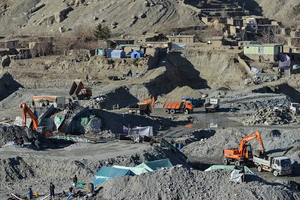
Alongside the rights crisis, Afghans are enduring a protracted humanitarian emergency. Following the cutoff of most foreign assistance to the country, half the population has needed food and medical assistance, with more than 3.7 million children facing acute malnutrition as health services have been severely weakened. Mass returns of Afghan refugees forced out of Pakistan and Iran have deepened the crisis further, as most returnees lack housing and any source of subsistence or income once back in the country. Renewed armed conflict with Pakistan, along with sporadic attacks by the Islamic State group, have added hundreds of civilian casualties to this toll.
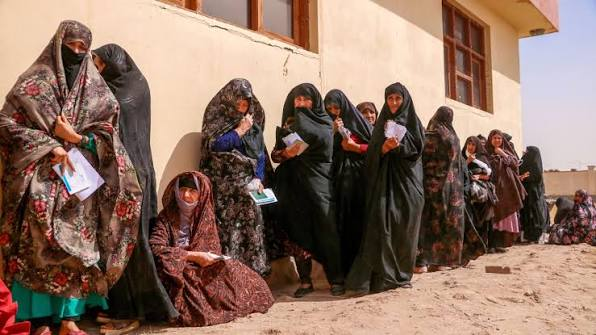
The Taliban acted almost immediately after taking power to restrict independent media, beating and detaining journalists, imposing reporting restrictions, and monitoring newsrooms. Hundreds of media outlets closed as funding dried up, and many reporters fled the country or stopped working altogether, with women journalists especially affected and pushed off the air or out of newsrooms entirely. In March 2022, the Taliban banned secondary education for girls, a decision that affected an entire generation and left girls who had expected to become doctors, teachers, engineers or journalists told to stay home after sixth grade.
Afghan women protesters became the face of resistance under Taliban rule, demonstrating in Kabul, Herat, Bamiyan and other provinces despite violent crackdowns that included beatings, threats and arbitrary arrests. Some detained women were held incommunicado, pressured to confess, and warned never to protest again, yet the rallying cry of “bread, work, freedom” has persisted as a reminder of Afghan women’s continued leadership in demanding their rights.
Afghanistan’s healthcare system has become one of the most visible casualties of the economic collapse, with health facilities lacking essential medicines and equipment as families are forced to choose between treatment and survival. Women already struggled to access healthcare before the takeover, and since August 2021, they face additional barriers in many provinces, including a requirement to be accompanied by a male guardian while traveling and to be seen only by female medical staff, even as the Taliban’s ban on women attending medical education threatens to leave future generations without female healthcare workers altogether.
Also Read: Mamdani Attends Brooklyn Pakistani Independence Mela
Afghanistan’s neighboring countries, Pakistan and Iran, have deported or forced nearly five million Afghans to return to the country, while Turkey has pushed Afghans back at its border with little or no examination of their protection claims.
In Europe, Germany has allowed Taliban officials to travel there to facilitate deportations, and European Union officials met with a Taliban delegation in Brussels in June 2026 to discuss forced returns from EU member states. Those at particular risk among returnees include women and girls, journalists, human rights defenders, former government employees, religious minorities and people perceived as critics of the Taliban.
While there has been virtually no accountability for abuses committed by all parties to the conflict over recent decades, efforts to pursue justice gained new momentum in 2025 with the International Criminal Court’s warrants and the creation of the UN-mandated Independent Investigative Mechanism for Afghanistan in October 2025, tasked with collecting and preserving evidence of international crimes to support future criminal proceedings. Human Rights Watch has called on governments to press the Taliban to end all restrictions on women and girls’ rights, support ongoing accountability mechanisms, fully fund the UN humanitarian response plan for Afghanistan, and halt all forced returns of Afghan refugees in favor of safe and legal pathways.

Managing Editor at Global News Pakistan (GNP), with a Bachelor's degree in International Relations from Riphah International University, graduated with a Gold Medal. Reach out at sabahtareengnp@gmail.com