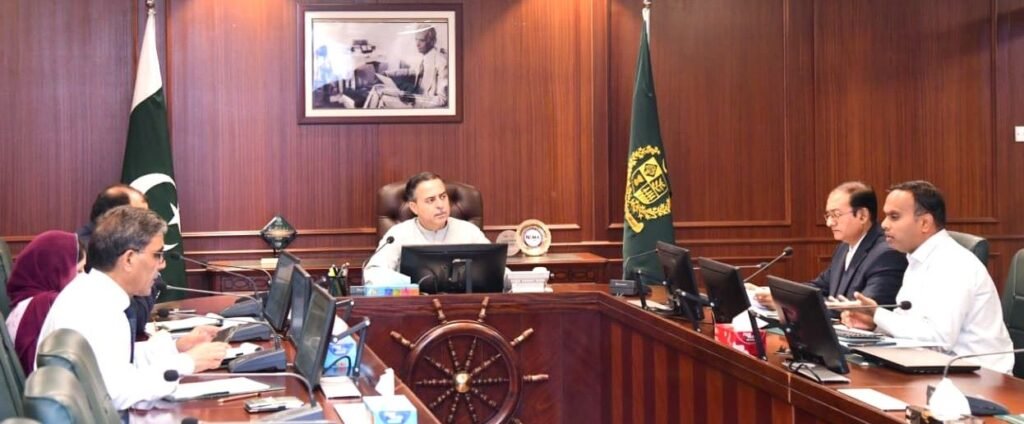
Islamabad (GNP): Federal Minister for Maritime Affairs Muhammad Junaid Anwar Chaudhry has called for stronger recognition of traditional ecological knowledge held by Pakistan’s coastal communities, saying it can play a valuable role in climate adaptation, marine conservation, and sustainable fisheries management.
In a statement marking the International Day of the World’s Indigenous Peoples, observed this year under the UN theme “Honouring Indigenous Midwives: Safeguarding Life and Well-being,” Chaudhry highlighted the broader significance of traditional knowledge systems passed down across generations.
Value of Traditional Knowledge
He noted that coastal communities have accumulated generations of knowledge about tides, fishing grounds, marine species, weather patterns, and coastal ecosystems including mangroves. He described this knowledge as a living resource rather than simply a legacy of the past, capable of contributing meaningfully to climate resilience and sustainable fisheries.
Chaudhry pointed to communities along Pakistan’s coastline — from Karachi and the Indus Delta to Gwadar and Jiwani — as remaining heavily dependent on fisheries, mangroves, and other marine resources for their livelihoods.
Challenges Facing Coastal Communities
He noted that fishing communities in Karachi’s coastal areas face growing pressure from urbanization, pollution, and habitat loss, while communities in the Indus Delta are grappling with freshwater shortages, saltwater intrusion, erosion, and shifting fish populations. Similar challenges, he said, are affecting traditional fishing communities along the Balochistan coast, including in Sonmiani, Ormara, Pasni, Gwadar, and Jiwani.
Integrating Traditional and Scientific Knowledge
Chaudhry said local fishing communities hold detailed understanding of tidal patterns, currents, seasonal changes, and shifts in marine life, and argued that combining this knowledge with scientific research could improve fisheries management, ecosystem restoration, and disaster preparedness. He emphasized that modern science and traditional ecological knowledge should work together, noting that communities with generations of experience living alongside the sea often understand environmental changes in ways that can strengthen formal policy frameworks.
He said climate change is already affecting traditional livelihoods through shifts in sea temperature, fish distribution, rainfall patterns, coastal erosion, and increasingly extreme weather, calling for community-based adaptation strategies, improved early-warning systems, climate-resilient infrastructure, and sustainable fisheries management.
Community Involvement in Policy
Chaudhry stressed the importance of involving coastal communities directly in decisions related to natural resource management, arguing that conservation efforts are more effective when local communities are treated as active partners rather than passive stakeholders.
He said Pakistan’s blue economy is closely tied to ecological security, noting that healthy marine ecosystems and empowered coastal communities are essential to sustainable maritime development.
Also read: Indonesia’s Hosts Lead-Up to 81st Independence Day
He reaffirmed the government’s commitment to supporting initiatives that strengthen coastal resilience and ensure traditional knowledge and community input remain part of Pakistan’s maritime and climate policy going forward.

Sohail Majeed is a Special Correspondent at The Diplomatic Insight. He has twelve plus years of experience in journalism & reporting. He covers International Affairs, Diplomacy, UN, Sports, Climate Change, Economy, Technology, and Health.