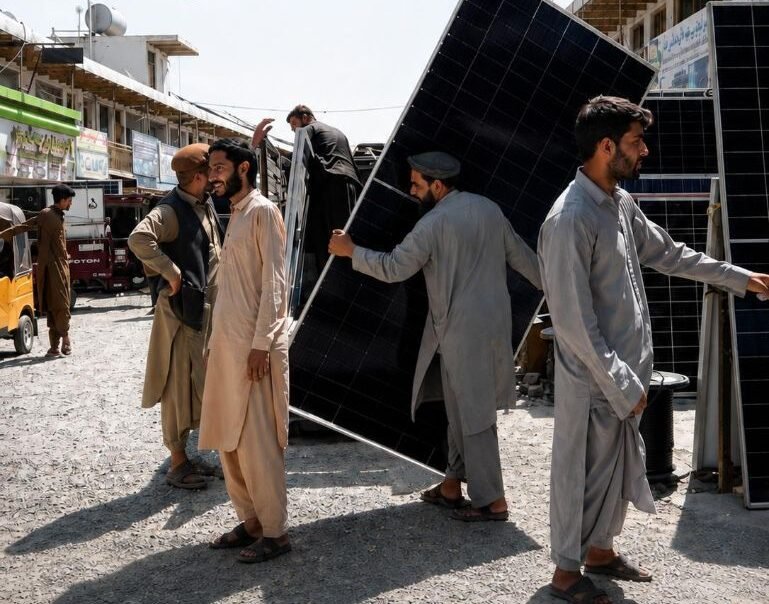
KABUL (GNP): Chinese Solar Products are playing an increasingly important role in tackling Afghanistan’s ongoing electricity shortages, offering households, farms, and small businesses across the country an affordable way to get renewable power. With reliable electricity still hard to come by in many regions, more and more Afghans are turning to solar as a way to meet their daily energy needs and cut their dependence on expensive fuel-run generators.
According to reports from China’s official media, Chinese Solar Products are catching on fast in Afghanistan, where dependable electricity access remains one of the country’s toughest development hurdles. Solar panels, batteries, inverters, and related gear are helping communities generate clean power for everything from irrigation and lighting to refrigeration, communication, and running small businesses.
For a lot of Afghan farmers, Chinese Solar Products have become genuinely indispensable. Solar-powered water pumps make irrigation possible even in remote spots where the power grid barely reaches, if it reaches at all. That’s translated into better crop yields and lower running costs compared to the diesel equipment farmers used to rely on. Many say the savings on energy free up money to put back into seeds, fertilizer, and growing their operations further.
Small businesses are feeling the benefit too. Shop owners, workshop operators, and other local entrepreneurs can now keep running through extended power outages by leaning on solar-generated electricity instead. That kind of stability has meant better productivity, longer business hours, and fewer losses from power cuts that used to bring everything to a halt. A lot of business owners see solar as less of an expense and more of a long-term investment in keeping their operations resilient.
Afghanistan still leans heavily on imported electricity, which leaves its energy system exposed to supply disruptions and infrastructure gaps. In plenty of rural districts, grid power is either nonexistent or wildly unreliable. Against that backdrop, decentralized solar systems have become a practical workaround a way for communities to get dependable power without waiting years for large infrastructure projects to materialize.
The rising demand for Chinese Solar Products also fits into a much larger global shift toward renewable energy. Manufacturing improvements, falling production costs, and better efficiency have made solar more affordable than it’s ever been. Chinese manufacturers remain among the top producers of photovoltaic equipment worldwide, shipping renewable energy products to markets across Asia, Africa, and the Middle East.
It’s not just households and businesses benefiting, either. Schools, clinics, and community facilities across Afghanistan are increasingly seeing the value of solar power. Reliable electricity means clinics can run medical equipment more effectively, and schools can offer better lighting and access to digital tools for students. So the ripple effects go beyond economics they reach into public services too.
Energy experts point out that expanding renewables could strengthen Afghanistan’s long-term energy security while cutting its reliance on imported fossil fuels. There are still hurdles, of course financing, maintenance, technical training but continued investment in solar could help diversify the country’s energy mix and make it more resilient against future shortages.
Also Read: Armed Forces Reaffirm Support for Kashmiris
The growing footprint of Chinese Solar Products also says something about the deepening economic ties between China and Afghanistan, spanning trade, technology, and infrastructure. Renewable energy cooperation has become just one piece of that broader relationship, with affordable solar equipment helping drive local economic development and raise living standards in underserved areas.
There’s an environmental upside too. Solar power generates electricity without greenhouse gas emissions, which helps cut down on the pollution that comes from diesel generators while pushing cleaner alternatives forward. As climate resilience becomes a bigger priority everywhere, renewable technologies like this are expected to play a growing role in sustainable development across developing economies.
Observers believe that continued access to affordable Chinese Solar Products paired with supportive policy and proper technical training could speed up Afghanistan’s shift toward decentralized renewable energy. Expanding clean energy infrastructure could boost productivity, strengthen rural livelihoods, and open up fresh opportunities for economic growth.
As Afghanistan keeps searching for practical answers to its energy struggles, Chinese Solar Products are becoming a more visible part of everyday life. From powering homes and businesses to supporting agriculture and essential public services, these renewable technologies are helping communities push past electricity shortages while building toward a more sustainable, dependable energy future.