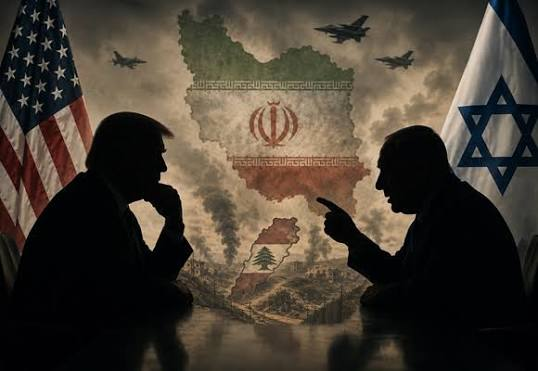
War always leads to devastation, the loss of human lives, economic disruptions, and chaos. After the devastating outcomes of conflicts, nations persist in waging wars and issuing military, political, and economic threats. This raises a question: what motivates states to engage in conflicts, considering the devastating costs of such operations? From a conceptual point of view, rationality can be found in realism, which asserts that international affairs involve the contest for power, security, and national interests. Another theoretical lens, liberalism, prioritizes collaboration, diplomacy, and international organizations for conflict resolution. Yet even in the 21st century, with the existence of diverse international organizations and institutions, state actions are driven by the struggle for power.
The 2026 Israel-Iran War significantly redefined the political and strategic landscape of the Middle East, grabbing global attention. Historically, Iran and Israel have not always been at odds; indeed, Iran became the second Muslim-majority country to recognize Israel upon its establishment in 1948. According to Al Jazeera, Iran was one of the eleven members on the special UN committee formed in 1947 to devise a settlement for Palestine once British colonial rule ended. Iran was among three members who voted against the UN partition plan, predicting a rise in violence in the region for generations. Iran advocated for a federalist solution that would allow coexistence between Arabs and Jews in a sovereign Palestine. However, the relationship between Iran and Israel deteriorated after the 1979 Iranian Revolution, when its new leaders, the Ayatollah Khomeini, considered Israel a foe and embraced the Palestinian cause.
Iran then established their groups, both political and military, across Lebanon, Syria, Iraq, and Yemen that opposed Israel’s occupation of Palestinian lands. As time progressed, escalation continued and created tensions between the two states. A main reason for this growing conflict has been Iran’s controversial nuclear program; Israel has adamantly proclaimed its stance that it will never allow the country to obtain nuclear weapons, and then Iran stance is that its program is purely for peaceful and civilian purposes. That difference eventually became a centerpiece in their intensifying rivalry.
These ongoing conflicts turned into a full-blown war in 2026, with Iran, the U.S., and Israeli military engagements that intensified regional conflicts into a global threat. The first incident that grabbed global attention was the apparent targeting of Minab School by US military force, which sent a shockwave across the region, and indeed the world. A direct missile strike killed numerous civilians, including women and children. That act of warfare sparked increased anger among people of Iran. At the time, according to the United Nations Office in Geneva, Nobel Peace Prize winner Malala Yousafzai had this to say in response to the attack: “The killing of civilians, especially children, is unconscionable, and I condemn it unequivocally,”. She also reminded the parties, “All states and parties must uphold their obligations under international law to protect civilians and safeguard schools. Every child deserves to live and learn in peace.”
Additionally, the death of Supreme Leader Ayatollah Ali Khamenei in the initial wave of strikes provoked outraged feelings among citizens of Iran, and a strong desire for retribution rose among the masses. Consequently, Iran retaliated with its own wide-ranging drone strikes on civilian locations throughout the region and conducted military strikes against US targets, such as diplomatic facilities and bases, located throughout Saudi Arabia, UAE, Oman, Kuwait, Bahrain, Jordan, Iraq, and Qatar.
The Iranian officials against strategically located assets in waterways around the globe did not spare strategic infrastructure either. Tens of thousands of individuals died or were injured, property was razed, and millions fled their homes. The Middle East’s economies slumped and political instability reached a high point during the 26th operation in Iran, Iraq, and the West.
The crisis came to a boil with Iran’s March 11-13 closing off of the Strait of Hormuz, a strategically crucial point for about 20% of oil exports in the world, the blockade created huge consequences as fuel prices sky rocketed and trades between countries was completely disrupted, leading to global economical issues that particularly impacted Asian countries negatively.
On March 30, President Trump upped the ante against Tehran’s economy, even with a mention of Kharg Island’s export oil prices and its significant desalination plants. Days later, an ultimatum was issued, followed by more bombastic statements from Trump on social media, According to Guardian, ‘A whole civilization will die tonight, never to be brought back again,’ he wrote in a Twitter message Saturday April 7 The crisis reached a critical turning point as the United States and Iran reached a two-week ceasefire on April 7–8, through mediation of Pakistan and China. An international meeting to ease tensions made progress on April 11-12, with U.S. Vice President, the Speaker of the Iranian Parliament, and various other officials at Islamabad, Pakistan. However, such efforts did not manage to conclude a conclusive accord.
It is worthy to note that while the ceasefire was set to expire two weeks from April 7, President Trump unilaterally decided to extend it, while asking the Iranian parliamentarians to present their own “comprehensive, complete, detailed offer in consultation with their government”. No timeframe was given when to extend this offer then ran ultimately refused an American proposal, as both parties continue their strikes and conflict with one another, after weeks with the proposals rejected .
Despite the continued mistrust, diplomatic interactions gained pace. Again diplomatic efforts happen and as an result of MoU on June 14 for ending the war following efforts of international arbitration. The MoU formally entered into effect when U.S. And Iranian representatives signed it, setting the course from military posturing to diplomatic dialogues on the evening of July 14.
The Issue also raised concerns according to international law, as to the legality of the Iran –United States war. Such actions went against the fundamental principle found in Article 2 (4) of the UN Charter, that emphasis prohibition of threat or use of force against the territorial integrity or political independence of any state. And according to the Article 2 (7) of the UN Charter strictly limits the interference of one country to another, which clearly states this can only be avoided if the nation doesn’t threat the international peace or the Security council intervenes with necessary means.
From a realism viewpoint, The “international system is anarchic” and that a country’s (state’s) is always “struggle for survival”. The realist theory describes states being driven by self-interest, power gains, strategic advantage and protection from internal conflicts which ultimately shape the politics of foreign countries around the world because, according to some realist theories, countries should thus defend themselves by increasing defense capability and pursuit of strategic strength if they feel their security threatened.
Major powers could be looking to destabilize regions to gain influence and divert global focus toward them and from other current political and social issues that affecting major powers. In any conflict, both sides’ powers can also take credit for their efforts and initiatives to promote peace and de- escalation for domestic or political motivations.
This conflict led to massive human and economic costs. Such human losses will cause a significant destructive lost. The destruction to infrastructure will have economic impacts for many decades to come. The number of internally displaced people will cause long- term economic issues. At the same time, if economic growth will take a backseat, no economy can recover from this event. No investment will flow to such kind of places. However, diplomatic discussions proceed to build trust. As the war had to concluded, the threat level seems reduced and both have stepped back to build better relations and future talks could possibly pave the way for a more strategic partnership between the two countries.” The conflict has definitely move from tension and de- escalation to building trust; but will trust be long lasting? Many questions remain unanswered.
Also Read: Is Spain Facing Retaliation for Challenging Israel?
And there is still room of tensions between many involved actors, regardless of the talks made for stability. War continues to affect entire regions, through economic distress, social unrest and human agony. After a signed memorandum, within a week the memorandum has become an excuse to violation, violation of memorandum happen; Iran blocked the strait of Hormuz; strikes were made by missiles and more on US bases, the US continue airstrikes to Iran, military and strategic positions. Violation of ceasefire, again happen and diplomacy failed again to achieve lasting peace in regions reflected by breaking of a memorandum. Both parties fail to trust on one other The current scenario illustrates a limitation of the diplomatic method.
Nations seek peace and yet both the involved countries accused each other on violating terms and set new conditions for negotiations. Moreover, the conflict is affecting the trade and balance of power in the world and it showed to us that lasting peace can’t be bought by Memorandum nor any peace document, if one has mistrust to another it present the chaos. The Iran and US dispute today is not about their militaries, this clash reflects the failed diplomacies and disturbed order of global peace.