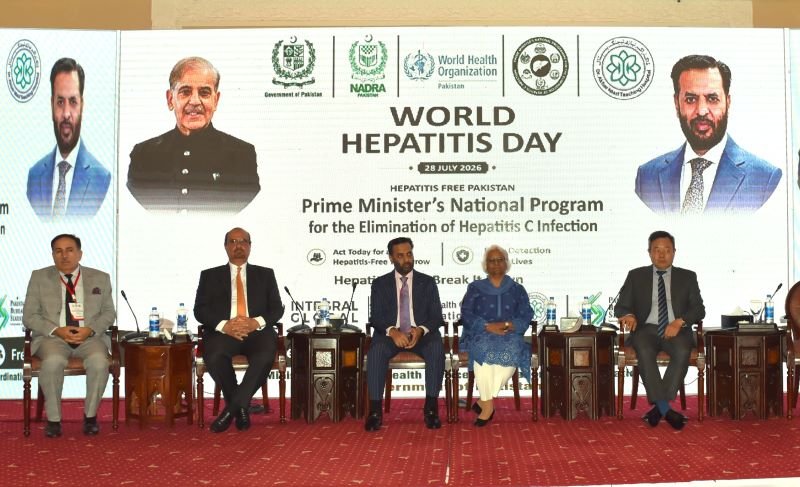
Islamabad (GNP): Federal Minister for National Health Services, Regulations and Coordination Syed Mustafa Kamal has declared Hepatitis C a national emergency, saying Pakistan can no longer remain silent on a disease that is preventable, detectable, and curable.
Speaking on World Hepatitis Day, Kamal said the event marked more than a symbolic observance, describing it instead as a reaffirmation of Pakistan’s commitment to eliminating the disease. He emphasized that Hepatitis C has moved beyond being simply a public health concern and now demands an urgent, coordinated national response.
Scale of the Problem
Kamal noted that Pakistan carries a significant burden of Hepatitis C, with more than 10 million people currently living with the virus and approximately 110,000 new infections reported annually — figures he said require immediate national attention rather than routine acknowledgment.
He pointed out that with modern antiviral treatments now available, more than 95% of patients can fully recover if diagnosed and treated in time.
National Elimination Programme
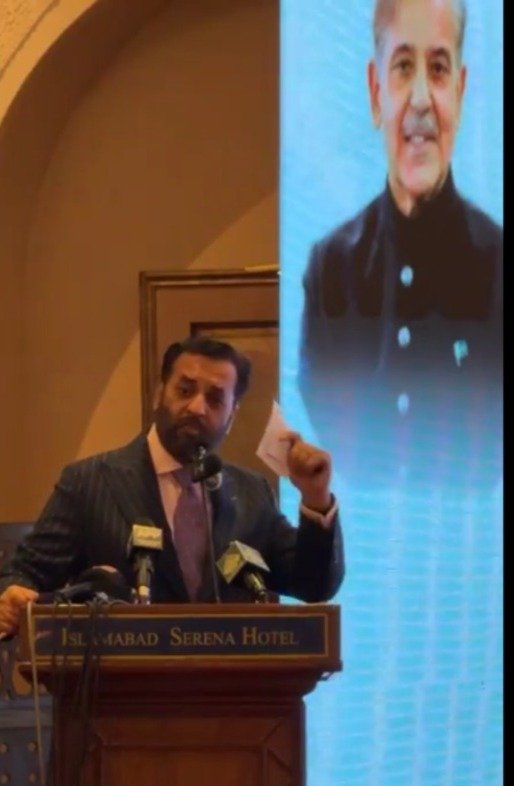
He described the government’s National Hepatitis C Elimination Programme as more than a policy statement, framing it instead as a firm commitment to identifying patients early through free screening, testing, and treatment. The programme is being rolled out in phases with the goal of screening more than 164 million people nationwide.
Kamal said the federal government is directly overseeing implementation in Islamabad, Azad Jammu and Kashmir, and Gilgit-Baltistan, while coordinating with provincial governments to extend coverage across the rest of the country, expressing confidence that Pakistan can become Hepatitis-free by 2030.
He stressed that while Hepatitis C is treatable, leaving it undiagnosed can lead to serious liver damage, cirrhosis, and eventually liver cancer, urging citizens to get screened and seek treatment early.
Programme Details and International Model
Kamal said the elimination programme, developed under the prime minister’s leadership with guidance from Professor Saeed Akhtar, draws on Egypt’s internationally recognized model, which successfully brought the disease under control through large-scale nationwide screening. Pakistan is adopting a similar phased approach, beginning in Islamabad, through coordination between federal and provincial authorities, with the ultimate goal of screening the entire population.
He announced that every patient diagnosed under the programme will receive a full three-month treatment course free of charge, valued at approximately PKR 34,000 per patient, with additional treatment also provided free if needed. All screening costs are being covered by the government, and citizens were encouraged to visit designated screening centers for free testing.
Broader Health Priorities
Turning to the wider healthcare system, Kamal said the government’s focus extends beyond treating illness to preventing it, describing prevention as the foundation of a modern healthcare system. He pointed to ongoing efforts to strengthen maternal and child health services, immunization, family planning, nutrition, and access to clean water and primary healthcare nationwide, warning that without greater emphasis on prevention, pressure on hospitals will continue to grow.
He also highlighted Pakistan’s broader public health challenges, noting that around 11,000 women die annually during pregnancy and childbirth from largely preventable causes, alongside ongoing struggles with malnutrition, hepatitis, diabetes, cardiovascular disease, and mental health issues — problems he said pose serious barriers to the country’s economic development, not just public health.
Antimicrobial Resistance and Mandatory Screening
Kamal also raised concerns about antimicrobial resistance driven by the overuse of antibiotics in humans and livestock, calling for more responsible antibiotic use as a shared national responsibility. He announced plans for new legislation requiring mandatory screening for HIV, Hepatitis B, Hepatitis C, and other infectious diseases for patients undergoing surgery or invasive procedures, with the screening program to be gradually expanded across public and private hospitals nationwide.
WHO Response
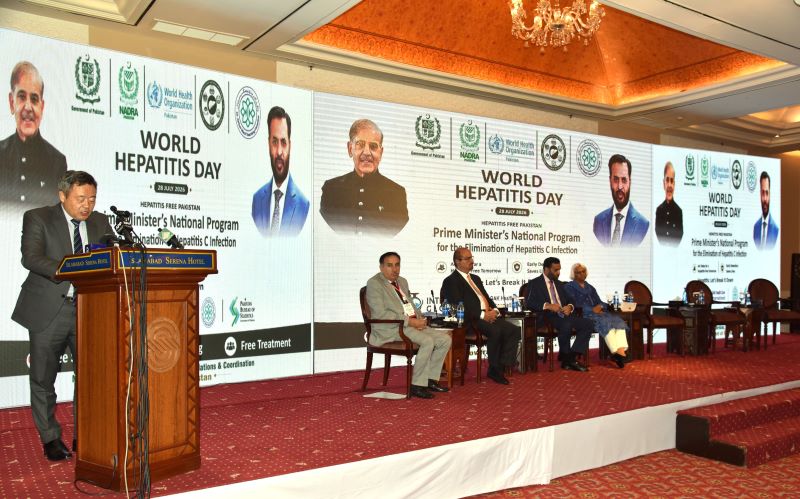
WHO Representative in Pakistan Dr. Dapeng Luo emphasized that while detecting and treating hepatitis remains important, prevention is ultimately key to ending the disease, reaffirming WHO’s continued partnership with Pakistan in applying evidence-based approaches drawn from global best practices.
Separately, the Islamabad Medical and Dental College, in partnership with China’s Sansure company and affiliated teaching hospitals including Dr. Akbar Niazi Teaching Hospital, also marked World Hepatitis Day with activities focused on liver health awareness, screening, and prevention.

Sohail Majeed is a Special Correspondent at The Diplomatic Insight. He has twelve plus years of experience in journalism & reporting. He covers International Affairs, Diplomacy, UN, Sports, Climate Change, Economy, Technology, and Health.