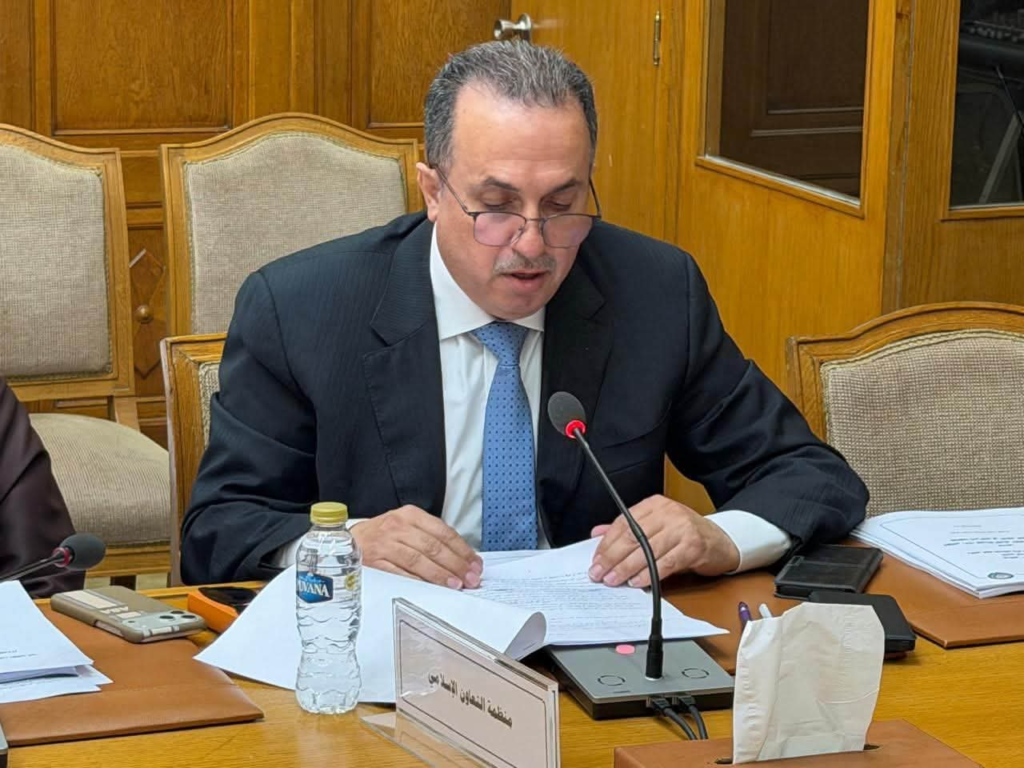
CAIRO (GNP): OIC Boycott efforts got a fresh push this week as the Organization of Islamic Cooperation joined the 98th Session of the Conference of Liaison Officers for the Regional Offices for the Boycott of Israel. Representatives from the League of Arab States and member countries came together in Cairo to tighten coordination on boycott measures, reaffirm their support for Palestinian rights, and press for greater international accountability over Israeli settlement activity in the occupied Palestinian territories.
Speaking on behalf of the OIC, Assistant Secretary-General for Palestine and Al-Quds Affairs, Ambassador Dawas Dawas, told delegates that the timing of this conference couldn’t be more critical. With the humanitarian crisis in Gaza still unfolding and tensions simmering in the occupied West Bank, he made the case that Islamic and Arab nations need to work more closely together to uphold international law and safeguard Palestinian rights.
Dawas didn’t shy away from calling for unified diplomatic pressure, especially in response to Israel’s continued settlement expansion policies he argued are designed to reshape the demographic and geographic makeup of occupied Palestinian land. His message was simple: the more coordinated member states are, the stronger their political, legal, and economic leverage becomes on the world stage.
He also didn’t hold back describing just how dire things have gotten in Gaza. Military operations, mass displacement, wrecked civilian infrastructure, and mounting humanitarian need he laid it all out plainly. His concerns extended to the West Bank too, where he pointed to military incursions, arrests, home demolitions, land seizures, and settlements that keep expanding despite international objections. In his view, these actions cross clear lines under international law and humanitarian law alike.
On a more hopeful note, Dawas praised several European countries Belgium, the Netherlands, and Ireland among them for taking steps to block commercial trade involving goods from Israeli settlements deemed illegal under international law. He framed these moves as proof that the world is waking up to the legal, ethical, and economic weight tied to settlement trade, and suggested that cutting off commercial ties could help hold settlement expansion in check.
Also Read: Trump Says US Iran Talks Going Well as Drones Strike Region
Much of the discussion also centered on how economic and diplomatic tools can reinforce international legal principles more broadly. Delegates talked through ways governments and financial institutions might rethink their dealings with companies linked to settlement activity, all while nudging broader compliance with international law. The consensus in the room was that coordinated economic pressure remains one of the few non-military tools states have to push these legal obligations forward.
Dawas also gave a nod to the Arab Boycott Office at the League of Arab States for its ongoing work tracking how boycott resolutions are being implemented and helping countries stay in sync. He emphasized that keeping this kind of coordination alive between regional institutions is what sustains momentum on efforts to support Palestinian rights through peaceful, diplomatic, and economic channels not force.
By the end of the conference, delegates reaffirmed their commitment to Palestinian self-determination, including the long-standing goal of an independent Palestinian state built on the 1967 borders, with East Jerusalem as its capital. The gathering wrapped up with fresh calls for OIC member states and international partners to keep working together toward a peaceful, just resolution.
The Cairo meeting fits into the OIC’s larger strategy of keeping the Palestinian cause front and center internationally, while encouraging member states to deepen their collective political and economic response. As tensions in the region continue to evolve, the organization’s stance remains consistent that coordinated diplomacy, respect for international law, and sustained multilateral engagement are what will ultimately move the needle toward peace, accountability, and a genuine two-state solution.