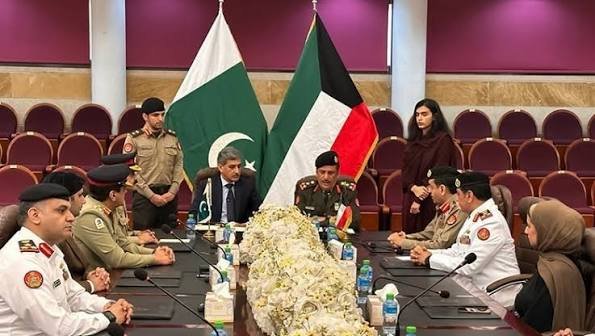
ISLAMABAD (GNP): Defense Cooperation between Kuwait and Pakistan has taken a major step forward after Kuwait’s government published Decree-Law No. 73/2026 in the official gazette, Kuwait Al-Youm, formally approving a defense agreement between the two countries. Though the pact itself dates back further, it was originally signed in Kuwait on June 11, 2023; its ratification this week signals that both nations are ready to move from paperwork to practice.
The timing has drawn plenty of attention. Kuwait’s approval paves the way for stronger military and defence ties between the two countries, and the agreement’s main goal is to deepen defence relations and boost military cooperation between the two nations.
For Pakistan, this isn’t happening in isolation; the deal expands its role as a genuine Gulf security partner, coming not long after it signed a similar agreement with Saudi Arabia. Kuwait Officially Approves Defence Cooperation Agreement with Pakistan.
So what does the agreement actually cover? Quite a lot, as it turns out. It establishes a formal framework touching military training, intelligence sharing, logistical support, and other security-related cooperation.
More specifically, the two sides have agreed to broaden their collaboration across military training, logistics support, and the exchange of both military personnel and technical experts. It’s a wide net from classroom-style training programs to hands-on logistics and personnel exchanges that will likely see officers from both countries working more closely together than ever before.
To keep things running smoothly, the two governments aren’t just leaving this to chance. They’ll develop annual plans and executive programs to carry out the agreement, and they’re also setting up a joint military committee, led by representatives appointed by their respective defense ministers, to oversee implementation a committee expected to meet once a year. That kind of built-in review process suggests both sides want this to be a living agreement, not just a document that gathers dust.
Confidentiality is clearly a priority too. The agreement places heavy emphasis on protecting classified information, stating that no documents or materials can be shared with a third party without prior written consent and that obligation doesn’t expire when the agreement does. In other words, whatever gets shared between Kuwaiti and Pakistani forces stays between them, indefinitely.
There’s also a practical side to how the deal gets funded on the ground. Financial arrangements dictate that the host country will cover the costs of domestic activities tied to joint programs, which keeps the burden from falling unevenly on either side.
Also Read: SCO Media and Think Tank Forum Unites 26 States in Bishkek
Not everyone is reading this as a dramatic shift in the region’s security balance, though. One notable voice on social media pushed back against comparisons to other major defense pacts, arguing that the Pakistan-Kuwait agreement is really more about capacity building for Kuwaiti forces by the Pakistani side, and bears no resemblance to the Saudi-Pakistan Strategic Mutual Defence Agreement.
That same commentary pointed out the agreement had actually been signed back in 2023. Still, it took roughly three years for Kuwait’s cabinet to ratify it for implementation, underscoring that bureaucratic timelines in defense diplomacy can move at their own pace, regardless of how the headlines frame it.
Still, the broader picture is hard to ignore. Kuwait and Pakistan have a long history of cooperation, and this agreement gives that relationship a modern, formal structure one built around training, shared expertise, and mutual trust on sensitive information. Whether it evolves into something bigger down the line or stays focused on capacity-building, as some observers suggest, it’s a clear signal that both countries see value in strengthening ties well beyond diplomacy and into the realm of hard security cooperation.