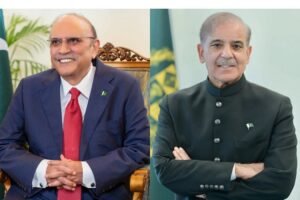
Islamabad (GNP): President Asif Ali Zardari sent congratulations to Mongolian President Ukhnaagiin Khurelsukh, along with the government and people of Mongolia, on the occasion of Mongolia’s National Day.
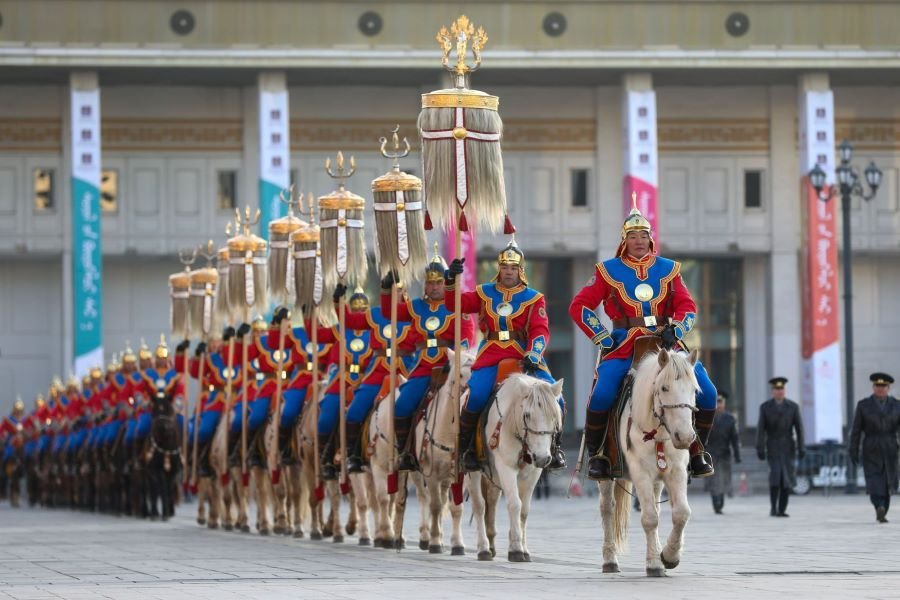
In his message, Zardari noted that the occasion celebrates Mongolia’s proud history, cultural richness, and the resilient spirit of its people, pointing to the Naadam Festival — known for its traditional wrestling, archery, and horse racing competitions — as a fitting reflection of Mongolia’s vibrant heritage and national pride.
He described Pakistan-Mongolia relations as warm and cordial, built on mutual trust, shared values, and cooperation within regional and multilateral forums. He noted that expanding collaboration in trade, agriculture, capacity building, and people-to-people exchanges reflects the positive trajectory of the relationship between the two countries.
Zardari highlighted that as fellow democracies and self-described “third neighbors,” Pakistan and Mongolia have developed a strong partnership over the decades rooted in mutual respect. With the 40th anniversary of diplomatic relations approaching in 2027, he affirmed Pakistan’s commitment to further strengthening what both countries describe as their Strategic Third Neighbor Partnership.
He expressed confidence that the friendship between the two nations would continue to deepen in the years ahead, guided by shared goals of peace, goodwill, and sustainable development.
Background on Mongolia’s National Day
Mongolia’s National Day traces back to its history under Qing dynasty rule, which governed the region then known as Outer Mongolia from the late 17th century. Efforts by the Qing to culturally assimilate the territory eventually fueled a Mongolian independence movement in the early 20th century.
Also read: Dar underscores significance of Pak-UK ties
Following the 1911 Xinhai Revolution that toppled the Qing dynasty and established the Republic of China, Mongolia declared independence on December 29, 1911, with Bogd Khan — spiritual leader of Tibetan Buddhists — becoming head of state. Chinese forces invaded Mongolia in 1919 but were pushed out by 1921. With Soviet backing, the Mongolian People’s Party then declared independence a second time on July 11, 1921 — an event now commemorated annually as Revolution Day, marking the start of the Naadam Festival and serving as Mongolia’s official National Day. Separately, December 27 has been observed as a public holiday since 2011, marking the centenary of the original 1911 independence declaration.

Sohail Majeed is a Special Correspondent at The Diplomatic Insight. He has twelve plus years of experience in journalism & reporting. He covers International Affairs, Diplomacy, UN, Sports, Climate Change, Economy, Technology, and Health.