
Cape Canaveral (GNP): A NASA Telescope rescue mission has entered a critical phase after a specially designed spacecraft was successfully launched to save the Swift Observatory, which has been gradually losing altitude because of increased atmospheric drag caused by recent solar activity. According to reports, the mission aims to capture the orbiting telescope and raise it to a safer orbit, allowing it to continue its scientific observations for several more years. The operation marks an important step in the growing field of satellite servicing and orbital maintenance.
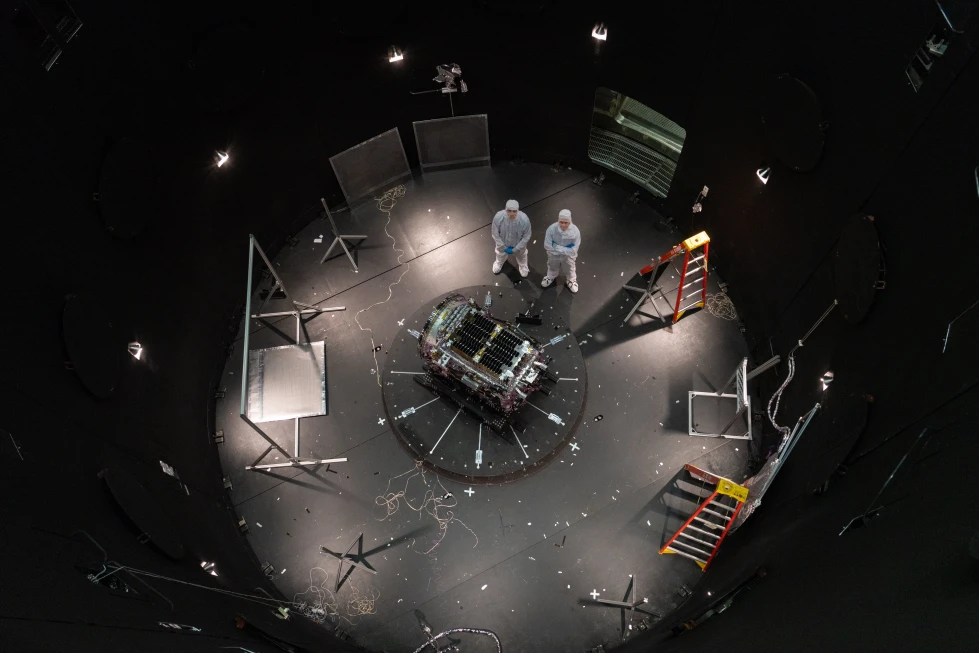
Reports stated that the mission was launched aboard a Pegasus rocket operated by Northrop Grumman. The rocket was released from a modified aircraft over the Pacific Ocean near the Marshall Islands before carrying the Link spacecraft into orbit. Developed by Katalyst Space Technologies, the spacecraft is equipped with three robotic arms designed to safely approach, capture, and reposition the NASA Telescope without causing damage to its sensitive scientific instruments.
The Swift Observatory was originally launched in 2004 and has played a major role in studying some of the most energetic events in the universe. The NASA Telescope has helped scientists detect gamma ray bursts, exploding stars, and other powerful cosmic phenomena that provide valuable information about the evolution of the universe. Over the past two decades, Swift has contributed to numerous scientific discoveries and remains an important space based observatory for astrophysical research.
According to reports, recent solar storms have increased atmospheric drag in low Earth orbit, causing the NASA Telescope to lose altitude more rapidly than expected. If no action is taken, the observatory could eventually re enter Earth’s atmosphere earlier than planned. To prevent that outcome, NASA is supporting the rescue mission with an investment of approximately 30 million dollars to extend the telescope’s operational life and protect its valuable scientific capabilities.
Reports indicated that the Link spacecraft is expected to reach the Swift Observatory within approximately one month. Once it successfully captures the telescope, its propulsion system will gradually raise the observatory by nearly 150 miles, returning it close to its original operating altitude. Engineers have designed the manoeuvre to occur slowly and carefully to avoid placing excessive stress on the spacecraft or disrupting its sensitive instruments.
During the rescue operation, scientific observations from the NASA Telescope have reportedly been suspended to preserve the remaining orbital altitude until the servicing mission is completed. If the operation proceeds successfully, Swift is expected to resume scientific observations by September, allowing astronomers to continue monitoring distant explosions, black holes, and other high energy events across the universe.
Space experts believe the mission represents an important advancement in satellite servicing technology. Successfully extending the operational life of orbiting spacecraft could reduce future mission costs while preserving valuable scientific assets already operating in space. The rescue mission may also demonstrate new capabilities that could be applied to other satellites and observatories requiring maintenance or orbital adjustments in the future.
Also read: Tesla Innovation Marks 23 Years of Progress
Reports further suggested that NASA’s Hubble Space Telescope could become another candidate for a similar servicing mission in the coming years. Like the Swift Observatory, Hubble has also experienced gradual orbital decay because of increased atmospheric drag linked to heightened solar activity. Future servicing missions could help extend the lifespan of other important scientific observatories operating in Earth orbit.
The NASA Telescope rescue mission highlights the growing importance of innovative space technologies designed to maintain and preserve valuable orbital infrastructure. Scientists and engineers will closely monitor the progress of the mission over the coming weeks as the Link spacecraft approaches the Swift Observatory. If successful, the operation could establish a new model for extending the lives of scientific satellites while supporting future space exploration and astronomical research.