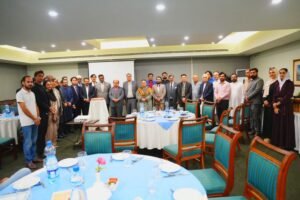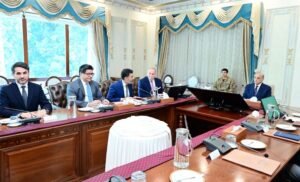
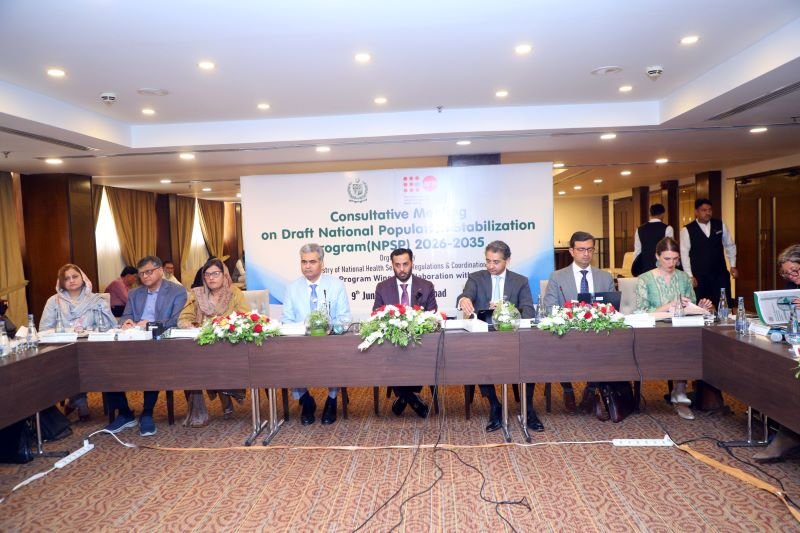
Islamabad (GNP): The Ministry of National Health Services, Regulations and Coordination (M/o NHSR&C) convened a national consultative meeting to deliberate on the Draft National Population Stabilization Program (NPSP) 2026–35, a framework developed with the technical backing of the Ministry of Finance. The meeting drew participation from a broad cross-section of stakeholders, including representatives from the Ministry of Finance, Planning Commission, Economic Affairs Division, United Nations agencies, international development partners, the Population Council, and other relevant bodies.
Federal Health Minister Syed Mustufa Kamal delivered a pointed message, describing population stabilization not as a matter of policy preference but as an existential necessity for Pakistan’s economic survival, social progress, and long-term national prosperity. He identified three pillars essential to translating the Plan from paper into practice: firm political will, coordinated inter-provincial cooperation, and dependable resource mobilization.
The Minister noted that Pakistan’s commitments as a signatory to the Paris Declaration principles are woven into the Draft NPSP, which has been designed as a country-owned, evidence-grounded, and results-oriented framework — one that emerged from a rigorous assessment of national priorities, demographic realities, and global best practices.
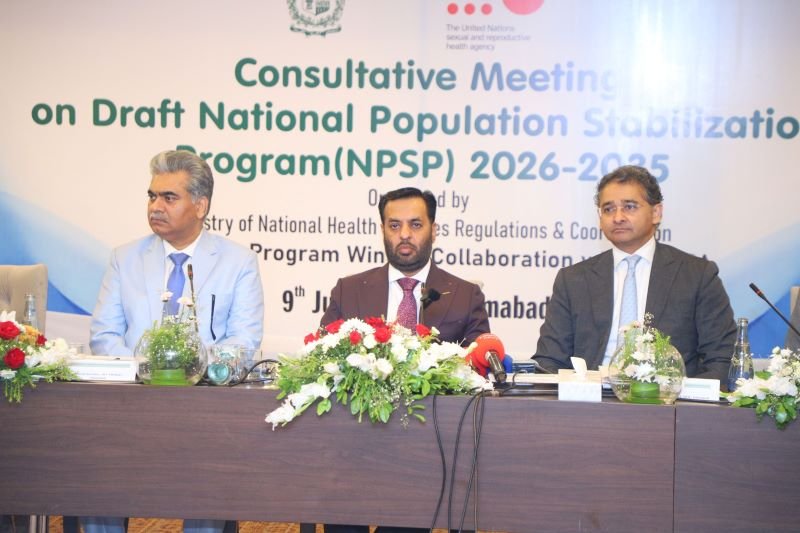
He also made a direct connection between family planning and Universal Health Coverage, asserting that without meaningful progress on population management, Pakistan’s ambitions in maternal and child health, gender equity, and poverty reduction will remain out of reach.
Minister Kamal extended his appreciation to longstanding development partners — including UNFPA, WHO, FCDO, GAVI, ADB, and the World Bank — acknowledging the sustained technical and financial contributions these organizations have made to strengthening Pakistan’s health and population sectors over the years.
Adnan Pasha, Advisor to the Federal Minister for Finance, presented a sobering demographic picture. He warned that Pakistan’s population is expanding at an unprecedented pace and, if current trends continue unchecked, will reach 390 million by 2050. He described the country as standing at a defining demographic crossroads, cautioning that the present trajectory will place mounting and potentially unsustainable pressure on the country’s finite resources — spanning water, food, housing, education, and healthcare infrastructure.
Also Read: COMSATS, ITS Convene Emerging Technologies Conference
International development partners took the floor to present their policy positions and renew their commitment to supporting Pakistan’s population agenda. They stressed that meaningful progress requires the federal and provincial governments to take clear ownership and lead from the front, while also harnessing the influence of media, academia, civil society organizations, INGOs, NGOs, and the private sector in advancing population stabilization goals.
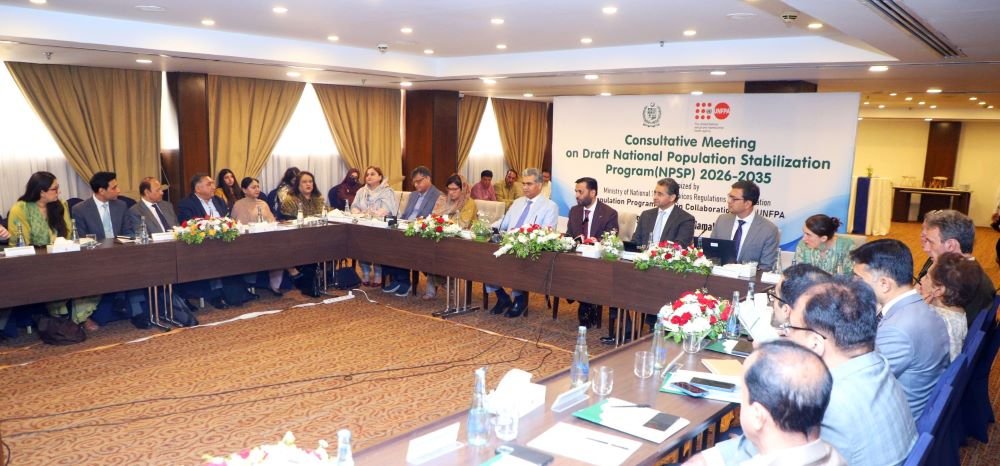
Participants contributed their specialized perspectives throughout the session, offering expert recommendations aimed at strengthening the overall framework for population stabilization in Pakistan.

Sohail Majeed is a Special Correspondent at The Diplomatic Insight. He has twelve plus years of experience in journalism & reporting. He covers International Affairs, Diplomacy, UN, Sports, Climate Change, Economy, Technology, and Health.