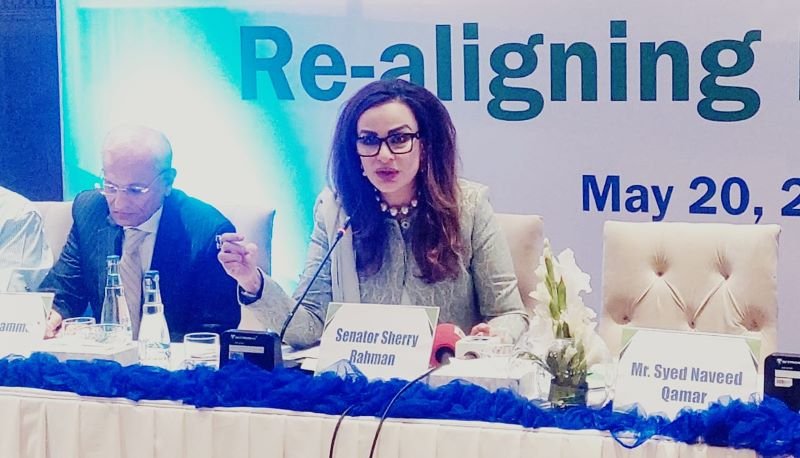
Islamabad (GNP): Senator Sherry Rehman, chaired a high-level meeting of the Population Council, calling Pakistan’s rapid population growth a “ticking time bomb” that is exerting unbearable pressure on the country’s already strained resources.
Senator Rehman warned that Pakistan is heading towards a population explosion that threatens basic rights and the country’s long-term sustainability. “Our population is projected to reach 390 million by 2050, marking an alarming 62% increase. By then, 256 million people will be in the job market, more than our existing total population.”
“This is no longer a demographic dividend. It has become a demographic drag,” she stressed.
Calling for political ownership at every level, Senator Rehman urged lawmakers across the political spectrum to unite behind a shared national commitment.
“Our commitment is across all parties, and it is extremely heartening. But this is not something we can commit to only on paper,” she said. “We need powerful messaging, local and provincial ownership, and multi-party support that follows through. Pakistan is facing population numbers that directly endanger our people’s fundamental rights, the right to clean water, clean air, life, and dignity.”
She emphasized that population planning must be embedded into budget conversations, economic planning, and development frameworks. “I cannot stress enough the importance of lawmakers getting behind this effort. Population discourse in Pakistan lacks power. We cannot afford to let this continue.”
Highlighting the crisis of malnutrition and poverty, Senator Rehman noted that 40% of children under five are stunted, an alarming indicator of chronic undernourishment and a failing system.
“Forty percent stunting should be enough of a wake-up call for all of us. We defend many frontiers as a nation, but these are our real trenches,” she said. “This is not a women’s issue. It is a family issue. Families are the heart of communities and society.”
She added that 42% of Pakistan’s population lives below the poverty line, and cultural norms, particularly in rural economies, encourage families to have six to seven children, even when they can barely feed one or two. “This directly threatens the life, health, and food security of every infant and child. It affects education, entrenches inequality, and pushes women into the background of every social and economic decision.”
Senator Rehman underscored the urgent need to improve the contraceptive prevalence rate, noting that many contraceptives are imported and already difficult to access for low-income households.
“There cannot be any tax on contraceptives,” she urged. “People must be able to make the right choices. This is the least invasive tool for empowering families and reducing pressure on national resources. Taxing contraceptives is a regressive step.”
She warned that sustainability itself is under threat as Pakistan enters an era of scarcity. “A country that cannot grow its own food is a country under threat. Even our mango exports are delayed by a month. Our agriculture, cash crops, and entire food system are being reshaped by climate stress and overpopulation.”
Also Read: Pakistan Braces for Week-Long Dust Storms and Rain
Senator Rehman appreciated the Population Council’s efforts in keeping the issue alive on national policy agendas. She extended special gratitude to Dr. Zeba for her leadership and continued commitment to advancing population policy.
“I deeply appreciate Pakistan’s strategic efforts on population management. Population growth is not a story running parallel to our national journey; it is a direct choice we make at home and at the policy level. I commend the Population Council and especially Dr. Zeba for keeping this flame alive.”

Sohail Majeed is a Special Correspondent at The Diplomatic Insight. He has twelve plus years of experience in journalism & reporting. He covers International Affairs, Diplomacy, UN, Sports, Climate Change, Economy, Technology, and Health.