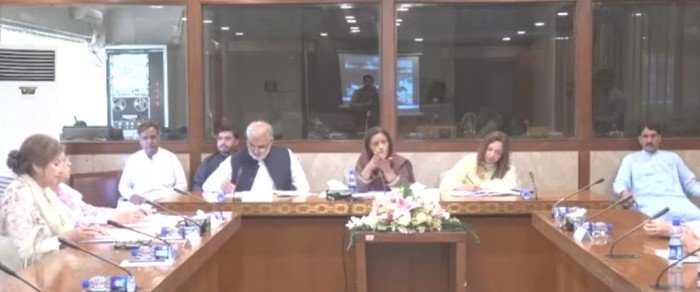
Islamabad (GNP): A meeting of the Special Committee on Gender Mainstreaming convened at Parliament House under the chairpersonship of Dr. Nafisa Shah, MNA, bringing together key institutional stakeholders to assess progress on gender-responsive budgeting, women-centered development initiatives, and the protection and representation of women at the national level.
The Committee reviewed presentations from the Ministry of Planning, Development and Special Initiatives and the National Commission on the Status of Women (NCSW), focusing on gender mainstreaming within the Public Sector Development Programme, tagging mechanisms for gender-specific allocations, and the implementation status of women-focused projects.
Members formally noted their displeasure over the failure of senior officials from the Ministry of Human Rights to appear before the Committee, directing all ministries to ensure adequate representation at parliamentary forums.
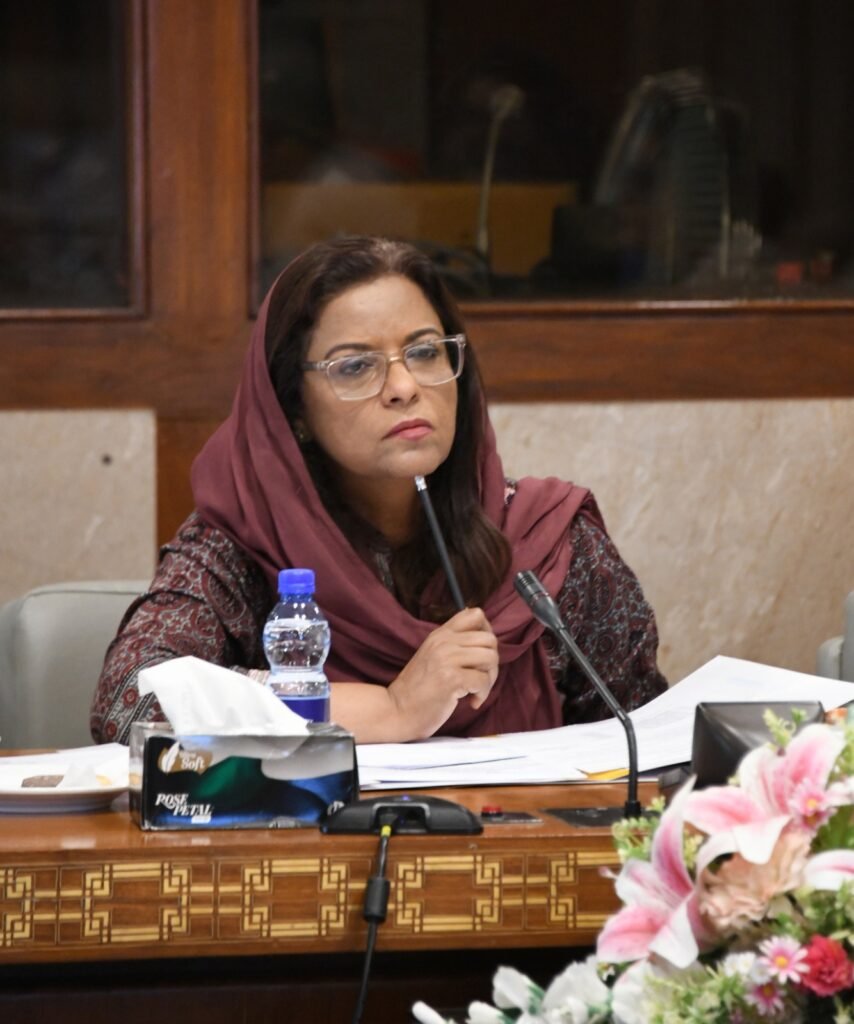
Considerable concern was voiced over the prolonged vacancy in the position of permanent Chairperson of the NCSW, with members observing that the absence of substantive leadership had weakened the Commission’s operational effectiveness, institutional credibility, and capacity to engage meaningfully with legislative bodies.
The Committee directed relevant authorities to conclude the appointment process without further delay, emphasizing that Pakistan’s foremost statutory body on women’s rights warranted transparent and timely leadership.
Budget Allocation Termed Alarming during the Committee
Members expressed alarm upon learning that gender-specific allocations under the PSDP accounted for merely 0.4 percent of the total development budget, describing the figure as wholly insufficient given the scale of gender disparities persisting across education, employment, healthcare, and economic participation.
The Committee called for a dedicated Gender Budget Statement to be presented alongside the federal budget each year, stressing that gender-responsive budgeting must translate into concrete investments and measurable outcomes rather than remaining a technical classification exercise.
The Ministry of Planning and Development was directed to strengthen gender analysis frameworks and provide regular implementation updates to the Committee.
The Committee also took up the issue of rising incidents of honour crimes and gender-based violence, expressing deep concern that existing legal protections had failed to produce adequate deterrence due to weak enforcement, institutional gaps, and entrenched societal pressures.
Members called for strengthened coordination among prosecution, law enforcement, and support institutions, alongside sustained awareness efforts and stricter accountability mechanisms to safeguard women and support survivors.
Also Read: U.S. Embassy Hosts Grand Ceremony to Mark FIFA World Cup 2026
Disappointment was also recorded over the absence of NCSW representation at a recent United Nations conference on the Commission on the Status of Women, with members stressing that Pakistan’s principal gender institution carried an obligation to engage actively at international forums addressing global commitments on gender equality and women’s empowerment. An explanation was sought from relevant quarters regarding the lapse.
The Committee concluded by reaffirming that gender mainstreaming must be embedded within national planning, public expenditure, and governance structures as a substantive priority rather than a policy aspiration, noting that women comprising more than half of Pakistan’s population demanded nothing less than genuine representation in every dimension of national development.

Sohail Majeed is a Special Correspondent at The Diplomatic Insight. He has twelve plus years of experience in journalism & reporting. He covers International Affairs, Diplomacy, UN, Sports, Climate Change, Economy, Technology, and Health.