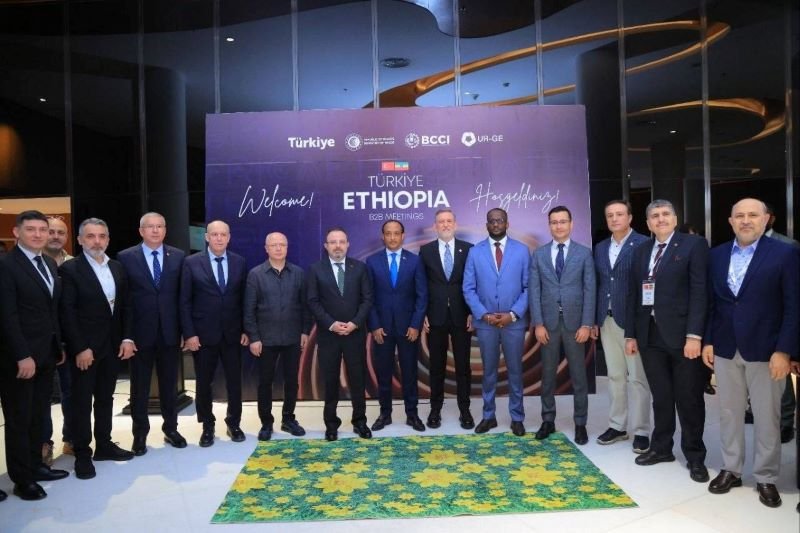
Addis Ababa (GNP): Addis Ababa Chamber of Commerce and Sectoral Associations (Addis Chamber) and the Bursa Chamber of Commerce and Industry (BCCI) of Turkey signed a pivotal Memorandum of Understanding (MoU) today to significantly boost bilateral trade and investment.
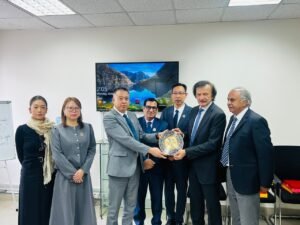
The agreement was formalized by Zehara Mohammed, President of Addis Chamber, and brahim Burkay, President of BCCI, during the opening of a high-level business forum at the Ethiopian Skylight Hotel. This strategic partnership aims to create a streamlined pathway for capital flow and industrial cooperation between the business communities of both nations.
Ethio–Turkey Business Forum was held in Addis Ababa. During the forum, both sides delivered speeches, emphasizing that Ethiopia is an attractive destination for Turkish investors due to its strategic geographic location, ongoing economic reforms, and vast untapped investment opportunities.
Turkish companies were encouraged to explore and expand their investments in Ethiopia.
The event also featured B2B meetings between business representatives from the two countries, aimed at strengthening trade and investment partnerships.
In addition, an exhibition was organized showcasing garments and other products from Turkish companies, particularly those represented by the Bursa Chamber of Commerce and Industry. The forum will stay for the coming days.
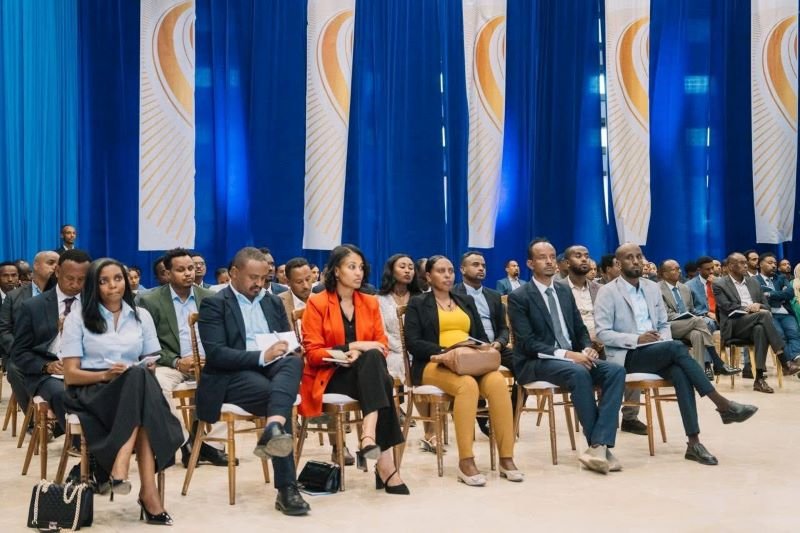
The signing ceremony served as the cornerstone of the Addis Chamber-Bursa Business-to-Business (B2B) Forum, a collaborative initiative organized by the Ethiopian Ministry of Foreign Affairs, the Turkish government, and the respective chambers of commerce. Scheduled to run through May 8, 2026, the forum focuses on practical matchmaking between Ethiopian entrepreneurs and Turkish investors.
By establishing a formal legal framework through the MoU, both institutions have committed to sharing market intelligence, organizing joint trade fairs, and removing bureaucratic hurdles that currently impede cross-border commercial activities.
Central to this economic exchange is the participation of a massive delegation consisting of over 160 prominent Turkish companies, industrial leaders, and institutional investors. These firms represent a broad spectrum of the Turkish economy, ranging from heavy manufacturing to specialized services.
The scale of the delegation reflects Turkey’s growing interest in Ethiopia’s emerging market.
For Ethiopia, the influx of Turkish expertise and capital is viewed as a vital component for its ongoing structural economic transformation and job creation efforts.
Representing the Ethiopian government, Ambassador Meles Alem, Director General for Europe and America at the Ministry of Foreign Affairs, lauded the Addis Chamber for its proactive role in economic diplomacy. He emphasized that the government fully supports such private-sector-led initiatives, noting that they are essential for enhancing national export capacities and attracting Foreign Direct Investment (FDI).
The Ambassador highlighted that the commitment shown by both chambers mirrors the deepening diplomatic and historical ties between Addis Ababa and Ankara, providing a stable foundation for long-term commercial ventures.
Ibrahim Burkay, President of the Bursa Chamber, provided context on the industrial weight behind the agreement, noting that Bursa, Turkey’s fourth-largest city, is a global manufacturing hub housing over 61,000 enterprises.
Also Read: Pak-Qatar reaffirm support for lasting peace efforts
He expressed strong optimism regarding the synergy between Bursa’s advanced industrial base and Ethiopia’s resource potential. Specifically, the Turkish delegation is targeting deep-rooted collaborations in the textile, construction, furniture, and chemical sectors, areas where Turkish firms possess significant competitive advantages and technological know-how that could be transferred to the local Ethiopian market.
The forum will conclude with a series of intensive, one-on-one B2B meetings designed to translate the signed MoU into tangible contracts. Organizers expect hundreds of local Ethiopian companies to engage directly with their Turkish counterparts, fostering partnerships that go beyond simple trade to include joint ventures and technology transfers. As both nations look toward the future, this agreement marks a decisive shift toward a more integrated and mutually beneficial economic relationship, positioning the private sector as the primary engine for bilateral growth.

Sohail Majeed is a Special Correspondent at The Diplomatic Insight. He has twelve plus years of experience in journalism & reporting. He covers International Affairs, Diplomacy, UN, Sports, Climate Change, Economy, Technology, and Health.