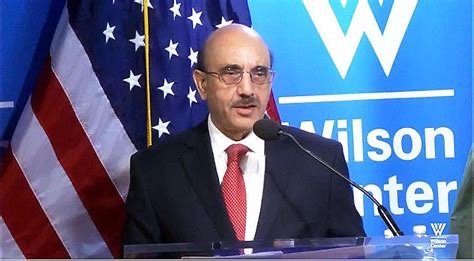
Islamabad :- Ambassador Masood Khan, former President of Azad Jammu and Kashmir and former Permanent Representative of Pakistan to the United Nations as well as Ambassador to the United States, has said that India’s hesitation to join the US-led Board of Peace is driven less by procedural concerns and more by deep strategic anxiety over Kashmir, accountability for human rights violations, and rapidly changing relations with Washington.
Ambassador Khan said that while it is India’s sovereign right to decide whether to join the Board of Peace, New Delhi has deliberately avoided an outright rejection. He explained that speculation in diplomatic circles suggests India fears the Board’s broad mandate, particularly the possibility that it could address long-standing conflicts beyond Gaza, including Jammu and Kashmir. “India’s paranoia stems from the concern that Kashmir could be internationalised again under a new global mechanism,” he said.
Ambassador Khan noted that India has long resisted third-party mediation on Kashmir and has undermined UN Security Council resolutions affirming the Kashmiri people’s right to self-determination. He said the emergence of a new peace architecture—championed personally by President Donald Trump—has unsettled India, especially given its unresolved record in occupied Jammu and Kashmir. “The Kashmir dispute has not ended despite India’s claims in 2019; the struggle continues, and repression has intensified,” he added.
He observed that India’s discomfort has been amplified by a visible cooling of US–India relations following the India–Pakistan conflict last year and Washington’s mediation role, which New Delhi publicly denied. According to Ambassador Khan, the imposition of tariffs, disagreements over Russian oil purchases, and diverging strategic expectations have weakened the once-celebrated partnership between the two countries.
Ambassador Khan said India is actively exploring alternative alignments to offset this strain, including deeper engagement with Europe, closer coordination with Russia, cautious outreach to China, and participation in new groupings such as the IMEC corridor. However, he stressed that these maneuvers reflect uncertainty rather than confidence. “India is searching for strategic relevance in a fluid world order,” he remarked.
On the Board of Peace itself, Ambassador Khan cautioned Pakistan to remain prudent, particularly regarding the introduction of the Kashmir issue. He emphasized that any discussion of Kashmir must be firmly anchored in existing UN Security Council resolutions to avoid weakening the established international legal framework. He said the true test of the Peace Board’s credibility would be its performance in Gaza—specifically whether it can ensure a permanent ceasefire, Israeli withdrawal from occupied areas, humanitarian relief, and protection against further displacement of Palestinians.
Ambassador Khan described Pakistan’s decision to join the Board of Peace as a major diplomatic success that has significantly expanded Islamabad’s political space and global relevance. He said Pakistan’s foreign policy over the past year has been marked by pragmatism and flexibility, enabling it to play a constructive role in peacebuilding while maintaining principled positions. He reiterated that Pakistan will participate in peacekeeping and humanitarian efforts but will not take part in peace enforcement or disarmament operations, including any action against Hamas.
Turning to broader regional tensions, Ambassador Khan warned that escalating confrontation between the United States, Israel, and Iran poses grave risks for the Middle East and beyond. He said the large-scale military build-up, harsh rhetoric from all sides, and collapse of trust have created a volatile situation that could easily spiral into a regional war with severe consequences for Pakistan and its neighbours.
Concluding his remarks, Ambassador Masood Khan reaffirmed that Kashmir remains central to Pakistan’s foreign policy and cannot be pushed aside. He said that whether India joins the Board of Peace or stays out, the risk for New Delhi is the same—or greater—if Kashmir comes under international discussion in its absence. “Peace mechanisms evolve, world orders shift, but unresolved injustices do not disappear,” he said. “Kashmir will remain alive in international consciousness until its people are allowed to decide their own future.”

Sohail Majeed is a Special Correspondent at The Diplomatic Insight. He has twelve plus years of experience in journalism & reporting. He covers International Affairs, Diplomacy, UN, Sports, Climate Change, Economy, Technology, and Health.