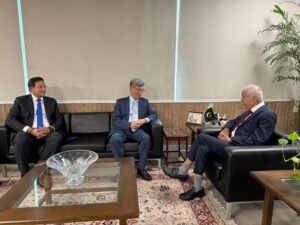
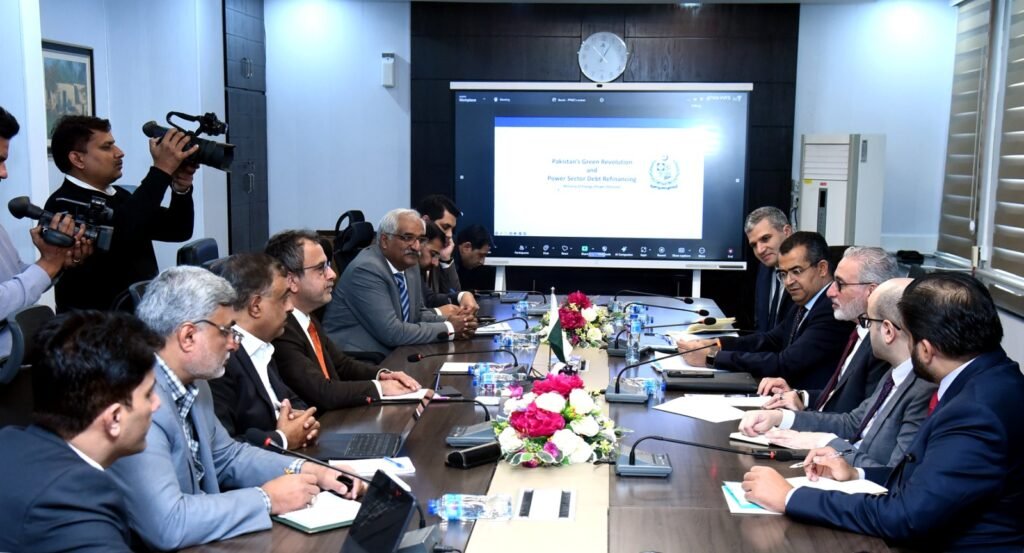
Islamabad: A delegation from the World Bank met with Federal Minister for Power Sardar Awais Ahmed Khan Leghari. The world bank delegation was led by Ousmane Dione, Vice President for the Middle East, North Africa, Afghanistan, and Pakistan Region. In addition, the Minister also received Dr. Rami Ahmad, Vice President (Operations) of the Islamic Development Bank. These meetings centered on strategies to enhance Pakistan’s energy sector, with a focus on sustainability and efficiency.
The Minister welcomed the World Bank delegation and expressed gratitude for its historical support in development projects. He referenced his recent visit to the World Bank’s headquarters, which highlighted the ongoing need for robust partnerships to address energy challenges effectively.
During the discussions, the World Bank team emphasized the value of reliable and affordable energy systems. Dr. Rami Ahmad from the Islamic Development Bank outlined opportunities for joint initiatives in promoting sustainable energy practices.
The Minister reaffirmed his dedication to reinforcing the power sector through targeted reforms. He outlined current initiatives that span generation, transmission, and distribution. These include the integrated development of expansion plans for generation and transmission. The government has excluded costly and unnecessary power plants from IGCEP of approximately 8,000 MW in capacity which translates savings of around USD 17 billion from future expenses to be borne by the consumers.
Further enhancements involve resolving inefficiencies in distribution companies, which have resulted in improvements worth PKR 197 billion. Circular debt has been reduced by PKR 780 billion, and imported coal plants are being converted to use local Thar coal. Transmission bottlenecks are also being addressed, alongside a comprehensive review to achieve full implementation of automated metering.
To stimulate demand and rationalize tariffs, the Minister highlighted incentive packages for industrial and agricultural consumers, which aim to boost usage. Captive power facilities are transitioning to the national grid to improve overall efficiency. Tariff incentives for EVs are designed to encourage the adoption of electric vehicles, supporting environmental goals and reducing reliance on fossil fuels. Net metering regulations are being refined for better equity.
In terms of market and governance reforms, the wholesale electricity market is being liberalized to foster competition. Energy planning is gaining a more institutionalized structure, with a five-year national electricity plan now in effect. Key institutions, such as the national grid company, system operator, and private power board, are undergoing restructuring for enhanced performance. PPMC, a technical unit within the Ministry, provides analytical support and monitors reform progress, while IT tools are being deployed to facilitate consumer services and strengthen oversight.
The Minister concluded by stressing the transition to clean energy sources, which will underpin long-term energy security and drive economic prosperity.
Ousmane Dione and Dr. Rami Ahmad appreciated the Government of Pakistan’s efforts to reform the power sector and acknowledged the strong commitment shown by the ministry of energy. They commended the practical and timely reforms being implemented to improve efficiency, financial sustainability, and service delivery across the power sector. Noting the visible progress achieved so far, they expressed confidence that these measures would strengthen Pakistan’s energy system, enhance investor confidence, and support long-term economic growth. They also reaffirmed their continued support and cooperation with Pakistan in advancing a sustainable and reliable energy sector.

Sohail Majeed is a Special Correspondent at The Diplomatic Insight. He has twelve plus years of experience in journalism & reporting. He covers International Affairs, Diplomacy, UN, Sports, Climate Change, Economy, Technology, and Health.