
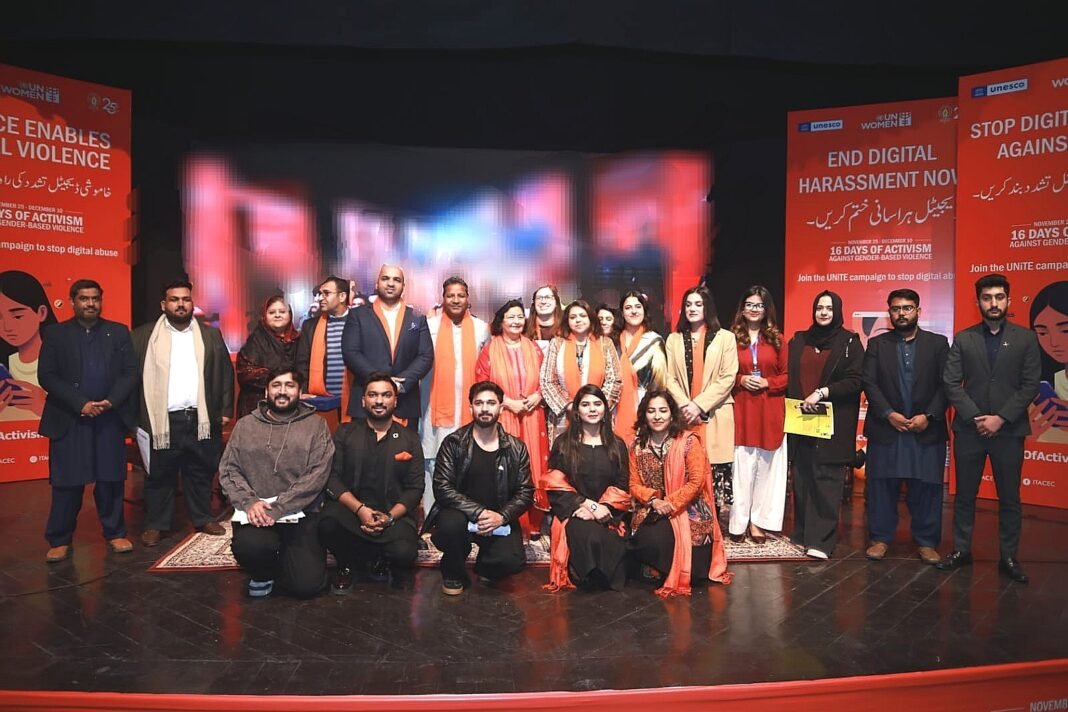

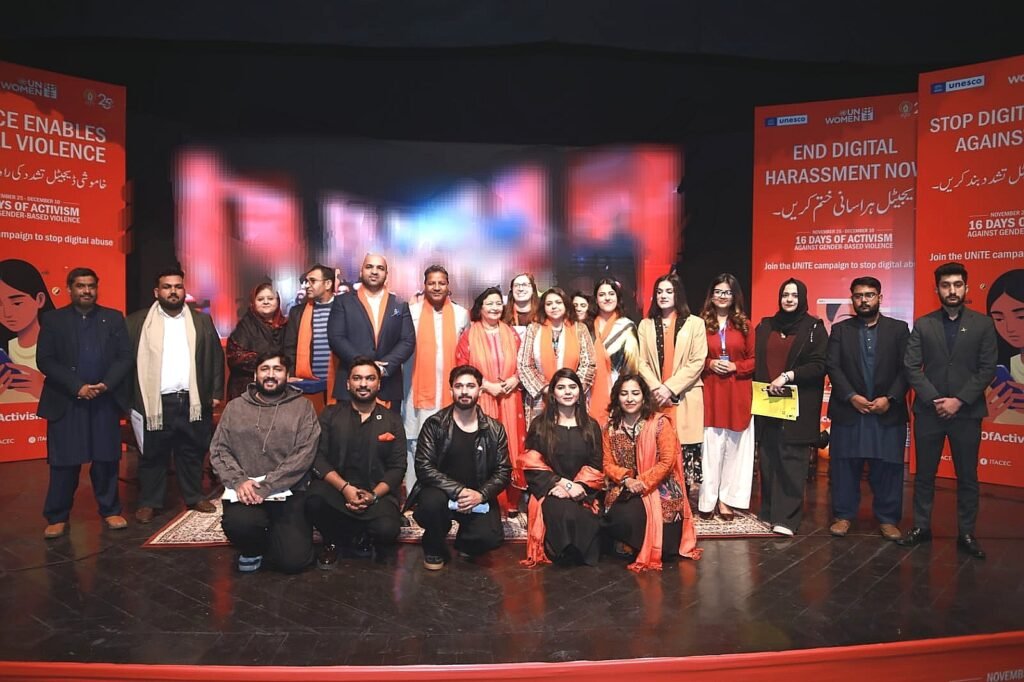
LAHORE: — What began as a conversation in Islamabad last month transformed into a provincial roar today as the “UNiTE to End Digital Violence Against Women & Girls” campaign reached its powerful conclusion at Alhamra Hall, Lahore. Led jointly by UNESCO and Idara-e-Taleem-o-Aagahi (ITA), in partnership with UN Women, the closing ceremony marked the end of 16 days of activism that did more than share facts—it shifted perspectives across Punjab.
The significance of this campaign lies in its reach. It was not a series of seminars, but a journey through the heart of Pakistan’s youth. From the lecture halls of the University of the Punjab to government schools in Bahawalpur and Toba Tek Singh, thousands of students moved beyond the screen to confront the realities of cyber harassment, misinformation, and the digital exclusion of women and transgender persons.
Equipping the Nation’s Future
The atmosphere at the closing ceremony turned from reflection to resolution, as the Honorable Rana Sikandar Hayat, Provincial Minister for School Education & Higher Education, Government of Punjab, took the stage. His remarks served as a powerful reminder of the stakes involved in this campaign.
“Women are not property,” the Minister declared, addressing young advocates and educators. “Giving them education and a diverse skillset will equip them for a better tomorrow and push this nation forward. Our goal is clear: we must make Punjab a harassment-free province where every girl can navigate the digital world without fear.”
A Generation Empowered
The journey of the past two weeks saw thousands of students trained in the technicalities of the PECA laws and the ethics of digital citizenship. They didn’t just listen; they acted—creating digital posters and recording pledges that documented a collective refusal to accept online violence as the status quo.
Following the opening remarks by Baela Raza Jamil, CEO of ITA, the ceremony focused on dialogue and strategy. The discussion, “Confronting Digital Violence and Advancing Inclusive and Safer Digital Spaces,” was expertly moderated by Joshua Dilawar. The panelists—including Kulsoom Saqib (DG, PWPA), Ayesha Babar (DRF), Muhammad Hammad Ur Rehman (UCP), Anjum James Paul (Government Graduate College, Faisalabad), and Mahnoor Chaudhary (KSS)—collectively mapped out multi-sectoral solutions. While Zahra Sohail (National Communication Officer, UNESCO) and Sidra Humauyn (Program Coordinator Punjab, UN Women) stressed the urgency of the cause, the day was ultimately defined by the “Youth Pledge,” a collective vow led by ITA and UNESCO to champion digital empathy and zero tolerance for online abuse.
The Path Ahead
As the 16 Days of Activism concludes, the movement leaves behind a network of certified digital safety advocates across colleges and universities. The campaign has proven that when youth are equipped with tools and leadership, they become the strongest barrier against digital violence.
The event ended with a singular vision: a Punjab where the digital space is an engine for progress and empowerment, rather than a frontier of fear.

Sohail Majeed is a Special Correspondent at The Diplomatic Insight. He has twelve plus years of experience in journalism & reporting. He covers International Affairs, Diplomacy, UN, Sports, Climate Change, Economy, Technology, and Health.