

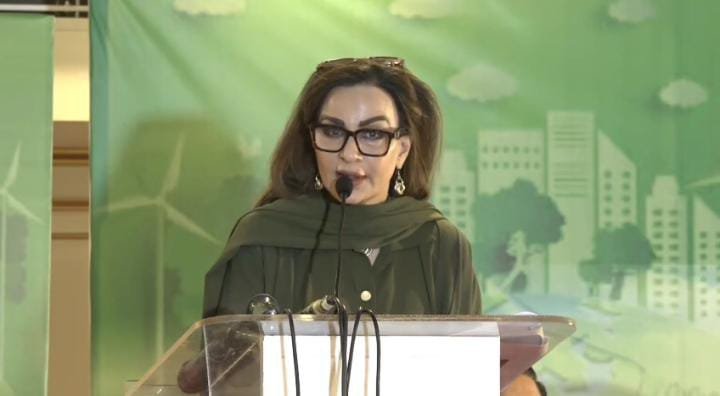
Islamabad — Chair of Senate Standing Committee on Climate Change Senator Sherry Rehman, has called for an urgent national shift toward sustainable, circular, and climate-resilient construction while addressing the Pakistan Sustainability Summit.
Sherry Rehman stressed that the core focus of the Summit must remain on sustainable construction, as Pakistan stands at a critical juncture in its climate and urbanization trajectory. “Pakistan already has Green Building Codes, but implementation is extremely low. According to the Climate Risk Index 2025, Pakistan is the most climate-impacted country in the world,” she said.
Highlighting the urgency of reform, she noted that the industrial sector accounts for 38% of Pakistan’s total energy-related CO₂ emissions, and 49% of national emissions come from the cement industry, making it essential to shift construction practices toward sustainability.
Senator Rehman underscored that Pakistan’s rapid urbanization—according to the World Urbanization Report, 39 percent of Pakistan’s population is urban, and when considering population density and concentration measures, this figure rises to 88 percent—with nearly 42% of the country classified as peri-urban, demands a radical rethink of planning and growth models.
“Urbanization is happening fast, especially in peri-urban regions where expanding settlements now resemble towns. These communities lack proper waste disposal systems, which must be addressed immediately,” she emphasized.
She stressed that Pakistan is among the fastest urbanizing nations in Asia, making it imperative to embed sustainability into every tier of planning and construction.
Referring to the catastrophic 2022 floods, she reminded the audience that fragile and poorly located structures were wiped out within moments. “A hotel collapsed in seconds during the 2022 floods. The question is: Why was construction allowed there? Shockingly, we saw the same failures again during the 2025 floods. This shows the private sector still isn’t alarmed.” She called on the government to ensure strong and resilient infrastructure, warning that Pakistan cannot continue the dangerous practice of building on floodplains and stormwater paths.
Senator Rehman stressed the need for circular construction models, integrating reduce, reuse, and recycle principles into building codes. “Our construction sector must move decisively toward circularity. Reducing waste, improving material efficiency, and adopting regenerative models is no longer optional — it is imperative.”
She noted that CE adoption could save Pakistan $1.5–2 billion annually by 2030, primarily by reducing material imports and landfill costs according to World Bank. Recycling half of the country’s C&D waste could reduce 4–5 million tons of CO₂ emissions per year, aligning with Pakistan’s Nationally Determined Contributions (NDCs) under the Paris Agreement. A formalized circular construction industry could generate 200,000+ jobs, many of which can engage women and youth, addressing both unemployment and gender disparities.
She emphasized that while informal sectors in Pakistan already reuse a substantial amount of material, official recycling rates are extremely low. “Globally, only 9% of plastic is recycled, while Pakistan recycles just 1%. Nearly 30% of our national waste comes from construction and demolition debris out of 49.6 million tons generated annually. This is a staggering figure, especially given that a significant portion of this waste—materials like concrete, steel, bricks, glass, and wood—can be reused or recycled. Yet, in the absence of systemic regulation or recycling infrastructure, most of it ends up in landfills or open dumps.”
She also called attention to alarming waste disposal trends, including 9 million gallons of waste being dumped into Rawal Dam every day.
Senator Rehman underscored Pakistan’s impressive shift toward affordable renewable energy, especially solar power. “Pakistan has turned to low-cost renewables, and the rooftop solar revolution is unfolding rapidly across the country. Pakistan has risen to the 6th position globally in the solar market from an inconsequential position just three years ago. Our energy supply has now exceeded demand — the next step is innovating for sustainable construction.”
She emphasized that cement and steel, the most polluting sectors globally, must also adopt sustainable materials, referring to best practices in the Netherlands, Finland, and Germany, which are taking ambitious steps toward circularity. By 2050, they aim to ensure that 50–100% of building materials come from recycled or regenerative sources.
Commending the Sindh People’s Housing for Flood Affectees(SPHF), she underscored that the initiative is constructing 2.1 million multi-hazard-resistant homes, set to benefit more than 15 million people—more than the population of 154 countries. Built on transparent systems, a strong digital architecture, and inclusive public–private partnerships, the programme places gender equity at its core: 1.5 million bank accounts have been opened for direct transfers, 1.45 million homes are currently under construction, and 650,000 are already complete, with nearly 800,000 women as direct beneficiaries. In a historic first, every title deed is issued in a woman’s name.
She further emphasized,
“Karachi’s circular projects show real promise. But these initiatives must now be scaled. Your federation must lead the charge by setting clear and measurable sustainability milestones for the construction industry.”
She concluded by emphasizing that long-term, scalable, and locally relevant solutions are the only way forward for Pakistan’s construction and housing sectors. “We must identify what works best for Pakistan and implement it on a wide and sustainable basis.”

Sohail Majeed is a Special Correspondent at The Diplomatic Insight. He has twelve plus years of experience in journalism & reporting. He covers International Affairs, Diplomacy, UN, Sports, Climate Change, Economy, Technology, and Health.