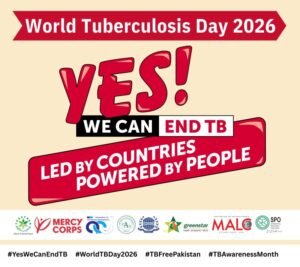
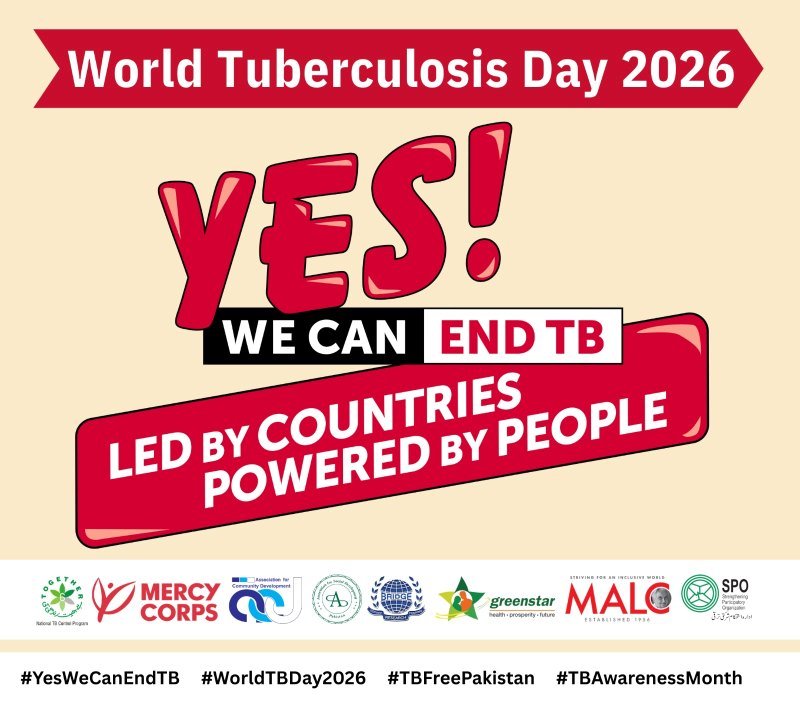
Islamabad (GNP) :- On World Tuberculosis Day 2026, Pakistan calls for urgent, coordinated, and sustained action to eliminate tuberculosis, one of the world’s deadliest yet preventable and curable infectious diseases, amid persistent challenges including stigma, funding gaps, and health system constraints.
Tuberculosis remains the leading cause of death from a single infectious agent globally. According to the World Health Organization, an estimated 10.7 million people fell ill with TB in 2024, while 1.23 million people lost their lives. The disease spreads through the air when an infected person coughs, sneezes, or speaks. Although it primarily affects the lungs, TB can also affect other vital organs, including the brain, kidneys, and spine. Globally, men account for 54 percent of TB cases, women 35 percent, and children 11 percent, with childhood TB still receiving insufficient attention.
Pakistan continues to face a high burden of TB. With approximately 670,000 new cases annually, the country accounts for around 6.3 percent of the global TB burden. Despite global commitments, including the United Nations High-Level Meetings on TB, progress remains slow, particularly in high-burden countries like Pakistan.
Pakistan’s TB response has been significantly strengthened through partnerships between the public and private sectors. Mercy Corps Pakistan, in collaboration with the National TB Control Program and Provincial TB Programmes, supported by the Global Fund, has expanded access to TB services through Public Private Mix models, reaching millions of people, particularly in underserved areas.
Arif Jabar Khan, Country Director of Mercy Corps Pakistan, said, “Ending TB requires more than medical treatment, it demands community awareness, and equity in access to services. While we have made progress through our public and private partnerships, stigma and misinformation continue to delay care-seeking and increase transmission. We must intensify community engagement, expand preventive treatment, and ensure uninterrupted availability of health services, including for children. Raising awareness, strengthening supply chains and investing in resilient systems will be essential to achieving a TB free Pakistan.”
He further added, “The National TB Control Program and Provincial TB Programmes are doing commendable work to eliminate TB from Pakistan. Under the leadership of NTP, we are optimistic about achieving our national targets while strengthening the overall health system to ensure sustainable and long term impact.”
Heads of implementing partner organizations, including Dr. Akmal Naved from Association for Community Development, Dr. Muhammad Amir Khan from Association for Social Development, Dr. Syed Sharaf Ali Shah from Bridge Consultants Foundation, Dr. M. Khalid Farough from Greenstar Social Marketing, Mervyn Lobo from Marie Adelaide Leprosy Centre, and Ms. Arifa Mazhar from Strengthening Participatory Organization, emphasized the importance of community level action. In a joint statement, they noted, “TB is not only a health issue but also a social challenge closely linked with poverty, stigma, and lack of awareness. Many patients delay treatment due to fear and misconceptions, which increases transmission and worsens outcomes. Bringing services closer to communities, promoting respectful and patient centered care, and strengthening awareness are essential to ensure early diagnosis and successful treatment.”
Supporting the national response, partner organizations reiterated that “Eliminating TB is both a public health and development priority”. Addressing funding gaps, strengthening prevention efforts, and tackling the social determinants of TB will be essential. A coordinated, multi sectoral approach involving government, partners, and communities is critical to accelerate progress and meet national and global targets.”
Experts emphasize that eliminating TB in Pakistan is achievable through sustained political commitment, increased domestic investment, and strengthened health systems. Expanding preventive treatment, ensuring uninterrupted medicine supply, investing in local pharmaceutical production, and prioritizing community awareness are critical steps forward.
As the world marks World Tuberculosis Day 2026, stakeholders across Pakistan have reiterated that ending tuberculosis is possible, but only through collective action, strong partnerships, and sustained commitment.