Islamabad (GNP): Pakistan is hosting a two-day meeting of the Makkah Defence Alliance’s top decision-making body from Friday, aiming to finalize the arrangements for carrying out the three member countries’ collective defense commitments, officials said.
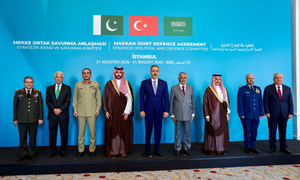
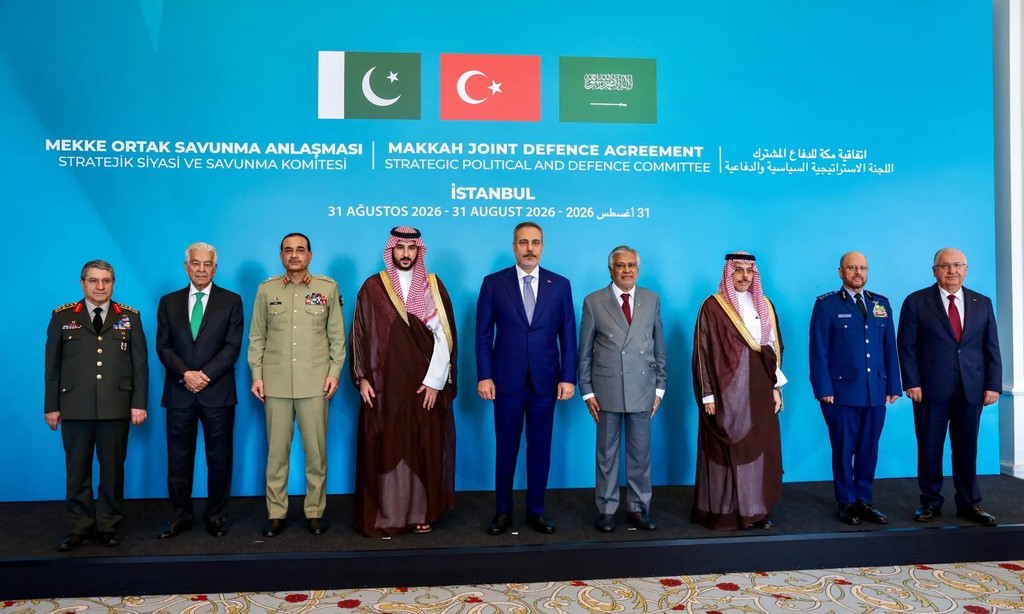
The third session of the Strategic Political and Defence Committee (SPDC) will be held in Islamabad on Nov 27-28. The foreign and defense ministers of Saudi Arabia, Turkiye and Pakistan are due to attend. Local authorities have announced a public holiday on Friday and imposed special movement restrictions for the high-level gathering.
The alliance was formed under a defense agreement signed in Makkah on Aug 7. It provides that an armed attack on any one member will be treated as an attack on all, obliging the other two to help through available means, including military support. Turkiye’s ratification has since completed the accession process for all three countries.
The framework is still taking shape, however. A Pakistani official said the Islamabad meeting is expected to focus on finalizing standard operating procedures (SOPs), setting up an implementation mechanism and defining how the three countries’ political, defense and military institutions will coordinate.
Defense Minister Khawaja Asif described the alliance’s institutional and operational framework as being at a “nascent stage.” He said frequent meetings are needed so that everything is in place within the next couple of months.
Some groundwork is already done. The SPDC brings together the foreign and defense ministers and the chiefs of defense staff of the three countries, and a permanent secretariat has been set up in Riyadh to coordinate its work. Retired Lt Gen Nauman Mahmood of Pakistan is its first secretary general, serving a three-year term, and a working committee of officials from member countries is also active.
The alliance has yet to publicly define its doctrine, the composition of its forces, its command arrangements or the procedures for a collective military response. An emergency SPDC meeting in Riyadh on Oct 5 had already called for practical steps, including arrangements for rapid deployment of agreed forces and capabilities, subject to national laws.
Regional security concerns add urgency to the talks. Asif said the conflict between Saudi Arabia and the Houthis will be on the agenda. Saudi Arabia has faced repeated attacks on cities, oil facilities and shipping from Yemen’s Houthi movement since fighting in Yemen’s civil war intensified in July.
Also Read: D-8 Secretary-General Addresses 12th World Halal Summit and Halal Expo
The meeting also takes place amid wider tensions involving Iran, the United States and Israel. Asif declined to say how the alliance would respond to a direct Iranian attack on Saudi Arabia, but he said the possibility of aggression from Israel exists and that regional countries need to close ranks.
Pakistan has sought to keep diplomatic channels open with Tehran while deepening defense ties with Riyadh and Ankara. Asif said Pakistan has played a constructive role between Washington and Tehran, but he called the outcome of the ongoing mediation fragile.
Turkiye has stressed that the agreement is defensive in nature and has remained cautious about involvement in combat operations in Yemen. A security source said recent Pakistani deployments, including JF-17 aircraft, drones and air defense systems, were made under bilateral cooperation that predates the alliance and will now become part of the trilateral framework.
Asif said on Wednesday, “Any threat to Saudi Arabia is a threat to Pakistan and Turkiye.”

Managing Editor at Global News Pakistan (GNP), with a Bachelor's degree in International Relations from Riphah International University, graduated with a Gold Medal. Reach out at sabahtareengnp@gmail.com