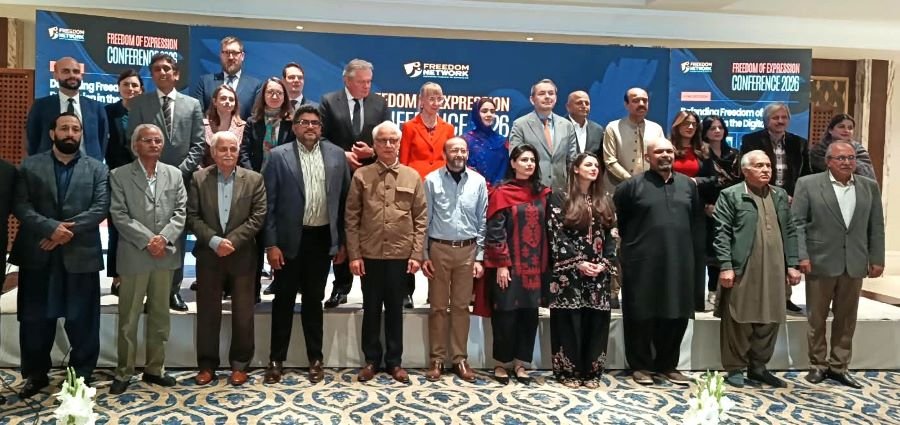
Islamabad (GNP): A national conference titled “The Future of Freedom of Expression: Technology, Safety and Accountability” held to called for greater respect for the public’s right to know, better safeguards for media workers and special steps to protect women journalists from harassment, both online and offline. Participants urged stakeholders to look for practical solutions, build institutional dialogue and share a commitment to tackling these problems.
Welcoming ambassadors, parliamentarians, public officials, journalists, civil society groups, academics and journalism students, Freedom Network Executive Director Iqbal Khattak said a society should be judged not only by how freely people may speak when they agree with those in power, but by how well it protects their right to speak when they disagree.
The conference was held as censorship under the Prevention of Electronic Crimes Act (PECA) is becoming more entrenched, according to the organisers’ framing, and as journalists and media outlets face growing safety and financial pressures despite special legislation against impunity and signs of improvement in the national economy.
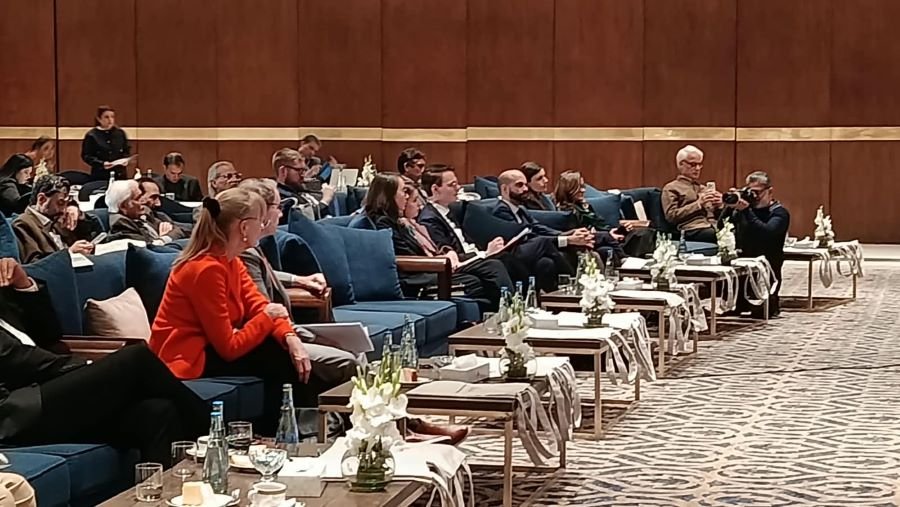
Ambassadors from three European Union member states addressed the gathering and pledged continued support for independent media and journalist safety in Pakistan.
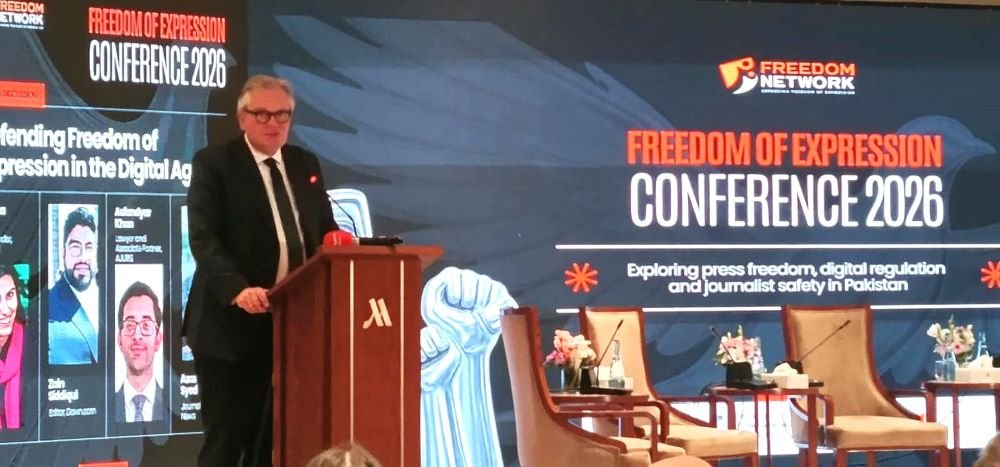
German Ambassador Ina Lepel called freedom of expression a fundamental human right and a foundation of democratic societies. She said press freedom cannot truly exist if half the population faces extra barriers to exercising it, and that there can be no genuine freedom of expression without women being able to express themselves safely, independently and without fear.
Speaking on the International Day for the Elimination of Violence against Women, she pointed to the threats facing Pakistani women journalists and the link between gender-based violence and freedom of expression.
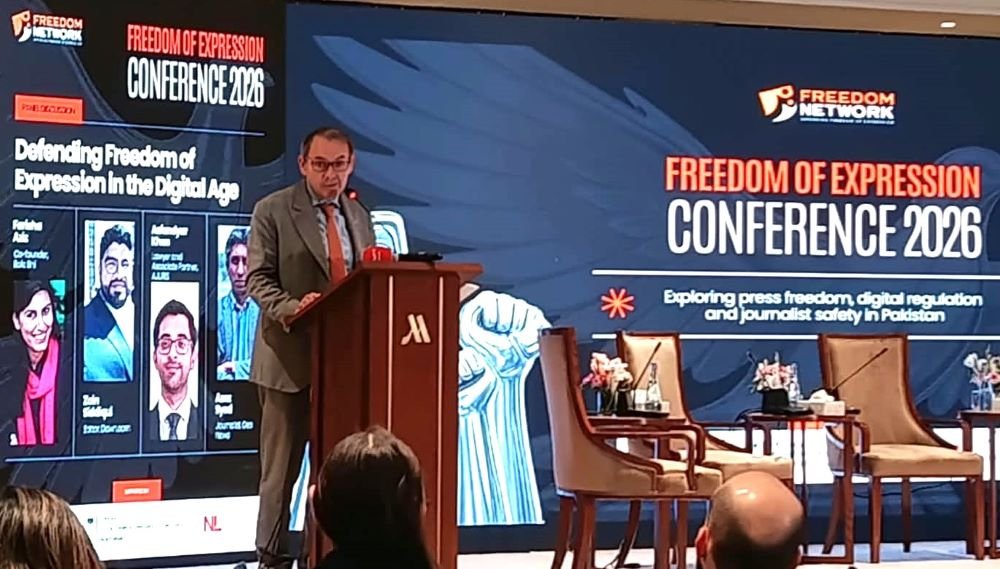
French Ambassador Jean-Noël Poirier said freedom of expression and press freedom are essential to any resilient society, not mere ideals.
He set out three priorities for France and its European partners: backing independent journalism and countering disinformation, holding major digital platforms accountable, and making sure artificial intelligence serves journalism instead of undermining it. Disinformation, he said, should be fought with verified facts, not censorship.
Dutch Ambassador Robert-Jan Siegert drew attention to the persistent impunity for crimes against journalists. Journalists play a vital role in holding the powerful to account, he said, yet worldwide almost nine in ten killings of journalists go unresolved. He called this unacceptable and said that without accountability there can be no lasting safety for journalists.
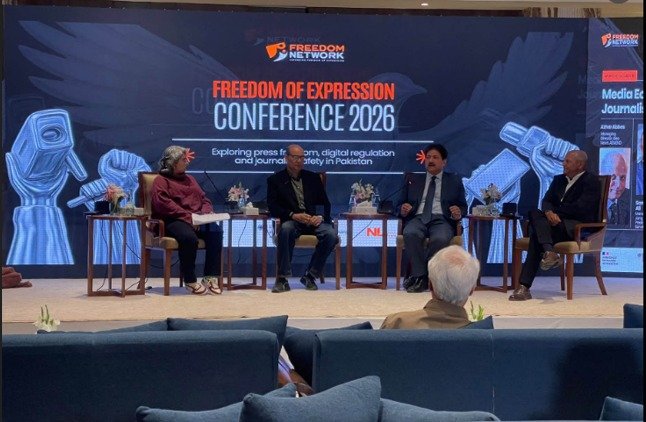
The conference included three panel discussions: “Defending Freedom of Expression in the Digital Age,” “Gender, Technology and Journalist Safety” and “From Law to Practice: How Can Public and Human Rights Mechanisms Tackle Impunity?” It also held two working sessions, on “Media Economy and Journalist Safety” and “Technology and the Future of Journalism.” These produced several recommendations:
- Journalist safety training should become a regular part of newsroom practice, so reporters understand legal risks and can work safely in digital spaces.
- Because financial sustainability underpins editorial independence, media organisations should diversify revenue through subscription models and depend less on government advertising.
- To counter AI-driven misinformation, newsrooms need several layers of human oversight, rigorous editorial verification and greater scepticism toward information circulating on social media.
- Women journalists should build institutional solidarity and support networks, along with a single referral mechanism for reporting and resolving complaints of harassment and other threats.
- The federal and Sindh commissions for the protection of journalists should be given stronger institutional and operational independence so they can carry out their statutory mandates and combat impunity.
Also read: UAE Embassy Marks 55th National Day, Celebrates Pakistan Ties
The conference closed by stressing the need for sustained cooperation among policymakers, public institutions, media organisations and civil society to protect freedom of expression and to create a safer, more accountable and financially sustainable media environment in Pakistan.

Sohail Majeed is a Special Correspondent at The Diplomatic Insight. He has twelve plus years of experience in journalism & reporting. He covers International Affairs, Diplomacy, UN, Sports, Climate Change, Economy, Technology, and Health.